
Best Pay-As-You-Go Auto Insurance in Florida for 2026 (Top 9 Companies Ranked)
Liberty Mutual, Nationwide, and AAA are among the best choices for pay-as-you-go auto insurance in Florida. Minimum coverage starts at $31 a month for drivers traveling 6,000 miles annually. Top pay-as-you-go insurance companies have good claims service, strong financial ratings, and offer savings to safe drivers who sign up for low-mileage programs.
Read more





Table of Contents
Table of Contents

Published Insurance Expert
Melanie Musson is the fourth generation in her family to work in the insurance industry. She grew up with insurance talk as part of her everyday conversation and has studied to gain an in-depth knowledge of state-specific car insurance laws and dynamics as well as a broad understanding of how insurance fits into every person’s life, from budgets to coverage levels. She also specializes in sustai...
Melanie Musson

Managing Editor
Daniel S. Young began his professional career as chief editor of The Chanticleer, a Jacksonville State University newspaper. He also contributed to The Anniston Star, a local newspaper in Alabama. Daniel holds a BA in Communication and is pursuing an MA in Journalism & Media Studies at the University of Alabama. With a strong desire to help others protect their investments, Daniel has writt...
Daniel S. Young

Licensed Insurance Broker
Zach Fagiano has been in the insurance industry for over 10 years, specializing in property and casualty and risk management consulting. He started out specializing in small businesses and moved up to large commercial real estate risks. During that time, he acquired property & casualty, life & health, and surplus lines brokers licenses. He’s now the Senior Vice President overseeing globa...
Zach Fagiano
Updated September 2026
Liberty Mutual, Nationwide, and AAA offer the best pay-as-you-go auto insurance in Florida. Geico has the lowest minimum coverage rate at $372 a year for drivers traveling 6,000 miles annually.
- Liberty Mutual earned 730 out of 1,000 for claims satisfaction
- Nationwide SmartMiles uses a base price plus a charge for each mile
- AAA offers member benefits and regional telematics savings
Florida pay-as-you-go insurers differ in claims service, pricing structure, and the type of mileage program they offer. Before choosing a pay-per-mile or usage-based plan, take a quick look at Florida auto insurance requirements.
Liberty Mutual ranks highest among the companies available to the general public, with strong claims satisfaction and a usage-based program for eligible drivers.
Top 9 Companies: Best Pay-As-You-Go Auto Insurance in Florida
| Company | Rank | Claims Satisfaction | AM Best | Best for |
|---|---|---|---|---|
 | #1 | 730 / 1,000 | A | Safe Drivers |
 | #2 | 729 / 1,000 | A | Pay-Per-Mile |
 | #3 | 720 / 1,000 | A | Member Perks |
 | #4 | 716 / 1,000 | A++ | Low Mileage |
 | #5 | 716 / 1,000 | A+ | Older Drivers |
 | #6 | 697 / 1,000 | A++ | Mobile Tracking |
 | #7 | 691 / 1,000 | A+ | Driving Insights |
 | #8 | 684 / 1,000 | A++ | UBI Feedback |
 | #9 | 673 / 1,000 | A+ | Low Rates |
Nationwide follows with a true pay-per-mile option, while AAA rounds out the top three with member benefits and coverage offered through regional clubs.
Before you choose a policy, look at each insurer’s eligibility rules, base premium, mileage charges, tracking requirements, coverage options, and estimated yearly cost. Enter your ZIP code to compare rates available in your area.
What Low-Mileage Florida Drivers Pay
Florida pay-as-you-go insurance prices depend on annual mileage, driving history, age, credit, location, coverage limits, and the type of pricing program. Learn More: What Affects Auto Insurance Rates
True pay-per-mile plans combine a base premium with a mileage charge. Usage-based insurance (UBI) programs may instead adjust a standard policy based on mileage and driving behavior.
How Additional Mileage Changes Your Premium
How much you drive affects the part of your pay-per-mile premium that changes. If you drive less, your monthly cost usually goes down. But if you drive a lot, a traditional policy might cost less overall.
As a hypothetical example, the table below shows how a monthly premium changes at different yearly mileage levels, using a $60 base premium and a charge of 7 cents per mile. This example is not directly comparable to the company averages below because the coverage level is not specified.
Florida Pay-Per-Mile Insurance Costs by Annual Mileage
| Annual Mileage | Monthly Miles | Mileage Cost | Est. Premium |
|---|---|---|---|
| 6,000 miles | 500 | $35 | $95 |
| 9,000 miles | 750 | $53 | $113 |
| 12,000 miles | 1,000 | $70 | $130 |
| 15,000 miles | 1,250 | $88 | $148 |
At 6,000 miles per year, the estimated monthly premium is $95. At 15,000 miles, it rises to $148 because the mileage charge increases with the number of miles driven.
Actual prices depend on your insurance company, car, location, coverage, and driving profile. It’s better to compare the estimated yearly total instead of just focusing on the per-mile rate.
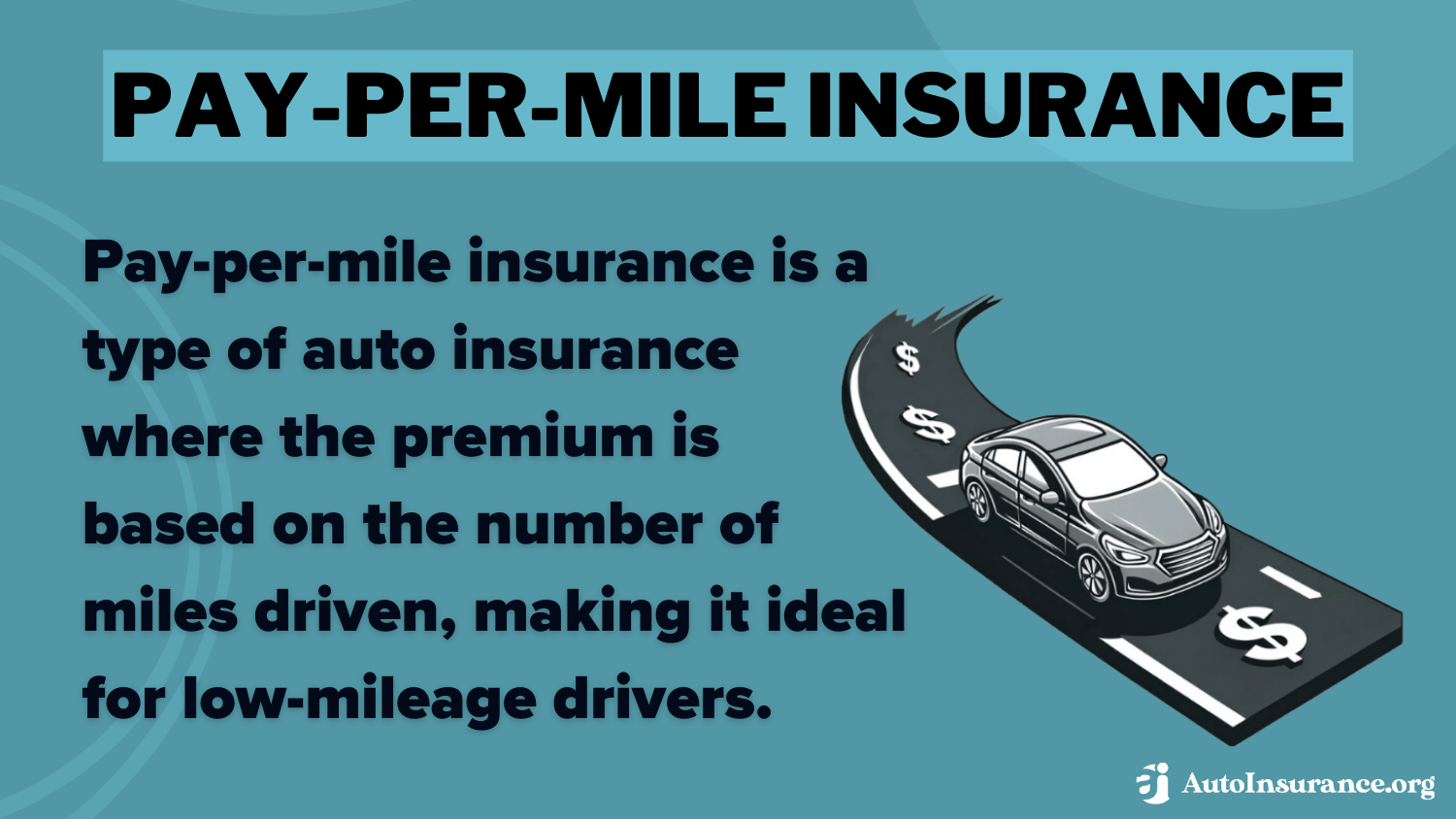
Pay-per-mile insurance has a fixed base cost plus a charge for the miles you actually drive. This type of plan can be a good fit for remote workers, retirees, students, or people with a second car.
Usage-based plans work differently because they may also evaluate braking, acceleration, speed, phone use, and driving time. Compare both options in our guide to pay-per-mile auto insurance.
Choosing Liability or Full Coverage With Pay-As-You-Go Insurance
Minimum coverage costs less because it only includes Florida’s required protection. Full coverage adds collision and comprehensive insurance to help pay for damage to your own vehicle.
The rates below are based on a 45-year-old male with a clean driving record, excellent credit, and 6,000 annual miles. Rates may reflect pay-per-mile pricing, usage-based programs, or low-mileage savings, depending on the insurer.
Florida Pay-As-You-Go Auto Insurance Monthly Rates by Coverage
| Insurance Company | Minimum Coverage | Full Coverage |
|---|---|---|
| $45 | $120 |
| $64 | $168 |
| $31 | $82 |
| $68 | $176 |
| $41 | $107 |
| $40 | $107 |
| $34 | $89 |
| $65 | $169 |
| $44 | $115 |
Geico has the lowest listed rates at $31 per month for minimum coverage and $82 for full coverage.
Compare the same limits and deductibles across insurers. A lower price may reflect less protection rather than a better pay-per-mile rate. Review the differences between minimum and full coverage auto insurance before choosing.
Your pay-per-mile insurance cost can rise if you drive more than expected during the month.
Dani Best Licensed Insurance Producer
When comparing pay-per-mile quotes, use the same coverage limits and deductibles for each insurer.
This makes it easier to determine whether the price difference comes from the mileage program or from a change in coverage.
How Age Impacts Florida Pay-As-You-Go Coverage Costs
Age plays a role in the fixed part of your insurance premium, even if some of the cost is based on how much you drive. Younger drivers often pay higher rates because insurers see them as more likely to have expensive claims.
If you drive less, you might pay less for the mileage part of your bill, but these savings may not completely make up for a higher base rate.
Young drivers who don’t drive often could save money with pay-per-mile insurance. Still, it’s important to compare the total yearly cost to a regular policy.
When comparing rates based on age, make sure you use the same mileage, car, coverage limits, and deductible. Young drivers can also look into tips for finding cheap auto insurance for young adults.
Driving History Can Still Raise FL Pay-As-You-Go Premiums
Accidents, tickets, and DUIs can increase the base cost of a pay-as-you-go premium. If you have recent violations, you might also lose out on safe-driving discounts.
Even if your starting rate is higher, driving fewer miles can still help lower the mileage part of your pay-per-mile bill.
If you have violations, compare real pay-per-mile pricing with usage-based insurance programs. Telematics programs might also track things like braking, speed, phone use, and other driving habits.
Be sure to compare the same coverage limits and deductibles so any rate differences are due to your driving record, not changes in coverage. Drivers with violations can also check out high-risk auto insurance.
How Credit Rating Affects Pay-As-You-Go Insurance in Florida
Credit-based insurance information may affect the base premium charged by Florida insurers. A driver with poor credit may pay more than someone with excellent credit even if both drive the same number of miles.
Pay-per-mile pricing may still help because the variable portion of the bill decreases when the vehicle is driven less.
Drivers with higher base rates should compare the full monthly estimate rather than focusing only on the advertised mileage charge.
Improving credit, reducing mileage, and comparing multiple insurers may help lower the total premium over time. Learn more about getting auto insurance with bad credit.
Free Insurance Comparison
Compare Quotes From Top Companies and Save
How Pay-As-You-Go Car Insurance Works in Florida
Pay-as-you-go insurance bases part of your rate on how much you drive or how safely you drive. In Florida, this usually comes as either a true pay-per-mile plan or a standard policy with a usage-based discount.
With true pay-per-mile insurance, you pay a fixed base premium and a fee for every mile you drive.
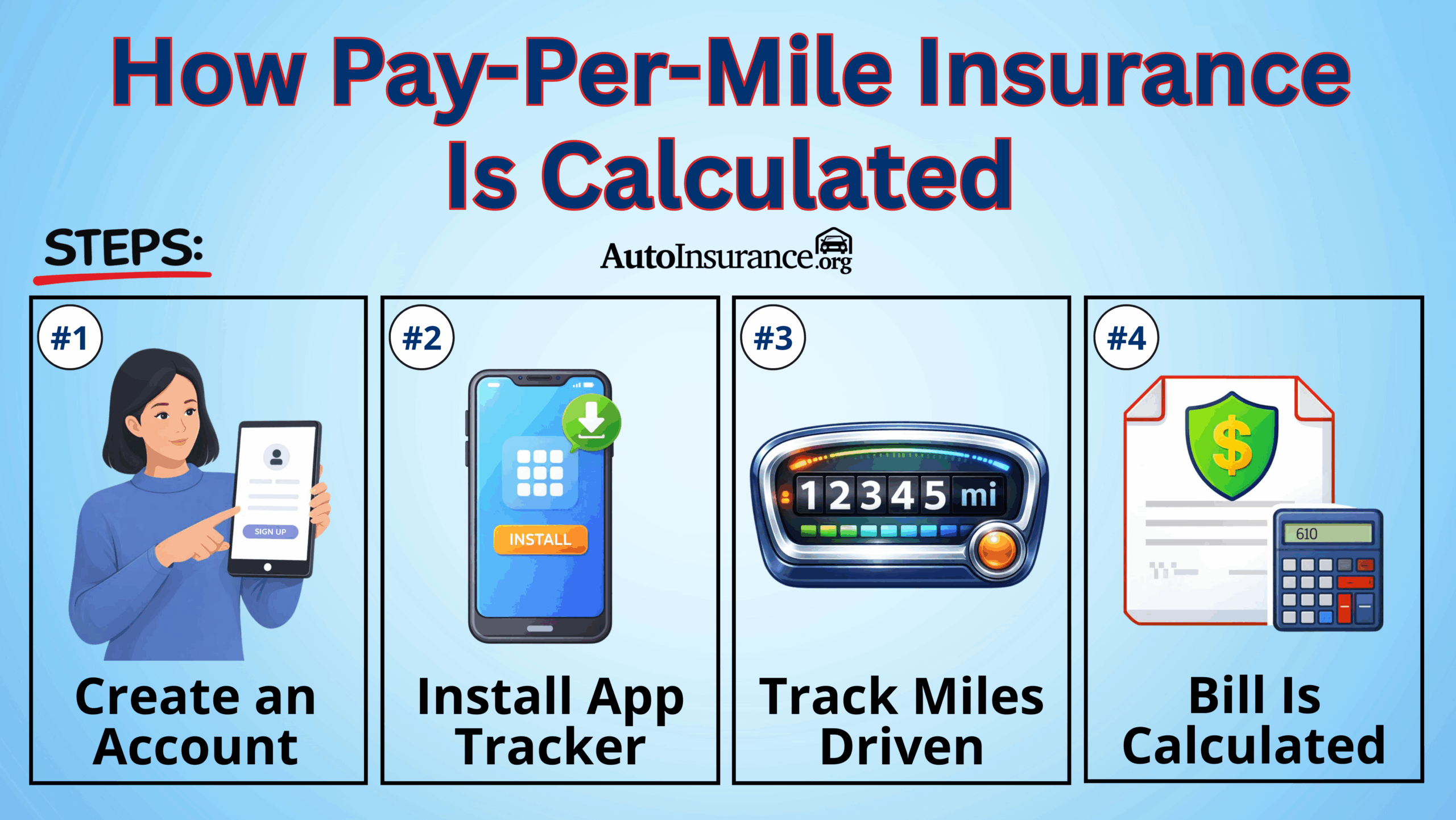
Usage-based insurance can change your discount or renewal price depending on your mileage and driving habits. These two options have different features:
- Base Rate: Your age, location, vehicle, driving record, credit, and coverage still affect your starting price.
- Pay-Per-Mile Pricing: Your bill mostly depends on how many miles you drive.
- Telematics Tracking: Programs may use an app, plug-in device, or connected vehicle.
- Usage-Based Pricing: Both your mileage and driving habits can affect how much you save.
Nationwide SmartMiles is the clearest true pay-per-mile option in the ranking. It charges a base premium plus a per-mile fee.
State Farm Drive Safe & Save, Progressive Snapshot, Liberty Mutual RightTrack, and Geico DriveEasy are usage-based programs rather than true per-mile policies. See how these programs compare in our guide: Usage-Based Auto Insurance
Pay-as-you-go insurance can help you save if you don’t drive much. The fewer miles you drive, the less you may pay.
Jeff Root Licensed Insurance Agent
Drivers should look at the estimated yearly cost, not just the advertised discount or per-mile charge.
Check what data the program collects and whether risky driving could lower your savings or increase your future premiums.
Benefits of Pay-As-You-Go Car Insurance
Pay-as-you-go insurance works well for people who do not drive much. Remote workers, retirees, students, seasonal residents, and those with short commutes can save money when their premium is based on how much they actually use their car.
Drivers should compare the total yearly cost, what tracking is needed, and whether the insurer charges by the mile or provides a discount on a regular policy. Benefits include:
- Easy tools for checking trips and policy information
- Lower costs for driving fewer miles
- More control over monthly insurance expenses
- Motivation to reduce unnecessary driving
How much you save depends on the insurance company, your driving habits, and how many miles you drive each year. If your mileage changes a lot, a regular policy might still be cheaper.
Compare these programs with available low-mileage auto insurance discounts before switching.
Ways to Save on Florida Pay-As-You-Go Insurance
Driving fewer miles can help lower your insurance costs. You can also compare quotes, keep a clean driving record, review your optional coverage, and see if you qualify for any policy discounts.
Check the annual mileage listed on your policy before you renew. Giving accurate mileage can help you save money and avoid issues with your eligibility or future rates. Here are some more ways to lower your premium:
- Ask if you can combine any discounts you qualify for.
- Compare rates from different insurance companies in Florida.
- Think about choosing a higher deductible if it fits your budget.
- Pay the premium in full when the savings exceed the fees.
- Remove any optional coverage you don’t need from older cars.
- Review your policy if you move or change jobs.
Some insurance companies use telematics technology to track things like your mileage, braking, acceleration, driving times, phone use, and other details about your trips.
Cheap usage-based insurance companies often reward safe driving and low mileage, but results can vary for each driver.
How much you save depends on the insurer’s scoring, eligibility rules, and the program they offer.
You should also see if you can fix trips that were recorded when you were a passenger or using another type of transportation. You can find more tips in our guide: Factors That Affect Auto Insurance Rates
Available Discounts on Pay-As-You-Go Insurance Policies
Most pay-per-mile policies do not qualify for all traditional auto insurance discounts since the mileage-based pricing already lowers part of your premium.
Florida drivers can still get savings for things like anti-theft devices, bundling policies, driving fewer miles, or using a usage-based program. The discounts and their amounts depend on your insurer and policy.
Some insurers do not let you combine these discounts with a pay-per-mile program or with each other.
Check which discounts you qualify for before comparing final quotes, since advertised savings are not always guaranteed. You can find more ways to save in our guide to the best auto insurance discounts.
Common FL Pay-As-You-Go Policy Coverages
Pay-as-you-go insurance calculates your premium differently, but it typically gives you the same protection as a traditional policy.
- Liability: Covers injuries or property damage you are responsible for.
- Collision: Pays to repair or replace your car if you are in a covered accident.
- Comprehensive: Protects your car from theft, vandalism, weather events, falling objects, and other damage not caused by a crash.
- Roadside Help: Pays for towing, jump-starts, lockouts, and flat-tire services when you need them.
- Rental Coverage: Pays for a rental car while your vehicle is being repaired after a covered event.
Minimum coverage meets Florida’s legal requirements. Full coverage includes collision and comprehensive insurance for extra protection.
Choosing a higher deductible can lower your premium, but you will pay more out of pocket after a covered claim. Check the available types of auto insurance coverage before choosing your policy.
Meeting Florida Minimum Car Insurance Requirements
If you are registering a vehicle with at least four wheels in Florida, you will need to have personal injury protection and property damage liability.
Personal injury protection covers certain medical expenses no matter who is at fault in an accident. Property damage liability pays for damage you or another covered driver causes to someone else’s property.
- $10,000 in personal injury protection
- $10,000 in property damage liability
Florida’s minimum coverage meets state law, but it will not pay to fix your own car. If you want more protection, consider higher liability limits, collision, or comprehensive insurance.
The table lists average prices for a 45-year-old male with a clean driving record, excellent credit and 6,000 annual miles. Actual pay-as-you-go rates depend on the insurer, selected coverage and miles driven.
Florida Pay-As-You-Go Auto Insurance Costs by Policy Limit
| Policy Level | Deductible | Monthly Cost | Annual Cost |
|---|---|---|---|
| State Minimum | None | $48 | $576 |
| Full Coverage | $1,000 | $126 | $1,512 |
Review how much auto insurance coverage you need before selecting your coverage limits. State-minimum insurance offers the least protection.
Full coverage adds collision and comprehensive insurance, while higher liability limits provide more financial protection after a serious accident.
Drivers with financed, leased, newer, or high-value vehicles may need full coverage. A higher deductible can lower the premium but increases the amount paid after a claim.
Florida’s minimum coverage meets the law, but it may not be enough after a serious crash. Higher limits can help cover more of the costs you would otherwise have to pay yourself.
Michelle Robbins Licensed Insurance Agent
Do not stop at the legal minimum without considering your vehicle’s value and the amount you could afford to pay after an accident.
Choose limits and deductibles that provide enough protection without making the premium unaffordable.
Florida No-Fault Insurance and PIP Rules Explained
Florida uses a no-fault insurance system, which means your personal injury protection usually helps cover medical bills after an accident, no matter who was at fault.
No-fault rules do not remove responsibility for every part of a claim. The driver who caused the accident may still have to pay for property damage and other losses that PIP does not cover.
PIP and property damage liability do not always pay to fix your car. Collision coverage can help with accident damage, while comprehensive coverage may help if your car is stolen, vandalized, or damaged by storms or other events.
You might also want to look into bodily injury liability and uninsured or underinsured motorist coverage for extra financial protection.
Free Insurance Comparison
Compare Quotes From Top Companies and Save
When Mileage-Based Coverage Makes Sense
Mileage-based coverage can work well for remote workers, retirees, students, seasonal residents, and households with a second car that isn’t driven often. Lower annual mileage can reduce costs, but the base rate still depends on factors such as age, location, vehicle, driving record, credit, and coverage.
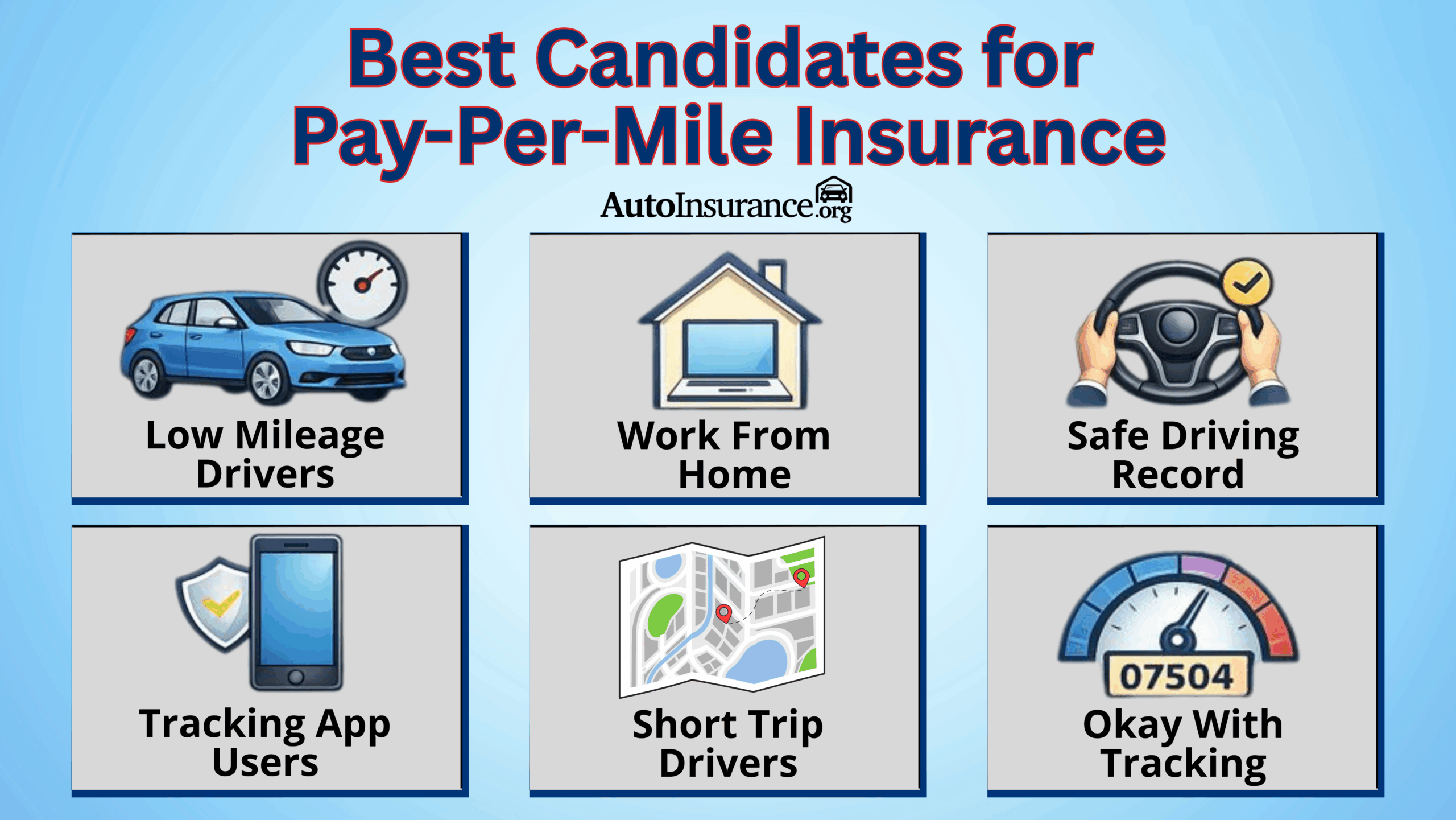
Before enrolling, check how the insurer tracks mileage and whether driving habits such as braking, speed, or phone use also affect your rate. Drivers with long commutes, frequent road trips, or unpredictable mileage may get a better value from a traditional policy. Seasonal drivers can also compare the best seasonal auto insurance options.
Pay-as-you-go insurance can help you save if you don’t drive much. The fewer miles you drive, the less you may pay.
Michael Vereecke Licensed Insurance Agent
Pay-per-mile insurance is a good choice for drivers who don’t drive much and have steady mileage. It’s important to look at the total yearly cost, not just the per-mile rate you see in ads.
Before signing up, drivers should check how mileage is tracked, any limits, and what coverage is included. If your driving habits change a lot, a traditional policy might still be cheaper.
When Traditional Auto Insurance May Cost Less
A traditional policy may cost less if you have a long commute, take frequent road trips, or regularly exceed the mileage that makes a pay-per-mile plan worthwhile. It may also be a better fit if your driving varies significantly from month to month, since higher or inconsistent mileage can reduce the value of mileage-based pricing.
Usage-based programs can also become less attractive when driving habits affect the discount. Frequent hard braking, rapid acceleration, phone use, or driving at higher-risk times may reduce your savings with some programs. Drivers who encounter these conditions regularly may find that a traditional policy offers more consistent pricing.
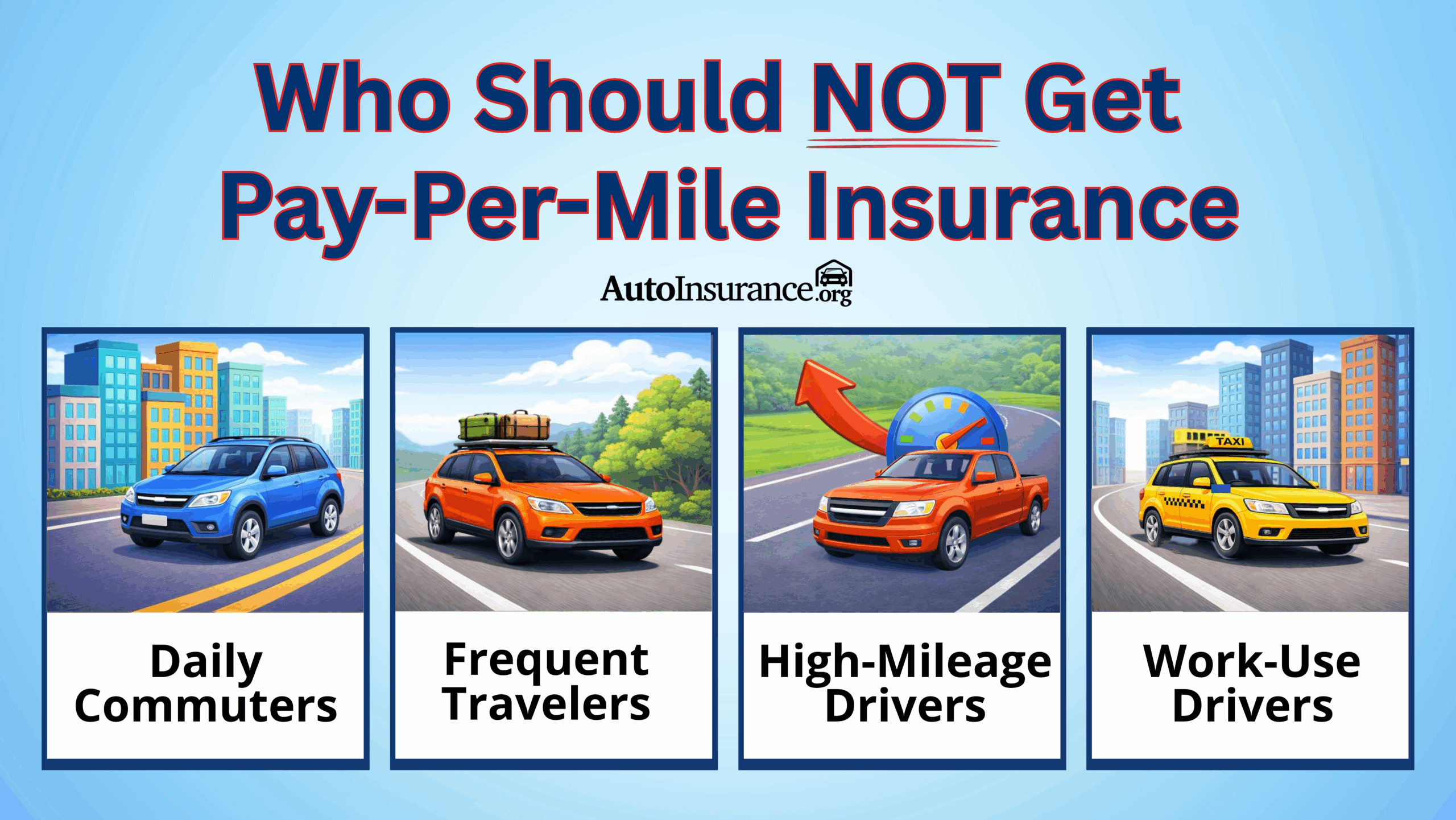
Compare the annual cost of both options using the same coverage limits and deductibles. This gives you a more useful comparison than looking only at an advertised per-mile rate or telematics discount. Include any fees or available discounts to see which policy provides the better overall value.
Top Pay-As-You-Go Companies in Florida
The best pay-as-you-go companies in Florida combine claims service and financial stability with pay-per-mile pricing, usage-based programs, or low-mileage discounts.
Review each company’s rates, coverage, mileage rules, financial rating, and program terms before choosing. You can also compare the best pay-as-you-go auto insurance companies nationally.
Liberty Mutual, Nationwide, and AAA earned the highest claims satisfaction scores in this comparison. Program eligibility, tracking methods, and potential savings differ by insurer.
Enter your ZIP code to compare pay-as-you-go auto insurance rates available in Florida.
#1 – Liberty Mutual: Best for Safe Drivers
Pros
- Safe-Driving Rewards: RightTrack looks at your braking, acceleration, mileage, and nighttime driving to figure out savings for safer drivers.
- Enrollment Discount: Eligible drivers get an initial discount when they enroll in RightTrack.
- Several Policy Discounts: Read our Liberty Mutual auto insurance review for information about bundling, multi-car, homeowner, and online purchase discounts.
Cons
- Tracking Results Matter: Hard braking, rapid acceleration, and frequent late-night driving can reduce the final RightTrack discount.
- Program Rules Vary: RightTrack availability, tracking periods, and discounts depend on the state and policy.
#2 – Nationwide: Best for Pay-Per-Mile Pricing
Pros
- True Pay-Per-Mile Pricing: With SmartMiles, you pay a fixed base premium and a per-mile rate, so your cost depends in part on how much you drive.
- Road-Trip Exception: SmartMiles can cap the number of billable miles on longer daily trips.
- Flexible Protection: Our review of Nationwide covers SmartMiles, liability, collision, comprehensive, roadside assistance, and rental reimbursement.
Cons
- Mileage Tracking Required: SmartMiles needs approved technology to record the vehicle’s mileage accurately.
- Less Value for Frequent Drivers: Long commutes and high monthly mileage can reduce the savings from per-mile pricing.
#3 – AAA: Best for Member Benefits
Pros
- Member Roadside Benefits: AAA membership may include towing, battery service, lockout help, fuel delivery, and flat-tire assistance.
- Telematics Savings: Some regional AAA clubs offer programs that reward safe driving and lower mileage.
- Member Discounts: Read our AAA auto insurance review for information about multi-policy, multi-vehicle, loyalty, and safe-driver savings.
Cons
- Membership Cost: Annual AAA dues can offset some of the savings on insurance.
- Regional Differences: Programs, discounts, rules, and underwriting companies vary among AAA clubs.
#4 – State Farm: Best for Low-Mileage Drivers
Pros
- Mileage-Based Savings: Drive Safe & Save rewards eligible drivers for lower mileage and safe driving habits.
- Local Agent Support: Florida drivers can get in-person help when picking coverage or handling claims.
- Multiple Policy Options: The State Farm car insurance review explains Drive Safe & Save, Steer Clear, accident-free savings, and policy add-ons.
Cons
- Not True Pay-Per-Mile: Drive Safe & Save offers discounts on a regular policy, not by the mile.
- Ongoing Monitoring: Eligible technology must regularly collect driving and mileage information.
#5 – The Hartford: Best for Older Drivers
Pros
- Older-Driver Benefits: The Hartford offers AARP-related features and savings designed for eligible mature drivers.
- TrueLane Program: TrueLane tracks braking, acceleration, speed, phone use, and driving time to calculate potential savings.
- Useful Policy Features: Read our The Hartford auto insurance review for information about RecoverCare, new-car replacement, roadside assistance, and lifetime repair guarantees.
Cons
- Membership Requirements: Some benefits and savings require an active AARP membership.
- Not Mileage-Based Pricing: TrueLane is a telematics program, not true pay-per-mile coverage.
#6 – Geico: Best for Mobile Tracking
Pros
- Simple App Tracking: DriveEasy uses your phone to track eligible trips.
- Safe-Driving Savings: DriveEasy uses recorded driving habits when determining eligible savings.
- Helpful Online Tools: Our Geico auto insurance company review covers DriveEasy, online claims, mobile ID cards, roadside assistance, and rental reimbursement.
Cons
- Rates May Increase: Risky driving recorded through DriveEasy may result in higher premiums.
- Trip Errors Possible: Users may need to correct trips recorded while they were passengers.
#7 – Allstate: Best for Driving Insights
Pros
- Driving Feedback: Drivewise allows participants to review their speed, braking, and other driving habits in the app.
- Pay-Per-Mile Option: Milewise offers mileage-based pricing in eligible locations.
- Coverage Options: Read our Allstate car insurance review for information about accident forgiveness, new-car replacement, roadside assistance, and rental reimbursement.
Cons
- Program Availability Varies: Drivewise and Milewise are not available to all drivers in Florida.
- Higher Base Rates: Allstate’s standard premiums may be higher than those of some competitors before discounts.
#8 – Travelers: Best for Driving Feedback
Pros
- Detailed Reports: IntelliDrive provides feedback on speed, braking, acceleration, phone use, and driving time.
- Defined Tracking Period: Driving is generally evaluated during a set monitoring period.
- Broad Protection: The Travelers auto insurance review covers accident forgiveness, new-car replacement, roadside assistance, and rental coverage.
Cons
- Premium Impact: Riskier driving can reduce savings and, in some cases, increase premiums.
- Eligibility Varies: The program’s availability and rules depend on your state and policy.
#9 – Progressive: Best for Personalized Rates
Pros
- Personalized Snapshot Rates: Snapshot uses mileage, braking, acceleration, phone use, and driving time to help personalize premiums.
- Driving Feedback: Drivers can review trip details and see which habits may help or hurt their results.
- Useful Digital Features: Read our Progressive auto insurance review for information about Snapshot, Name Your Price, roadside assistance, and custom parts coverage.
Cons
- Possible Rate Increase: Risky driving recorded by Snapshot can result in a higher rate.
- Not Mileage-Only: Braking, acceleration, phone use, and when you drive can also affect your results.
Frequently Asked Questions
Which companies offer the best pay-as-you-go auto insurance in Florida?
Liberty Mutual, Nationwide, and AAA are among the best choices for pay-as-you-go auto insurance in Florida, based on claims satisfaction. Liberty Mutual offers savings through RightTrack, Nationwide uses true pay-per-mile pricing with SmartMiles, and AAA provides member benefits and regional telematics options.
Is pay-as-you-go insurance worth it?
Pay-as-you-go insurance can be a good option for drivers who don’t drive much. To decide if it will save you money, look at the yearly cost, tracking requirements, and coverage options.
How do pay-as-you-go companies in Florida calculate monthly premiums?
Pay-as-you-go companies often set a fixed base rate and then add a fee for every mile you drive. Some programs also consider how you brake, accelerate, use your phone, when you drive, and other driving habits. You can find more details in how annual mileage affects auto insurance rates.
Can drive-as-you-go insurance save me money if I have a short commute?
Yes, drive-as-you-go insurance can save money if you have a short commute or just don’t drive very often. Since your premium is tied to how much you drive, lower mileage can mean lower costs.
What happens if I drive more miles than expected?
If you drive more than expected, you’ll likely pay more for the mileage portion of a true pay-per-mile policy. With a usage-based program, extra miles may also reduce your savings, even if your driving habits are otherwise safe.
Enter your ZIP code to compare pay-as-you-go auto insurance quotes available in Florida.
Is Geico or Progressive better for Florida pay-as-you-go policies?
Geico may be better for drivers who prefer mobile tracking through DriveEasy, while Progressive may suit drivers who want personalized feedback through Snapshot. Compare the program details in our Geico vs. Progressive auto insurance review.
Is AAA cheaper than Geico for pay-as-you-go insurance in Florida?
Geico has lower average rates than AAA in the current comparison, but your actual price will depend on your mileage, driving record, coverage, and discounts. AAA membership benefits may still provide additional value even when its premium is higher.
What are the different types of Allstate pay-as-you-go car insurance available in Florida?
Allstate offers Drivewise, a usage-based program that tracks driving behavior, and Milewise, a true pay-per-mile option where available. Availability can vary by location and policy.
Are there any Florida companies with pay-as-you-go auto insurance like Hugo?
Florida drivers looking for coverage similar to Hugo can compare Nationwide SmartMiles and usage-based options from Liberty Mutual, State Farm, Geico, Progressive, and Allstate. Read our Hugo Auto Insurance Review for details about its flexible coverage and payment structure.
Can you get pay-as-you-go car insurance with a poor driving record?
Yes, you can still get pay-as-you-go car insurance with a poor driving record, but you’ll usually pay more. Enter your ZIP code to see personalized Florida auto insurance rates from available providers.
What are the pros and cons in reviews for Florida pay-as-you-go car insurance?
Do pay-as-you-go insurance companies offer coverage for multiple vehicles?
Are there specific coverage requirements for car insurance in Florida?
Are there additional benefits to PAYG insurance aside from flexible payments?
Can I switch back to traditional auto insurance later?
Related Articles
-
Oct 2024

Best Alexandria, Minnesota Auto Insurance in 2026 (Your Guide to the Top 10 Companies)
-
Oct 2024
Best Auto Insurance After a DUI in Illinois (Top 9 Companies Ranked for 2026)
-
Oct 2024
Best Belleville, Michigan Auto Insurance in 2024 (Your Guide to the Top 10 Companies)
-
Sep 2026
Best Vermont Auto Insurance in 2026 (Compare the Top 10 Companies)
-
Oct 2024
Best Overland Park, Kansas Auto Insurance in 2026 (Find the Top 10 Companies Here)
-
Feb 2025
Cheap Gap Insurance in Washington (Top 10 Low-Cost Companies for 2026)





Get a FREE Quote in Minutes
Insurance rates change constantly — we help you stay ahead by making it easy to compare top options and save.