

How to Get Auto Insurance in 2026 (Follow These 5 Simple Steps)
To get auto insurance, start by deciding how much coverage you need and gathering personal and vehicle details. Then, get quotes from multiple companies, compare them by rates, reviews, and stability, and finally, purchase the best coverage. Minimum liability insurance starts from as low as $33 per month.
Read more Secured with SHA-256 Encryption





Find the Lowest Car Insurance Rates Today
Quote’s drivers have found rates as low as $42/month in the last few days!

Table of Contents
Table of Contents

Insurance and Finance Writer
Maria Hanson grew up with a unique passion and understanding of both the automotive and insurance industries. With one grandfather in auto mechanics and another working in insurance, you could say automotive insurance is in her blood. Her love of research and finance serves her well in studying insurance trends and liability. Maria has expanded her scope of expertise to home, health, and life...
Maria Hanson

Licensed Insurance Agent
Jeff is a well-known speaker and expert in insurance and financial planning. He has spoken at top insurance conferences around the U.S., including the InsuranceNewsNet Super Conference, the 8% Nation Insurance Wealth Conference, and the Digital Life Insurance Agent Mastermind. He has been featured and quoted in Nerdwallet, Bloomberg, Forbes, U.S. News & Money, USA Today, and other leading fina...
Jeff Root
Updated September 2025
How you get auto insurance is by determining your coverage needs, collecting personal and vehicle information, obtaining and comparing auto insurance quotes from multiple companies, and then selecting and purchasing the best coverage based on rates, reviews, and stability.
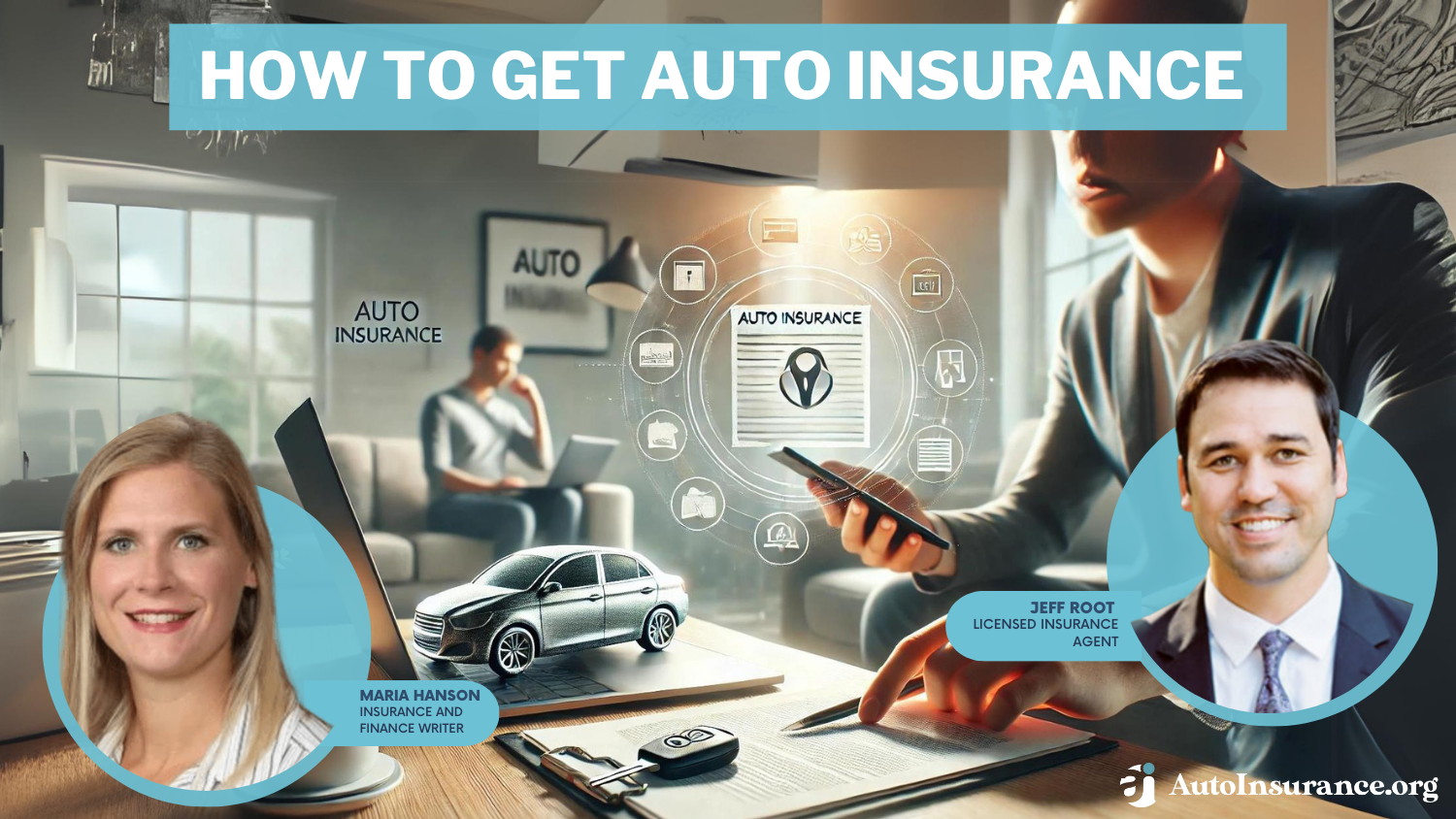
Before you start, ensure you have a clear understanding of your state’s minimum insurance requirements. Knowing your driving habits and financial situation will also help you choose coverage that fits your needs.
- How to Get Auto Insurance
- Best Rental Auto Insurance That Covers Additional Drivers in 2026 (Top 8 Companies)
- How to Get Insurance for a Car Not in Your Name in 2026
- How to Get Auto Insurance for the First Time in 2026 (7 Simple Steps)
- Buying Auto Insurance for a New Car (2026)
- How to Save Money by Bundling Insurance Policies in 2026 (7 Simple Steps)
- How to Insure a Car for 1 Month in 2026 (8 Simple Steps)
- How to Get Auto Insurance Without a License in 2026 (Follow These 5 Steps)
- How to Get SR-22 Auto Insurance from Geico in 2026 (Follow These 5 Steps)
- How to Insure a Commercial Truck for Personal Use in 2026
- How to Switch Auto Insurance Companies in 2026 (Clear Step-by-Step Instructions)
- How to Change Auto Insurance When Moving Out of State in 2026 (7 Easy Steps)
- How to Buy Auto Insurance Online Instantly in 2026 (Simple Step-by-Step Guide)
- Is buying dirt-cheap auto insurance safe? (2026)
- Buying Insurance FAQ
- Do you need proof of insurance to buy a car?
- Why Good Grades Matter to Your Auto Insurance Provider in 2026 (They Do Check!)
- Where to Get Pictures of My Vehicle Taken for Auto Insurance (2026)
- Can you get auto insurance with a suspended license?
- Can you get auto insurance without a title? (2026)
- Cheap Rebuilt Title Auto Insurance in 2026 (Unlock Big Savings From These 10 Companies!)
- What documents do you need to get auto insurance?
- What is an auto insurance price match?
- How Auto Insurance Companies Check Driving Records (2026)
- Can you get auto insurance without a license?
- What is a good deductible for auto insurance?
- Can you buy auto insurance on the weekend?
- How to Buy a Car Directly From an Insurance Company in 2026 (5 Easy Steps to Follow)
- Can I get auto insurance if I owe another company?
- Do auto insurance companies need your Social Security number? (Details for 2026)
- Do auto insurance companies check where you live? (+Why it Matters in 2026)
- Is auto insurance per car or per person??
- Do auto insurance companies check police records?
- Is auto insurance usually billed a month in advance? (2026)
- Best Auto Insurance for Drivers With a Canadian License in 2026 (Top 10 Companies Ranked)
- Can you buy auto insurance for someone else?
- Do auto insurance companies drug test? (2026)
- One-Day Auto Insurance (2026)
- Cheap Auto Insurance for 18-Year-Olds in 2026 (Save With These 8 Companies!)
- Can an auto insurance company deny you coverage? (Details for 2026)
- Do auto insurance companies check employment status?
- Is there a penalty for changing auto insurance?
- How much commission do auto insurance agents make? (2026)
- What do I do if I need auto insurance today?
- How Celebrities Purchase Auto Insurance for Their Cars (2026)
- 9 Best Companies for Credit-Based Auto Insurance (2026)
- Best Auto Insurance for Undocumented Immigrants in 2026 (Our Top 10 Companies)
Read on to learn more about each step in the process of finding the right auto insurance plan for you. We’ve outlined each step of how to get car insurance below.
- Step #1: Collect Application Information – Collect personal and vehicle details
- Step #2: Choose Coverage – Evaluate different coverage types to find the best fit
- Step #3: Get Quotes – Request quotes from various insurers to compare rates
- Step #4: Compare Companies – Compare insurers by quotes, reviews, and stability
- Step #5: Purchase Coverage – Choose an insurer and complete the payment
Buy Car Insurance Coverage in 5 Fast Steps
Step #1 – Collect Auto Insurance Application Information
The very first step you should take when looking to get auto insurance is to collect all the information you’ll need when applying for car insurance. You will need information about every car and driver that you are signing up for the insurance policy.
Read More: What documents do you need to get auto insurance?
The insurance company will also ask for information like your annual mileage and whether you use your car for work or pleasure. A representative will also ask other relevant questions to help calculate your rates.
Step #2 – Choose Auto Insurance Coverage
After collecting all of your driver and vehicle information, you need to decide what coverages you want to purchase for your vehicle. Start by checking your state’s minimum insurance requirements to ensure you’re meeting legal obligations. We’ve outlined the main coverages that drivers typically purchase and common add-on insurances.
Common Auto Insurance Coverage Options
| Coverage Name | What it Covers |
|---|---|
| Classic Car | Protects classic vehicles with agreed value coverage |
| Collision Coverage | Pays for vehicle damages after a collision |
| Comprehensive Coverage | Covers damages from non-collision events |
| Gap Insurance | Covers between loan and market value |
| Liability Coverage | Covers damages and injuries you cause to others |
| Medical Payments Coverage | Pays for medical expenses after an accident |
| New Car Replacement | Replaces your new car if totaled in the first year |
| Personal Injury Protection (PIP) | Covers medical expenses and lost wages after an accident |
| Rental Car Coverage | Pays for a rental car during vehicle repairs |
| Roadside Assistance | Provides help if your car breaks down |
| Uninsured/Underinsured Motorist Coverage | Protects you in an accident with an uninsured driver |
Not all coverages are required, but you may wish to consider additional coverages to avoid financial issues after an accident.
Liability Auto Insurance
Liability auto insurance is required in almost every state. The few states that allow drivers to forgo carrying liability insurance require drivers to post bonds or show proof of financial ability to pay for an accident.
However, the vast majority of drivers are legally required to carry liability insurance to drive.
For example, in New York, all drivers must carry minimum liability limits of 25/50/10, which means:
- $25,000 for bodily injury of one person ($50,000 for death)
- $50,000 for bodily injury for two or more people ($100,000 for death)
- $10,000 for property damage
Liability insurance consists of two parts — bodily injury liability insurance and property damage liability insurance. If you cause an accident, liability insurance will take care of the other parties’ property damage and medical bills. Discover the best New York auto insurance in our guide.
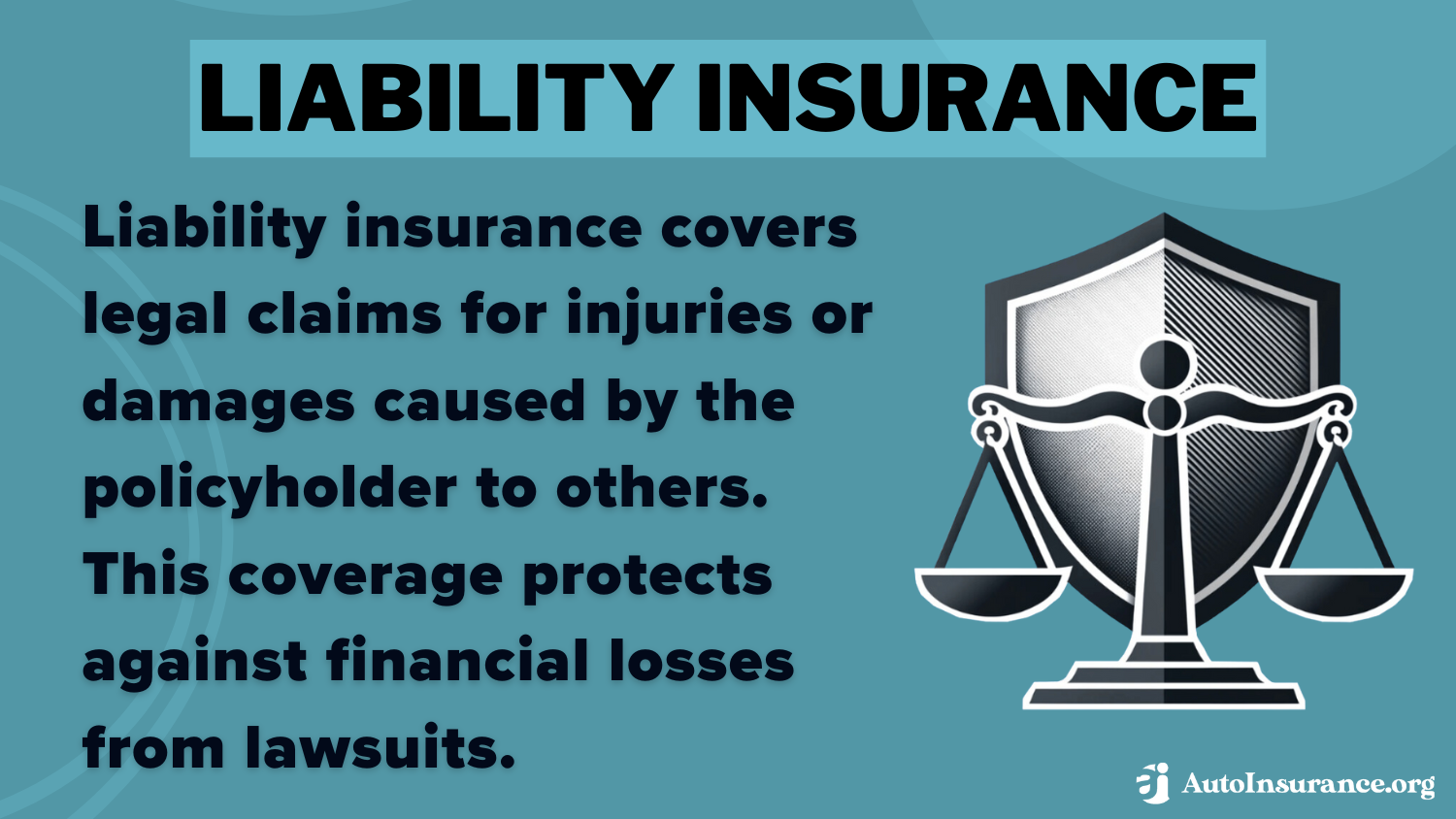
How much of the bill liability insurance will cover depends on your liability limit. You are required to carry the state minimum amount, but we recommend carrying a higher limit if you are financially able.
Keep in mind that the state minimum amounts are often not enough to pay for accident costs.
Uninsured/Underinsured Motorist Auto Insurance
According to the Insurance Information Institute (III), only twenty states and the District of Columbia have mandatory requirements for uninsured motorist coverage and underinsured motorist coverage.
However, it protects you if the driver who hits you doesn’t have enough insurance to cover your bills or has no insurance.
Uninsured/underinsured motorist coverage will pay for your accident bills. Therefore, you may want to consider this coverage, even if it is not required, if you live in a state with a high number of uninsured drivers (Read More: Best Underinsured Motorist (UIM) Coverage Auto Insurance Companies).
Personal Injury Protection Auto Insurance
A handful of states require personal injury protection (PIP) insurance. It will cover you and your passenger’s medical expenses, regardless of who caused the accident.
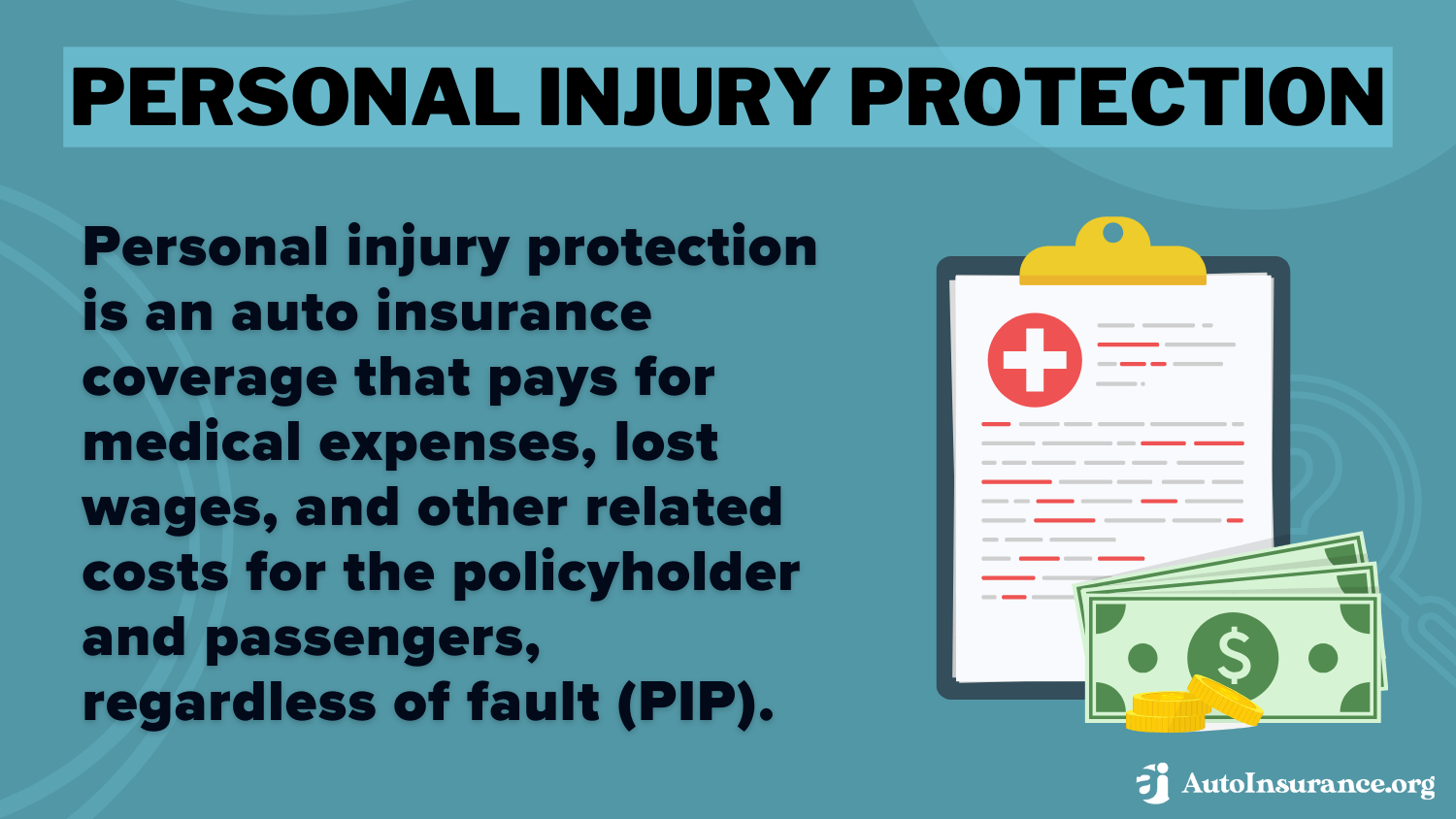
In addition to medical bills, PIP will usually cover lost wages due to injuries, rehabilitation, unexpected expenses due to injuries (such as childcare), and funeral costs.
Medical Payments Auto Insurance
Medical payments (MedPay) is similar to PIP coverage, but it doesn’t have all the extras that PIP has. MedPay only covers the medical bills of you and your passengers in an accident, regardless of who is at fault.
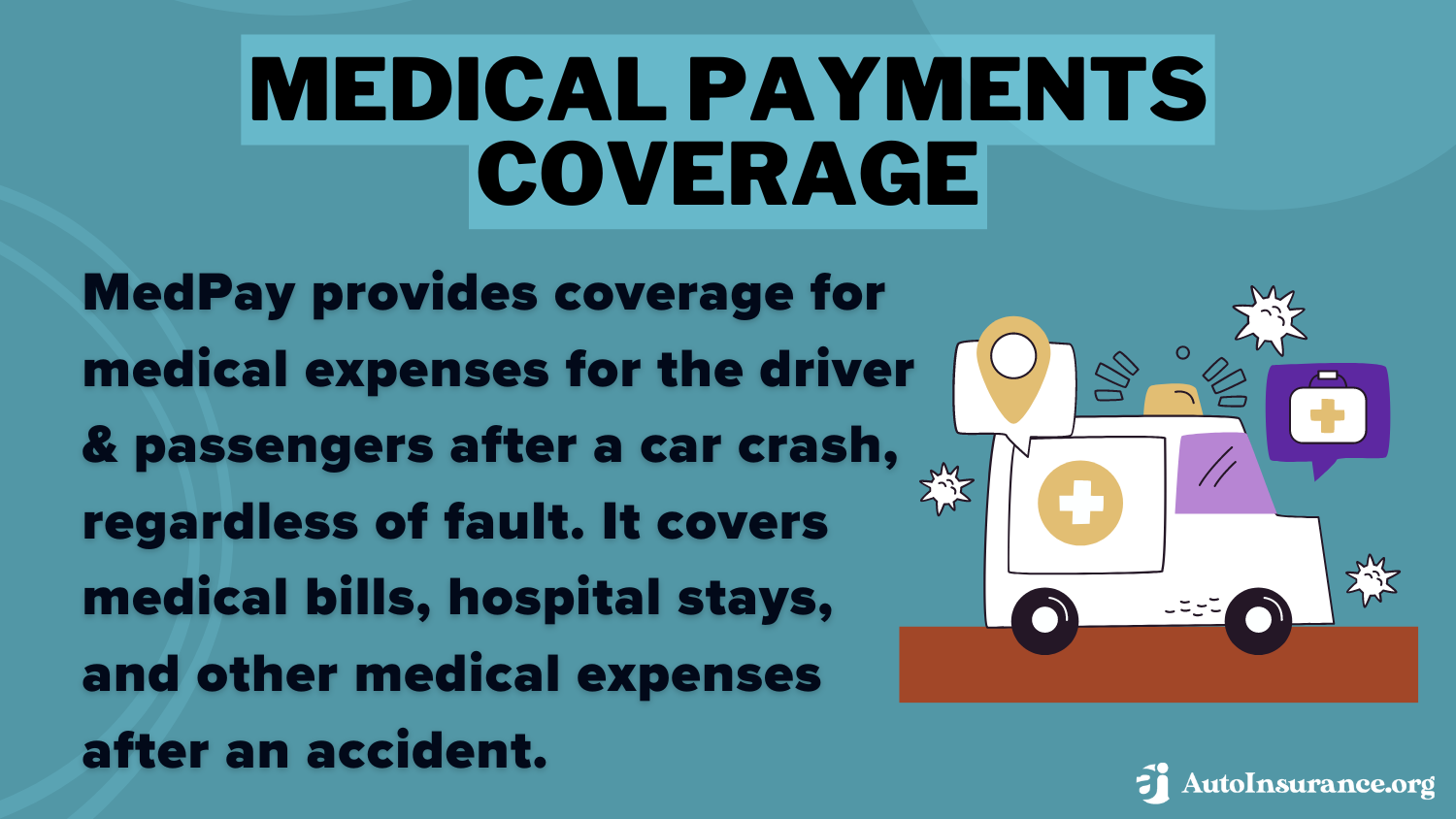
MedPay is not available in every state, so you’ll have to check if insurance companies in your area sell it if you want to add MedPay to your coverage. Learn more about MedPay in our article “Do you need medical payment coverage on auto insurance?”
Collision Auto Insurance
Collision auto insurance is a great coverage to have, even though it’s usually not required for the majority of drivers. However, if you have a lease or loan on your car, your lender will require you to carry collision insurance. If you crash into another vehicle or object, such as a fence or mailbox, collision insurance will pay for your repair bills or the value of your car if it is totaled.
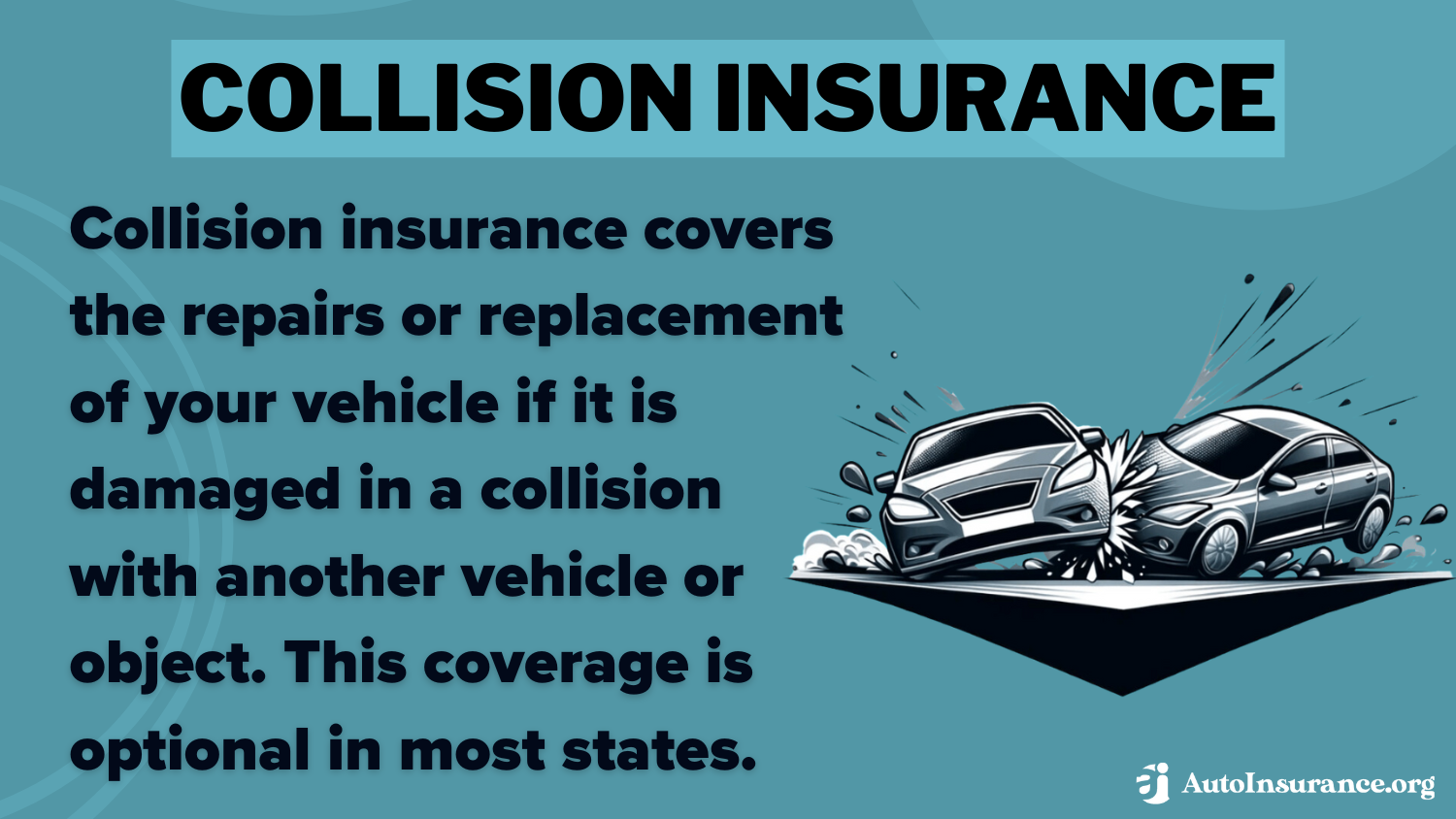
Without collision insurance, if you cause an accident, you will have to pay out of pocket for repairs or a new car if yours is totaled.
Comprehensive Auto Insurance
Comprehensive auto insurance is often sold in conjunction with collision insurance.
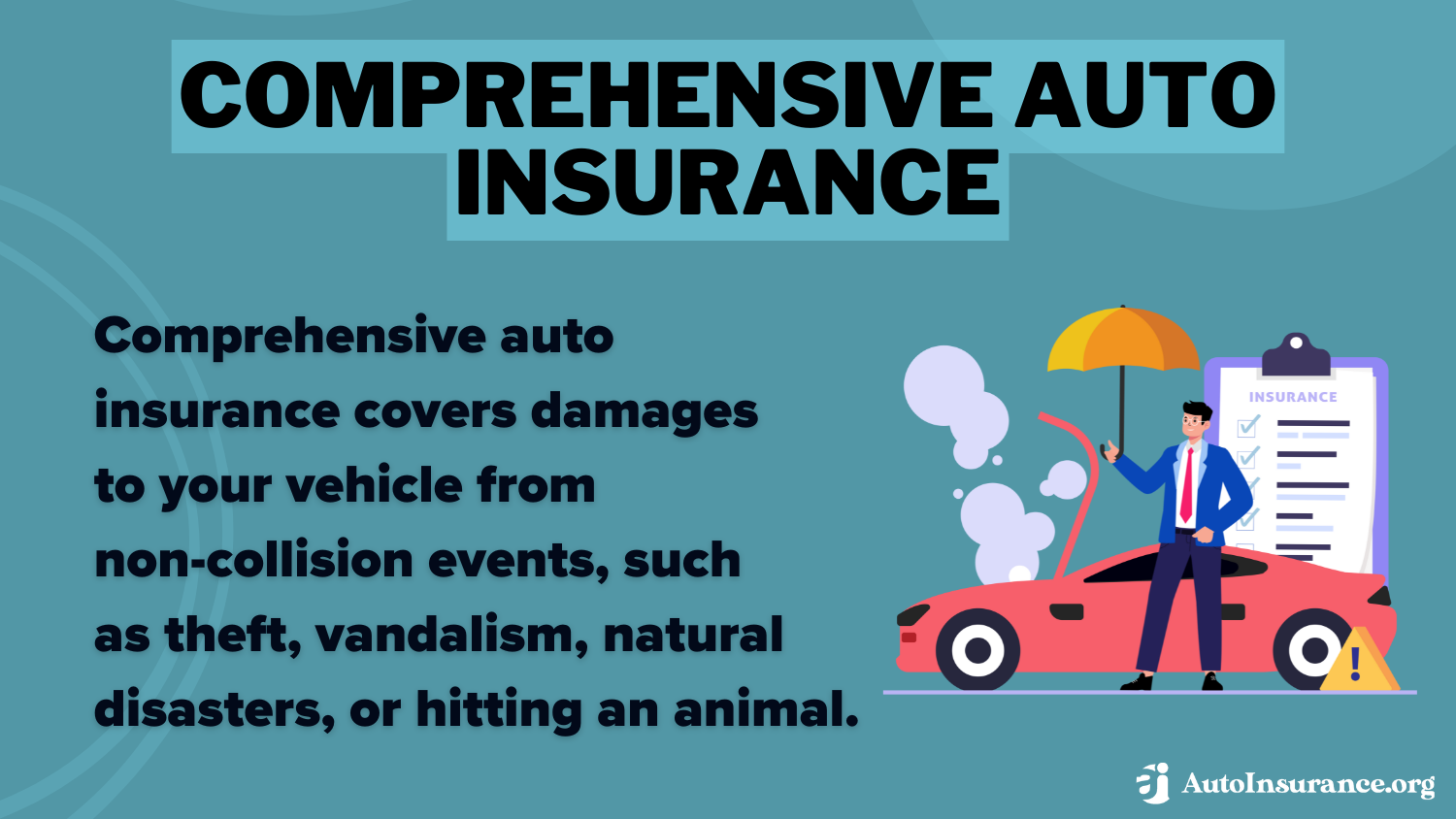
Like collision insurance, it is not required by the state, although your lender will require it if you have a lease or loan on your vehicle.
Comprehensive insurance will cover damage from the following:
- Animal collisions
- Weather conditions
- Vandalism
- Theft
- Falling objects
In some states, you may have to purchase fire and flood insurance separately to be fully covered against weather conditions.
Other Optional Auto Insurance Coverages
Insurance companies often offer a number of optional auto insurance coverages that aren’t required by states.
Some of the common add-on auto insurance coverages include the following:
- Classic Car Insurance: If your car is at least 20 years old and you rarely use it, you may need to purchase classic car insurance instead of regular car insurance (learn more: choosing insurance for a classic car).
- Gap insurance: Gap insurance pays the difference between the depreciated value of your car and what is left on your loan if your car is totaled in a covered claim.
- Modified Car Insurance: Suppose you’ve made modifications to your car, such as a custom paint job. In that case, modified car insurance will cover the higher cost of repairs or the replacement of the modifications in a covered accident.
- New Car Replacement: If you have a car that is less than two years old, new car replacement coverage will pay for a new car of the same make and model if you total yours.
- Rental Car Reimbursement Coverage: If your car is in the shop after a covered accident, rental car reimbursement will pay for a rental car until yours is repaired.
Roadside assistance can be added and will generally help if you run out of gas, your battery dies, you get a flat tire, you get locked out of your car, or you need a tow.
All of these coverages are optional, but they may be worth looking into if you want more complete coverage or specialty add-ons for convenience.
Remember, most lenders require gap insurance if you have a loan or lease. While gap coverage may be optional for some drivers, it may be required if you don’t own your car.
Step #3 – Get Auto Insurance Quotes
After you’ve decided what coverages you want on your policy and collected your relevant information, the next step is to start getting quotes from different insurance companies. Learn how to get multiple auto insurance quotes in our simple guide.
There are several ways to get quotes:
- Captive Agent: You can get quotes from an insurance company’s agent, also known as a captive agent, because they only sell for that company.
- Independent Agent: You can reach out to an independent agent or broker who sells for multiple companies and, therefore, can compare multiple different quotes for you.
- Online: You can get quotes from individual companies online or use a free quote comparison website to see quotes from multiple companies.
Getting auto insurance quotes is the best way to find reasonable pricing for the coverages you want, as auto insurance can vary dramatically in price depending on the company.
Below is a table showing the cheapest auto insurance company rates in each state.
Cheapest Auto Insurance Providers for SSI Recipients by State
| Insurance Company | State | Monthly Rates |
|---|---|---|
 | Alabama | $37 |
 | Alaska | $32 |
 | Arizona | $34 |
| Arkansas | $38 |
| California | $51 |
| Colorado | $42 |
| Connecticut | $42 |
| Delaware | $51 |
| Florida | $40 |
| Georgia | $33 |
| Hawaii | $26 |
| Idaho | $23 |
| Illinois | $29 |
| Indiana | $34 |
| Iowa | $24 |
| Kansas | $29 |
| Kentucky | $35 |
| Louisiana | $44 |
| Maine | $21 |
| Maryland | $100 |
| Massachusetts | $40 |
| Michigan | $68 |
| Minnesota | $48 |
| Mississippi | $36 |
| Missouri | $48 |
 | Montana | $23 |
| Nebraska | $26 |
| Nevada | $58 |
| New Hampshire | $34 |
| New Jersey | $68 |
| New Mexico | $33 |
| New York | $51 |
 | North Carolina | $20 |
| North Dakota | $24 |
| Ohio | $32 |
| Oklahoma | $48 |
| Oregon | $68 |
| Pennsylvania | $36 |
| Rhode Island | $32 |
| South Carolina | $54 |
| South Dakota | $11 |
| Tennessee | $31 |
| Texas | $29 |
| Utah | $50 |
| Vermont | $17 |
| Virginia | $42 |
| Washington | $34 |
| Washington, D.C. | $43 |
| West Virginia | $36 |
| Wisconsin | $31 |
| Wyoming | $18 |
The table above should give you an idea of what to expect, but it is always recommended to get your own individual quotes from at least three insurers to make sure you’re getting the best deal for your unique needs.
Step #4 – Compare Auto Insurance Companies
Once you’ve collected quotes from a few different companies, you should compare factors beyond price. Going with the cheapest option isn’t always the best choice, as the company may have a reputation for not paying out claims or for poor customer service.
We have put together a list of the top 10 insurance companies and rates for minimum coverage versus full coverage compared with the national average.
Auto Insurance Monthly Rates by Provider & Coverage Level
| Insurance Company | Minimum Coverage | Full Coverage |
|---|---|---|
 | $87 | $228 |
 | $62 | $166 |
 | $76 | $198 |
 | $43 | $114 |
 | $63 | $164 |
| $56 | $150 |
 | $47 | $123 |
| $53 | $141 |
 | $32 | $84 |
So, in addition to price, check the companies’ reviews and ratings, including customer reviews to financial reviews. A poorly rated company should probably be scratched from your list, even if it has the cheapest rates.
Step #5 – Purchase Auto Insurance Coverage
Wondering how to buy car insurance? Once you’ve chosen your auto insurance company, it is time to purchase your policy.
It is essential to make sure that your new auto insurance policy starts before your cancellation date for your old insurance policy. Otherwise, you may end up with an illegal lapse in insurance.Schimri Yoyo Licensed Agent & Financial Advisor
Lapses in insurance can raise your auto insurance rates, so be careful to avoid an insurance lapse, even if the lapse is only for a few days. If you do have a lapse, take a look at the best auto insurance companies that don’t penalize for a lapse in coverage.
- Buying Insurance FAQ
- Do you need proof of insurance to buy a car?
- Why Good Grades Matter to Your Auto Insurance Provider in 2026 (They Do Check!)
- Where to Get Pictures of My Vehicle Taken for Auto Insurance (2026)
- Can you get auto insurance with a suspended license?
- Can you get auto insurance without a title? (2026)
- Cheap Rebuilt Title Auto Insurance in 2026 (Unlock Big Savings From These 10 Companies!)
- What documents do you need to get auto insurance?
- What is an auto insurance price match?
- How Auto Insurance Companies Check Driving Records (2026)
- Can you get auto insurance without a license?
- What is a good deductible for auto insurance?
- Can you buy auto insurance on the weekend?
- How to Buy a Car Directly From an Insurance Company in 2026 (5 Easy Steps to Follow)
- Can I get auto insurance if I owe another company?
- Do auto insurance companies need your Social Security number? (Details for 2026)
- Do auto insurance companies check where you live? (+Why it Matters in 2026)
- Is auto insurance per car or per person??
- Do auto insurance companies check police records?
- Is auto insurance usually billed a month in advance? (2026)
- Best Auto Insurance for Drivers With a Canadian License in 2026 (Top 10 Companies Ranked)
- Can you buy auto insurance for someone else?
- Do auto insurance companies drug test? (2026)
- One-Day Auto Insurance (2026)
- Cheap Auto Insurance for 18-Year-Olds in 2026 (Save With These 8 Companies!)
- Can an auto insurance company deny you coverage? (Details for 2026)
- Do auto insurance companies check employment status?
- Is there a penalty for changing auto insurance?
- How much commission do auto insurance agents make? (2026)
- What do I do if I need auto insurance today?
- How Celebrities Purchase Auto Insurance for Their Cars (2026)
- 9 Best Companies for Credit-Based Auto Insurance (2026)
- Best Auto Insurance for Undocumented Immigrants in 2026 (Our Top 10 Companies)
Once you’ve arranged your policy start date, you can choose to pay in full for your new insurance policy, which may earn you a discount, or you can set up monthly payments. Once you’ve paid and your policy becomes active, you are good to drive.
Buying Auto Insurance Online vs. Through an Agent
Is it cheaper to buy insurance online or through an agent?
Buying auto insurance online is cheaper than purchasing through an agent. Online insurance providers often have lower operating costs and pass those savings on to customers. However, the difference in cost can vary depending on the insurer and the complexity of your insurance needs.
For straightforward policies, online platforms offer the best rates. However, if you require more personalized assistance or have complex insurance needs, the added value of an auto insurance broker or agent could justify the potentially higher cost.
In the end, the choice between buying auto insurance online and through an agent depends on your preferences for convenience versus personalized service. Consider what factors are most important to you—whether it’s saving money, receiving expert advice, or having ongoing support—and choose the method that best aligns with your needs.
Free Insurance Comparison
Compare Quotes From Top Companies and Save
Secured with SHA-256 Encryption
How to Get Auto Insurance Without a Drivers License
Securing auto insurance without a driver’s license is possible by first understanding your specific insurance needs and researching state regulations, as requirements can vary. You may need to provide documentation such as proof of vehicle ownership and registration to insurers willing to offer coverage without a license.
Always contact multiple insurance providers to find one that can accommodate your situation.
In some cases, you might consider purchasing a policy with a named driver who will operate the vehicle. Additionally, specialized insurers may offer solutions tailored for non-traditional scenarios. Comparing different policies will help you find the most appropriate and cost-effective coverage, ensuring you don’t break any auto insurance laws.
Getting Auto Insurance Coverage Has Never Been Easier
Getting auto insurance coverage requires a bit of research and preparation. Still, it is necessary to take these steps when purchasing auto insurance to ensure you get the right coverage and affordable rates.
Make sure you consider rates in addition to company reviews and ratings when buying auto insurance. To help you make an informed decision, explore our guide on auto insurance companies with the best customer service.
The best way to compare company rates is through rate comparison websites. Now that you know how to get auto insurance, use our free rate comparison tool to find the best rates in your area. Enter your ZIP code into our free quote tool below to find the best auto insurance providers for your needs and budget.
Frequently Asked Questions
How do I get auto insurance?
To get auto insurance, you need to decide on the coverage type and level you require (liability, comprehensive, collision, etc.). Then, gather your personal information, vehicle details, and driving history. You can obtain quotes from various insurers online, by visiting local offices, or through an agent. Learn how to find auto insurance agents in your area in our guide.
Compare the quotes based on coverage and cost, then choose the policy that best meets your needs. Finally, complete the application process and pay your premium.
Why is auto insurance important?
Auto insurance is essential because it provides financial protection in case of accidents, theft, or damage to your vehicle. It also helps cover medical expenses for injuries sustained by you or others involved in the accident. In many countries, having auto insurance is a legal requirement.
Can I get auto insurance with a bad driving record?
Yes, you can still get auto insurance with a bad driving record, but it may be more challenging and expensive. Insurance companies may consider you a higher risk and charge higher premiums. Shopping around and comparing quotes from multiple providers can help you find cheap auto insurance for a bad driving record.
Is it cheaper to buy insurance online or through an agent?
Buying insurance online is often cheaper because it reduces the cost of overhead for the insurance company. Online purchases may come with additional discounts that aren’t available through agents. However, agents can provide personalized advice, which could help you avoid coverage gaps or ensure you’re not over-insured.
Which company typically has the cheapest insurance?
Auto insurance companies that tend to be cheaper when getting auto insurance coverage include USAA, Geico, and State Farm. Read our State Farm auto insurance review for more details.
Which auto insurance insurance company is most expensive?
Companies like Allstate and Progressive tend to have more expensive auto insurance rates when buying auto insurance.
What are three things to consider before buying auto insurance?
Before you buy auto insurance, you should consider the following:
- What coverages you want to carry on your car.
- How much auto insurance you can afford to purchase.
- The rates offered by different auto insurance companies.
Checking out customer service ratings and claim satisfaction scores is a smart move to find a provider that not only offers great rates but also has your back when you need help the most.
What type of auto insurance is best?
The best type of auto insurance coverage is full coverage, as this offers the most protection for your car.
Can I get auto insurance without a car?
Yes, you can get auto insurance without a car by buying non-owner car insurance coverage. Learn how to get an auto insurance quote without a car in our guide.
Who typically has the cheapest car insurance?
Companies like Geico, State Farm, USAA (for military members and their families), and Progressive often offer some of the lowest rates. However, the cheapest provider can vary significantly based on factors such as location, driving record, age, and vehicle type. Learn more about Geico’s rates in our Geico auto insurance company review.
Is it safe to buy car insurance online?
How much is car insurance in NY?
Can I get car insurance instantly?
Who has the cheapest car insurance in Florida?
Is $500 a lot for car insurance?
When will my new car insurance policy be activated?
Who is cheaper, Geico or Progressive?
Which company is best for car insurance?
Is it best to shop around for auto insurance?
Related Articles
-
Dec 2024

Do mid-contract changes affect auto insurance rates? (2026)
-
Jan 2025
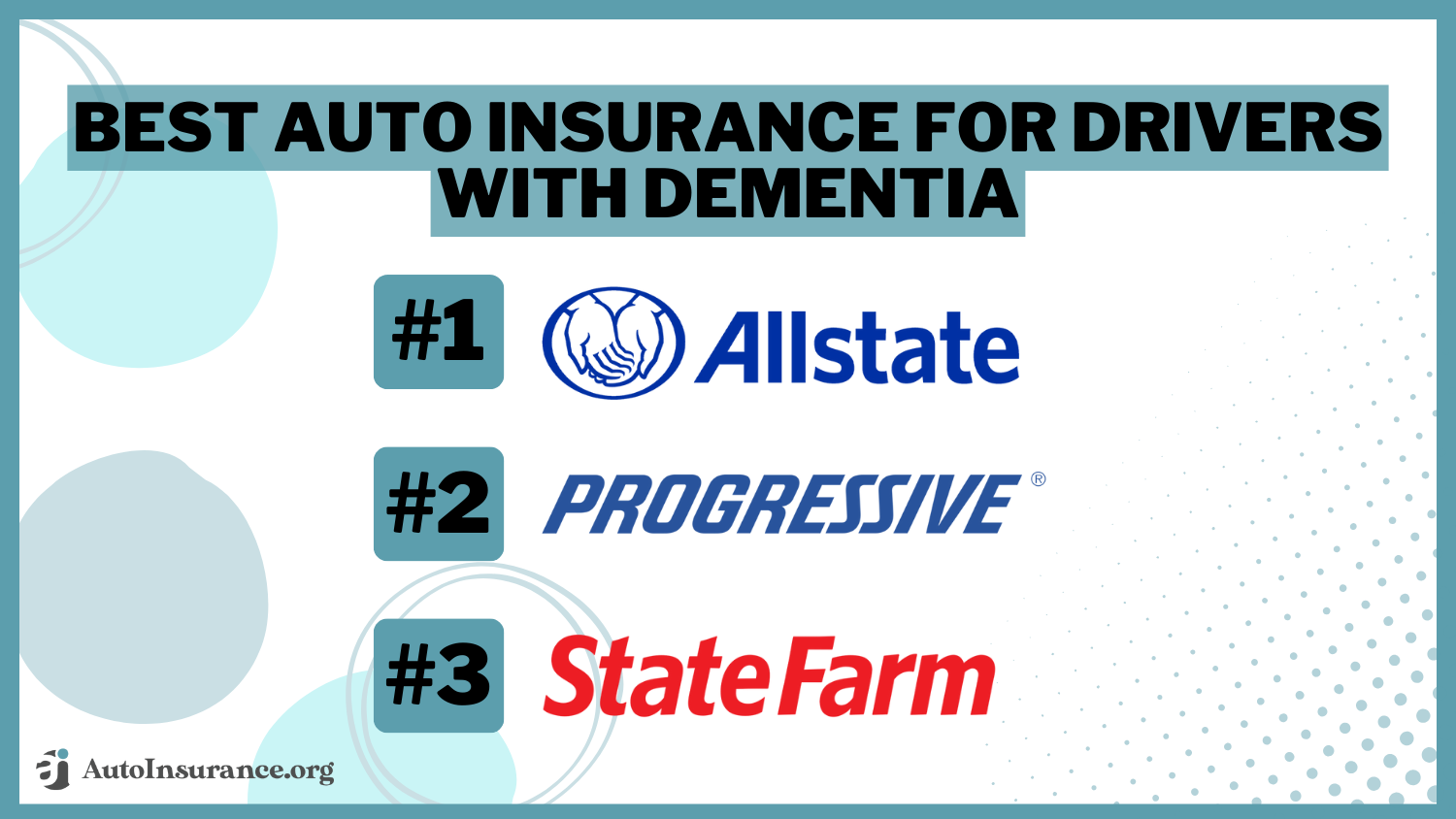
Best Auto Insurance for Drivers with Dementia in 2026 (10 Expert Favorites)
-
Oct 2025
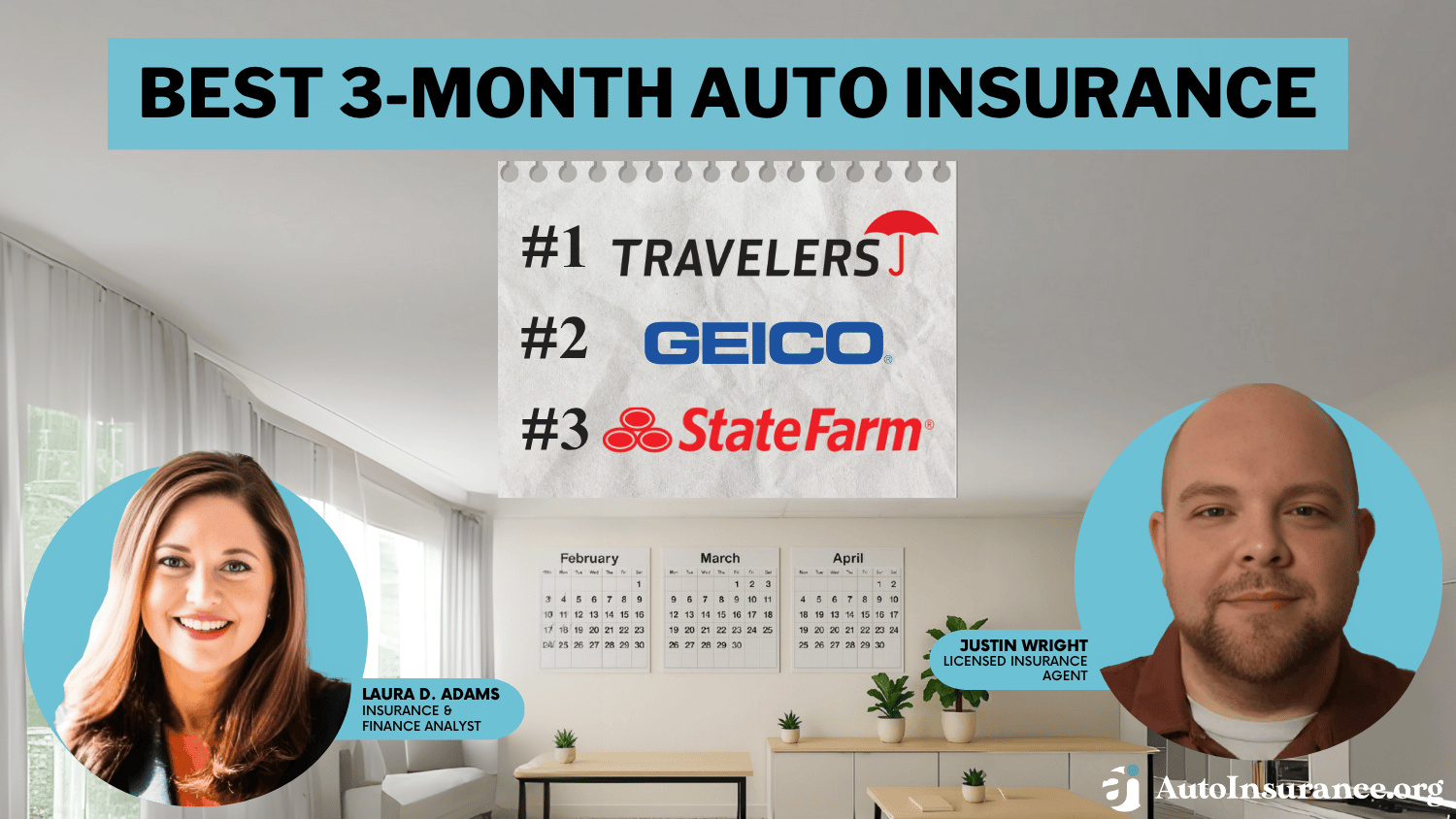
Best 3-Month Auto Insurance in 2026 (Top 10 Company Ranking)
-
Nov 2024
Best Auto Insurance Discounts for American Federation of Government Employees (AFGE) in 2026 (Save up to 25% With These Companies)
-
Oct 2025
Cheap Online-Only Auto Insurance in 2026 (Secure Low Rates With These 10 Companies!)
-
Dec 2025

How to Get Multiple Auto Insurance Quotes in 2026 (8 Simple Steps)


Get a FREE Quote in Minutes
Insurance rates change constantly — we help you stay ahead by making it easy to compare top options and save.
Secured with SHA-256 Encryption