Auto Insurance Rates by State (2026)
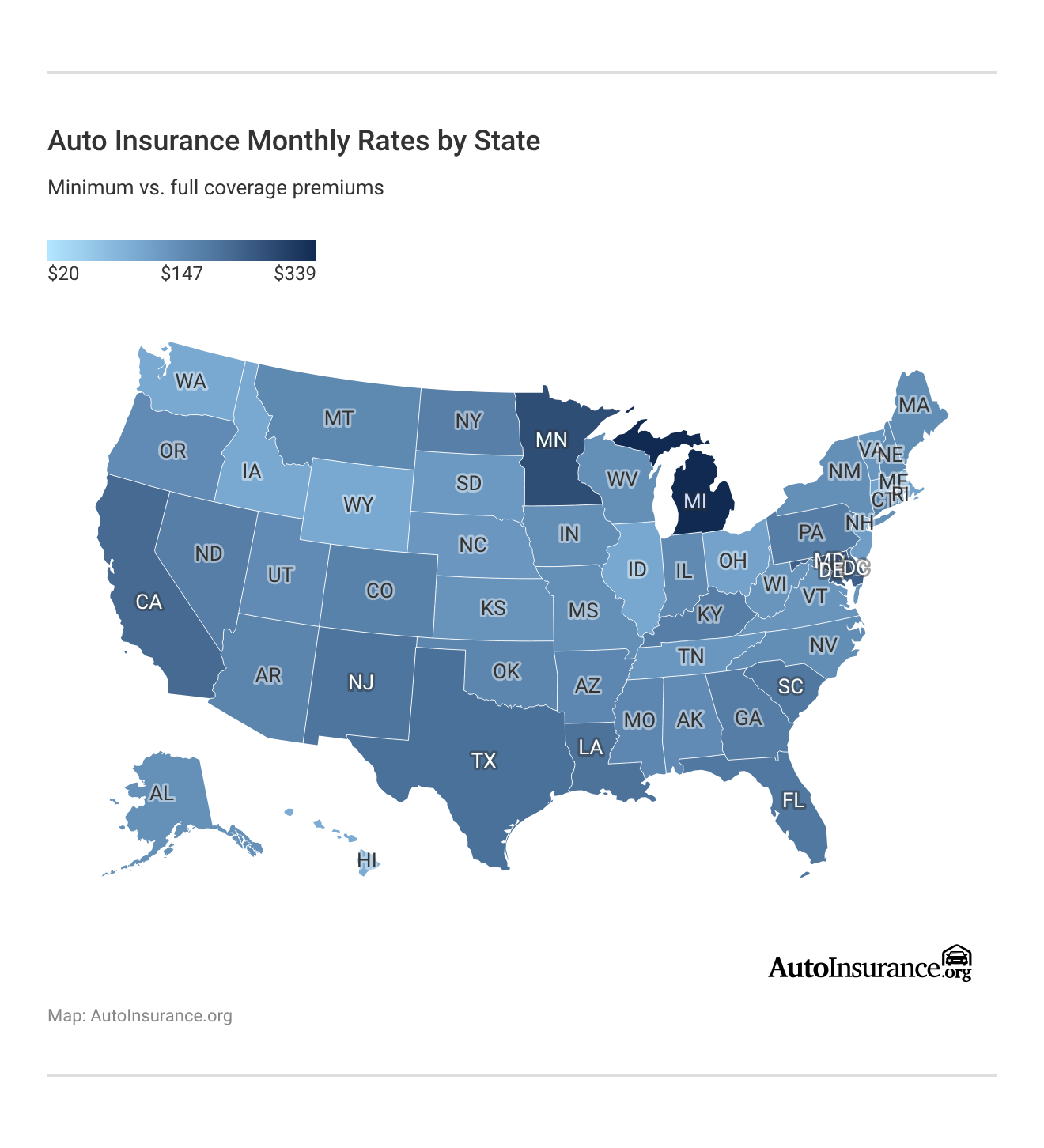
Auto insurance rates by state vary by coverage requirements, fault designation, and factors such as age, gender, and driving record. Wyoming is the state with the cheapest car insurance at $24 a month, compared to Delaware at $160 per month. The number of uninsured drivers in your state also affects premiums.
Read more




Table of Contents
Table of Contents

Insurance and Finance Writer
Laura Gunn is a former teacher who uses her passion for writing and learning to help others make the best decisions regarding finance and insurance. After stepping away from the classroom, Laura used her skills to write across many different industries including insurance, finance, real estate, home improvement, and healthcare. Her experience in various industries has helped develop both her ...
Laura Gunn

Managing Editor
Daniel S. Young began his professional career as chief editor of The Chanticleer, a Jacksonville State University newspaper. He also contributed to The Anniston Star, a local newspaper in Alabama. Daniel holds a BA in Communication and is pursuing an MA in Journalism & Media Studies at the University of Alabama. With a strong desire to help others protect their investments, Daniel has writt...
Daniel S. Young

Licensed Insurance Agent
Chris is the founder of Abrams Insurance Solutions and Marcan Insurance, which provide personal financial analysis and planning services for families and small businesses across the U.S. His companies represent nearly 100 of the top-rated insurance companies. Chris has been a licensed insurance agent since 2009 and has active insurance licenses in all 50 U.S. states and D.C. Chris works tireles...
Chris Abrams
Updated November 2026
Commute times, theft rates, cost of living, and coverage requirements all impact auto insurance rates by state.
- WY, VT, and IA have the cheapest car insurance by state
- No-fault states that require PIP often have higher premiums
- Louisiana has the highest full coverage rates at $310 monthly
The average car insurance rate by state is between $20 and $40 a month for minimum coverage, and around $200 monthly for full coverage.
More rural states, especially in the Midwest, tend to have cheaper state auto insurance rates. State Farm offers minimum rates as low as $13 monthly in South Dakota. Shop Now: Best Auto Insurance Companies
Review state-required coverage before buying so you aren’t driving underinsured. Enter your ZIP code to compare auto insurance by state and get free quotes.
State-by-State Auto Insurance Premiums
Many factors affect auto insurance rates, including where you live. Your state creates insurance laws and coverage requirements that impact the cost of coverage.
Drivers in states with expensive car insurance can pay two or three times as much for the same coverage as someone in a state with inexpensive insurance.
The rates shown reflect average premiums for a 45-year-old male driver with a clean driving record and excellent credit. Estimates account for state-specific coverage requirements and local risks, but your actual costs will vary.
While Wyoming has the lowest rate at $24 a month for minimum coverage, Delaware drivers pay $106 monthly. The required policies in each state play a role here. Both states require bodily injury and property damage liability, but Delaware also requires a large amount of personal injury protection (PIP), increasing premiums.
Select your state from the list to get more detailed information about the cost of auto insurance near you.
Auto Insurance in Your State
Additionally, some states require drivers to carry uninsured and underinsured motorist coverage (UM/UIM), especially if there are a lot of uninsured drivers in the state, which can raise rates. For example, Mississippi has a 28% uninsured driver rate.
Drivers who skip car insurance risk paying out of pocket for damages and injuries in an accident. Check local coverage options to find affordable car insurance prices by state.
Cheapest Car Insurance by State
What states have the cheapest auto insurance rates? Each state has different insurance rates, and some are significantly cheaper than others.
Estimated rates are based on minimum state-mandated coverage, driver information, and other factors like population, natural disasters, and crime rates. Since each state makes its own insurance regulations, rates vary widely.
10 States With the Cheapest Auto Insurance
| State | Rank | Monthly Rate | Reason |
|---|---|---|---|
| Wyoming | #1 | $24 | Low traffic, few claims |
| Vermont | #2 | $25 | Low traffic, rural roads |
| Iowa | #3 | $27 | Low thefts, few claims |
| North Dakota | #4 | $30 | Low traffic, few accidents |
| Maine | #5 | $31 | Few claims, many insurers |
| Nebraska | #6 | $31 | Low traffic, rural roads |
| Ohio | #7 | $32 | Safe drivers, low repair costs |
| South Dakota | #8 | $32 | Few claims, less traffic |
| Wisconsin | #9 | $34 | Low costs, less traffic |
| Alaska | #10 | $35 | Fewer drivers, few claims |
The cheapest car insurance states typically have lower populations, less traffic, fewer accidents, and fewer weather-related disasters.
Drivers in Wyoming and Vermont enjoy the lowest rates because rural roads aren’t as congested and claims are rare. See More: Best Pay-As-You-Go Auto Insurance in Wyoming
Highest Car Insurance Costs by State
Some of the states on this list are no-fault states, including Florida and New York, meaning each driver pays their own damages regardless of who caused the accident.
In addition, several of these states require drivers to carry PIP coverage to pay for medical costs. Use our guide to find affordable rates: Best Auto Insurance Companies for Cheap Personal Injury Protection
Many of these states also have a high number of uninsured drivers, like D.C. and Maryland. In that case, the average auto insurance rate by state will go up to compensate for damages caused by drivers without insurance.
10 States With the Most Expensive Auto Insurance
| State | Rank | Monthly Rate | Reason |
|---|---|---|---|
| Delaware | #1 | $106 | Dense traffic, required PIP |
| Florida | #2 | $101 | No-fault laws, frequent claims |
| New Jersey | #3 | $94 | Dense traffic, lawsuits |
| New York | #4 | $89 | Dense traffic, theft |
| Connectict | #5 | $87 | High costs, required UM |
| Louisiana | #6 | $83 | Frequent claims, lawsuits |
| Nevada | #7 | $76 | Urban congestion, theft |
| Washington, D.C. | #8 | $75 | Dense traffic, uninsured |
| Maryland | #9 | $68 | Required PIP and UM |
| Georgia | #10 | $65 | Dense traffic, uninsured |
These estimates reflect minimum liability coverage requirements, driver characteristics, and regional claim risks. Where you live in the state makes a difference, and cities with high vehicle theft rates or areas with weather-related claims will see higher rates.
Quoting auto insurance rates by ZIP code within your state can help you find more accurate pricing.
Comparing The Average Car Insurance Cost by Driver
No matter where you live, your age affects auto insurance rates. Younger drivers are less experienced behind the wheel and more likely to be in an accident. Find Savings Here: Companies With the Cheapest Teen Auto Insurance
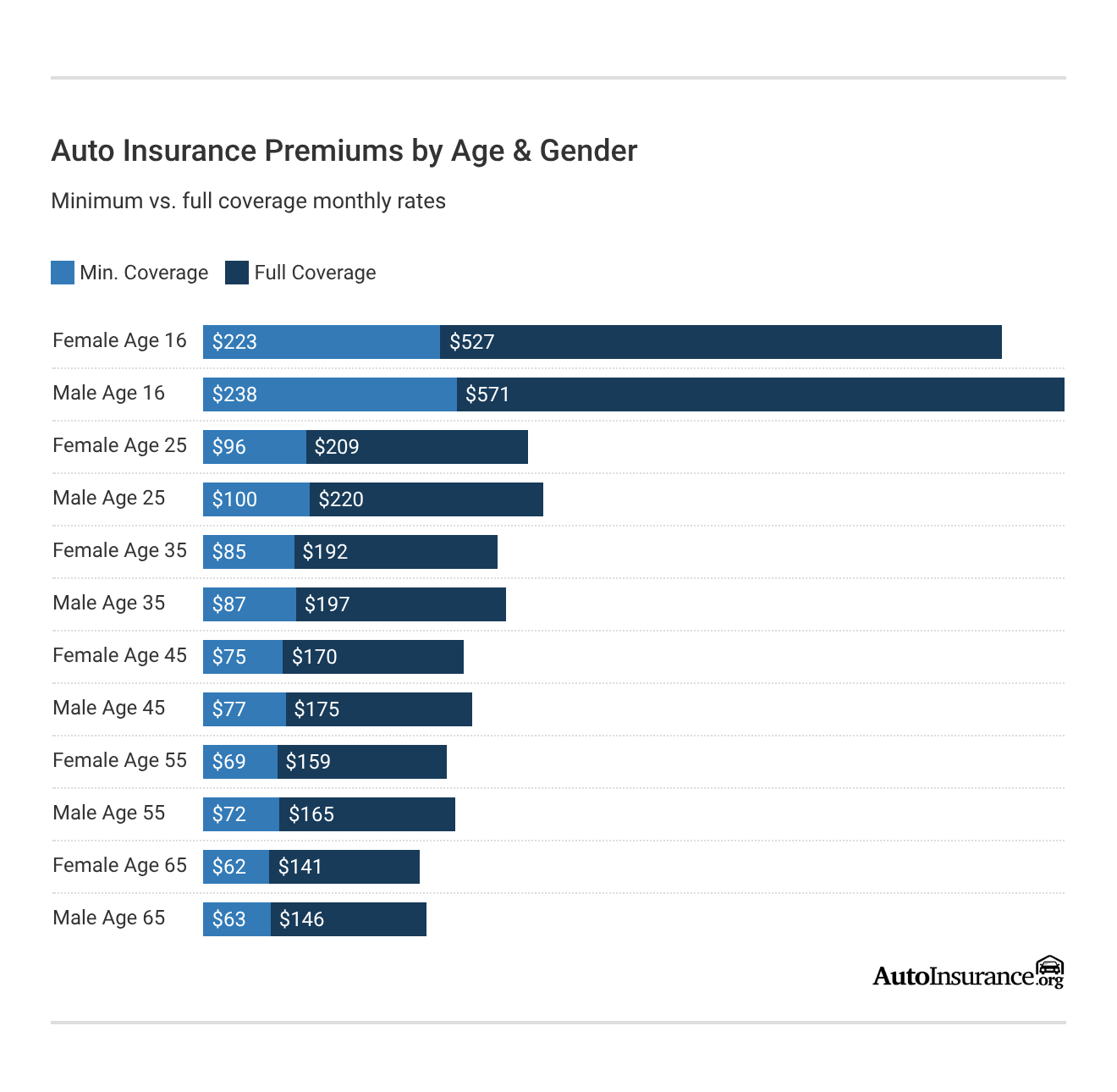
Insurers charge teens and drivers under 25 higher premiums than older, more experienced drivers. In addition, male drivers have higher average insurance rates by state. Teen males pay the most, at $238 per month for minimum coverage and $571 for full coverage.
Estimates show average premiums for drivers with excellent credit and a clean driving history.
Your quotes will vary based on personal variables, like gender and location, and the kind of car you drive.
Statistics show that women take fewer risks and get in fewer accidents, so they pay less for auto insurance than men at any age.
Dani Best Licensed Insurance Producer
The price gap between male and female drivers tends to narrow as they get older. Compare average car insurance rates by age and state to see where that gap is widest in your area.
However, these states don’t allow insurers to use gender when determining costs: California, Hawaii, Massachusetts, Michigan, North Carolina, and Pennsylvania.
Clean Record vs. High-Risk Car Insurance Premiums by State
Drivers with accidents, speeding tickets, and DUIs are considered high-risk for another violation and pay much higher rates than someone with a clean record. Find affordable coverage in our guide: Best Auto Insurance Companies for High-Risk Drivers
High-risk minimum coverage rates are calculated using state-specific premium increases. Individual quotes will vary based on city and the severity and frequency of your driving violations.
Auto Insurance Monthly Rates by State and Driving Record
| State | Clean Record | One Ticket | One Accident | One DUI |
|---|---|---|---|---|
| Alabama | $43 | $64 | $78 | $97 |
| Alaska | $35 | $59 | $71 | $78 |
| Arkansas | $55 | $74 | $86 | $92 |
| Arizona | $42 | $73 | $81 | $98 |
| California | $63 | $102 | $141 | $200 |
| Colorado | $46 | $67 | $82 | $94 |
| Connecticut | $87 | $110 | $151 | $179 |
| Delaware | $106 | $134 | $145 | $178 |
| Florida | $75 | $99 | $128 | $148 |
| Georgia | $101 | $78 | $92 | $156 |
| Hawaii | $65 | $92 | $108 | $196 |
| Iowa | $35 | $50 | $56 | $67 |
| Idaho | $35 | $40 | $51 | $62 |
| Illinois | $38 | $73 | $90 | $107 |
| Indiana | $37 | $61 | $73 | $85 |
| Kansas | $27 | $33 | $39 | $49 |
| Kentucky | $43 | $52 | $66 | $89 |
| Louisiana | $59 | $82 | $92 | $104 |
| Maine | $83 | $70 | $86 | $130 |
| Maryland | $31 | $58 | $72 | $96 |
| Massachusetts | $68 | $155 | $192 | $224 |
| Michigan | $52 | $68 | $74 | $150 |
| Minnesota | $60 | $202 | $251 | $362 |
| Mississippi | $49 | $110 | $139 | $177 |
| Missouri | $42 | $64 | $78 | $84 |
| Montana | $45 | $70 | $81 | $98 |
| Nebraska | $35 | $51 | $66 | $77 |
| Nevada | $31 | $48 | $57 | $61 |
| New Hampshire | $76 | $79 | $99 | $108 |
| New Jersey | $37 | $65 | $87 | $90 |
| New Mexico | $94 | $161 | $181 | $203 |
| New York | $40 | $56 | $63 | $87 |
| North Carolina | $89 | $133 | $162 | $387 |
| North Dakota | $54 | $67 | $83 | $103 |
| Ohio | $30 | $63 | $78 | $92 |
| Oklahoma | $32 | $54 | $62 | $66 |
| Oregon | $38 | $67 | $81 | $98 |
| Pennsylvania | $60 | $88 | $82 | $126 |
| Rhode Island | $35 | $81 | $81 | $138 |
| South Carolina | $63 | $79 | $98 | $114 |
| South Dakota | $57 | $101 | $129 | $190 |
| Tennessee | $32 | $29 | $34 | $38 |
| Texas | $43 | $46 | $59 | $62 |
| Utah | $52 | $93 | $114 | $132 |
| Virginia | $59 | $82 | $110 | $123 |
| Vermont | $25 | $53 | $67 | $89 |
| Washington | $44 | $76 | $84 | $86 |
| Wisconsin | $41 | $58 | $68 | $73 |
| Washington, D.C. | $48 | $61 | $71 | $86 |
| West Virginia | $34 | $57 | $67 | $84 |
| Wyoming | $24 | $32 | $34 | $45 |
State laws also govern how insurers can raise premiums after certain driving offenses, so the same violation may carry a steeper rate increase in one state than another. This is why drivers in Iowa see only a $5 increase per month after a speeding ticket, compared to $15 in Idaho.
In some states, an accident or ticket raises rates for up to five years, and a DUI can affect rates for ten years. Get quotes online after a moving violation to find the cheapest auto insurance rate by state based on your record.
Compare Now: Cheap Auto Insurance for High-Risk Drivers in Louisiana
How Credit Score Impacts the Cost of Auto Insurance by State
Many drivers are unaware that their credit score impacts auto insurance rates. Drivers with a higher credit score are less likely to file claims and typically can pay for damages out of pocket.
Auto Insurance Monthly Rates by Credit Score
| Company | Excellent (800+) | Good (670-799) | Fair (580-669) | Poor (<580) |
|---|---|---|---|---|
| Allstate | $78 | $85 | $107 | $169 |
| American Family | $69 | $80 | $98 | $131 |
| Erie | $56 | $65 | $79 | $103 |
| Farmers | $74 | $87 | $106 | $141 |
| Geico | $55 | $60 | $76 | $120 |
| Liberty Mutual | $82 | $96 | $118 | $157 |
| Nationwide | $63 | $73 | $90 | $117 |
| Progressive | $71 | $78 | $98 | $155 |
| State Farm | $59 | $64 | $81 | $128 |
| Travelers | $70 | $82 | $101 | $133 |
Monthly minimum-coverage premiums are estimates for a 45-year-old male with a clean driving record. Actual premiums vary by insurer, location, coverage requirements, and applicable state laws.
Some states prohibit or restrict credit-based auto insurance pricing. California, Hawaii, and Massachusetts don’t allow insurers to use credit scores to calculate rates. Michigan prohibits the use of conventional credit scores, although some credit-derived insurance scoring remains permissible.
Free Insurance Comparison
Compare Quotes From Top Companies and Save
Auto Insurance Provider Comparison by State
Drivers have multiple car insurance companies to choose from within each state. While rates vary from state to state, they also differ by company within a state. So, drivers get vastly different quotes for the same coverage.
To calculate rates, every car insurance company looks at personal factors like age and driving record. However, each company uses a different formula to determine rates, so quotes are typically different.
For example, one company may not raise your rates after your first speeding ticket, but another may raise rates considerably until the ticket comes off your driving record.
Auto Insurance Monthly Rates by State & Provider
| State | Allstate | Geico | Progressive | State Farm | Travelers |
|---|---|---|---|---|---|
| Alabama | $66 | $47 | $47 | $31 | $46 |
| Alaska | $52 | $37 | $53 | $52 | $37 |
| Arkansas | $95 | $47 | $44 | $42 | $54 |
| Arizona | $78 | $45 | $63 | $39 | $53 |
| California | $102 | $51 | $67 | $55 | $63 |
| Colorado | $74 | $57 | $53 | $41 | $52 |
| Connecticut | $84 | $39 | $107 | $52 | $45 |
| Delaware | $126 | $94 | $55 | $71 | $50 |
| Florida | $82 | $87 | $68 | $44 | $75 |
| Georgia | $90 | $87 | $63 | $59 | $60 |
| Hawaii | $52 | $34 | $35 | $28 | $33 |
| Iowa | $51 | $36 | $36 | $21 | $22 |
| Idaho | $109 | $43 | $55 | $41 | $54 |
| Illinois | $75 | $36 | $37 | $37 | $37 |
| Indiana | $37 | $32 | $23 | $19 | $28 |
| Kansas | $62 | $44 | $50 | $32 | $34 |
| Kentucky | $104 | $64 | $50 | $44 | $62 |
| Louisiana | $64 | $60 | $50 | $38 | $49 |
| Maine | $61 | $44 | $54 | $33 | $36 |
| Maryland | $197 | $111 | $118 | $105 | $101 |
| Massachusetts | $80 | $57 | $53 | $43 | $49 |
| Michigan | $278 | $75 | $104 | $143 | $126 |
| Minnesota | $115 | $53 | $73 | $48 | $67 |
| Mississippi | $75 | $51 | $61 | $42 | $45 |
| Missouri | $79 | $50 | $53 | $46 | $61 |
| Montana | $60 | $35 | $67 | $27 | $43 |
| Nebraska | $47 | $38 | $36 | $26 | $39 |
| Nevada | $87 | $85 | $44 | $55 | $48 |
| New Hampshire | $76 | $29 | $37 | $34 | $40 |
| New Jersey | $144 | $95 | $86 | $104 | $124 |
| New Mexico | $76 | $39 | $41 | $33 | $43 |
| New York | $127 | $79 | $63 | $91 | $97 |
| North Carolina | $109 | $37 | $20 | $49 | $64 |
| North Dakota | $54 | $36 | $44 | $30 | $36 |
| Ohio | $64 | $36 | $46 | $38 | $34 |
| Oklahoma | $60 | $47 | $49 | $39 | $46 |
| Oregon | $112 | $51 | $56 | $55 | $70 |
| Pennsylvania | $79 | $52 | $79 | $40 | $40 |
| Rhode Island | $80 | $99 | $49 | $32 | $44 |
| South Carolina | $90 | $91 | $70 | $59 | $70 |
| South Dakota | $26 | $36 | $20 | $13 | $19 |
| Tennessee | $77 | $34 | $52 | $65 | $39 |
| Texas | $117 | $63 | $70 | $51 | $58 |
| Utah | $80 | $52 | $65 | $71 | $60 |
| Virginia | $66 | $34 | $83 | $40 | $34 |
| Vermont | $70 | $64 | $42 | $44 | $51 |
| Washington | $65 | $51 | $34 | $39 | $46 |
| Wisconsin | $73 | $44 | $50 | $35 | $46 |
| Washington, D.C. | $150 | $118 | $71 | $70 | $64 |
| West Virginia | $61 | $32 | $47 | $30 | $37 |
| Wyoming | $37 | $28 | $25 | $19 | $23 |
This table shows the cheapest car insurance company for a 45-year-old driver with a clean driving record in each state. However, this varies by driver because other factors change, like credit score and vehicle.
Geico is the cheapest insurer in most states, but rates still vary up to $68 from state to state. In addition, State Farm is the cheapest in nine states, Travelers is the most affordable company in four states, Progressive is the most inexpensive in three states, and Liberty Mutual is the cheapest in two states.
While you can’t change factors like your age, improving other areas helps lower your rates. For example, maintain a clean driving record, improve your credit score, and drive a less expensive vehicle to lower rates.
Why Auto Insurance Rates Vary by State
Why does auto insurance vary from state to state? You’ll see many different rates from state to state for several reasons.
- Auto Insurance Laws: Each state creates its own car insurance laws that require drivers to carry a minimum amount of coverage.
- No-Fault vs. Tort: No-fault states typically require drivers to carry extra coverages, such as PIP, which raises rates.
- State Statistics: States with a high cost of living, frequent natural disasters, a high crime rate, or a large population see higher rates.
The number of uninsured drivers in the state may affect car insurance rates. In addition, some states may have higher repair costs than others, leading to increased rates.
If you live in an area where drivers are more likely to file a claim for theft, damage, or accidents, providers can charge increased rates.
Understanding State Auto Insurance Laws
It’s easy to be confused about what car insurance coverage you need since each state sets its own minimum auto insurance requirements.
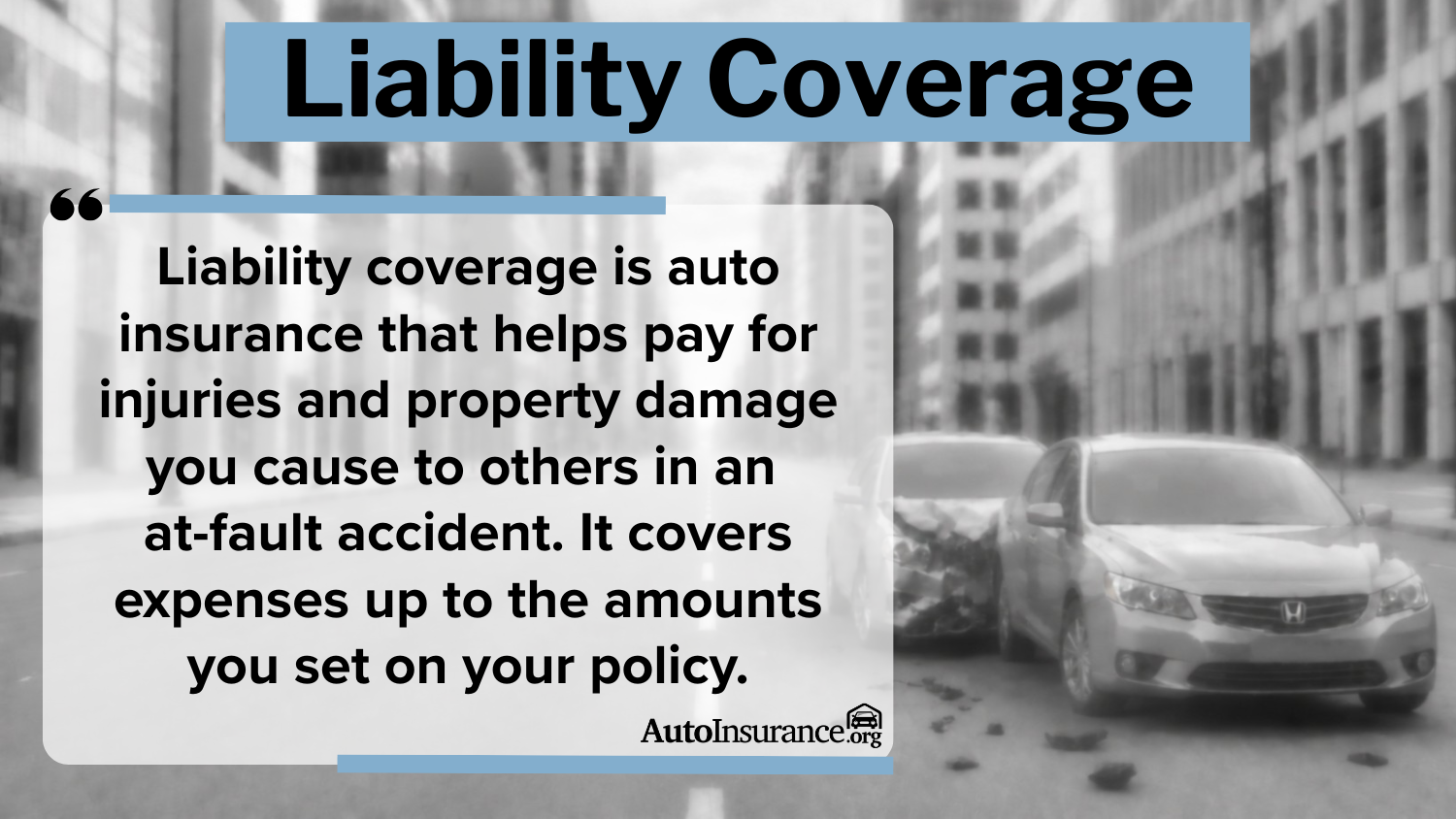
Most states require liability coverage, and some require UM/UIM and PIP coverage or MedPay.
Some states mandate very little coverage, and others require drivers to carry more coverage. These required coverages can increase or decrease car insurance rates significantly.
The more coverage a car insurance company must extend, the higher the rates. States requiring higher coverage amounts and more coverage types see increased rates.
Minimum Car Insurance Requirements by State
| State | Liability | UM/UIM | PIP/MedPay | Fault System |
|---|---|---|---|---|
| Alabama | 25/50/25 | ❌ | ❌ | At-Fault |
| Alaska | 50/100/25 | ❌ | ❌ | At-Fault |
| Arizona | 25/50/15 | ❌ | ❌ | At-Fault |
| Arkansas | 25/50/25 | ❌ | ❌ | At-Fault |
| California | 30/60/15 | ❌ | ❌ | At-Fault |
| Colorado | 25/50/15 | ❌ | ❌ | At-Fault |
| Connecticut | 25/50/25 | 25/50 | ❌ | At-Fault |
| Delaware | 25/50/10 | ❌ | PIP: $15K/$30K | At-Fault |
| Florida | 0/0/10 | ❌ | PIP: $10K | No-Fault |
| Georgia | 25/50/25 | ❌ | ❌ | At-Fault |
| Hawaii | 40/80/20 | ❌ | PIP: $10K | No-Fault |
| Idaho | 25/50/15 | ❌ | ❌ | At-Fault |
| Illinois | 25/50/20 | 25/50 | ❌ | At-Fault |
| Indiana | 25/50/25 | ❌ | ❌ | At-Fault |
| Iowa | 20/40/15 | ❌ | ❌ | At-Fault |
| Kansas | 25/50/25 | 25/50 | PIP: $4.5K | No-Fault |
| Kentucky | 25/50/25 | 25/50 | PIP: $10K | No-Fault |
| Louisiana | 15/30/25 | ❌ | ❌ | At-Fault |
| Maine | 50/100/25 | 50/100 | MedPay: $2K | At-Fault |
| Maryland | 30/60/15 | 30/60/15 | PIP: $2.5K | At-Fault |
| Massachusetts | 25/50/30 | 25/50 | PIP: $8K | No-Fault |
| Michigan | 50/100/10 | ❌ | PIP: Tiered | No-Fault |
| Minnesota | 30/60/10 | 25/50 | PIP: $40K | No-Fault |
| Mississippi | 25/50/25 | ❌ | ❌ | At-Fault |
| Missouri | 25/50/25 | 25/50 | ❌ | At-Fault |
| Montana | 25/50/20 | ❌ | ❌ | At-Fault |
| Nebraska | 25/50/25 | 25/50 | ❌ | At-Fault |
| Nevada | 25/50/20 | ❌ | ❌ | At-Fault |
| New Hampshire | 25/50/25 | 25/50 | ❌ | At-Fault |
| New Jersey | 35/70/25 | ❌ | PIP: $15K | No-Fault |
| New Mexico | 25/50/10 | ❌ | ❌ | At-Fault |
| New York | 25/50/10 | 25/50 | PIP: $50K | No-Fault |
| North Carolina | 50/100/50 | 50/100/50 | ❌ | At-Fault |
| North Dakota | 25/50/25 | 25/50 | PIP: $30K | No-Fault |
| Ohio | 25/50/25 | ❌ | ❌ | At-Fault |
| Oklahoma | 25/50/25 | ❌ | ❌ | At-Fault |
| Oregon | 25/50/20 | 25/50 | PIP: $15K | At-Fault |
| Pennsylvania | 15/30/5 | ❌ | PIP: $5K | No-Fault |
| Rhode Island | 25/50/25 | ❌ | ❌ | At-Fault |
| South Carolina | 25/50/25 | UM: 25/50/25 | ❌ | At-Fault |
| South Dakota | 25/50/25 | 25/50 | ❌ | At-Fault |
| Tennessee | 25/50/25 | ❌ | ❌ | At-Fault |
| Texas | 30/60/25 | ❌ | ❌ | At-Fault |
| Utah | 30/65/25 | ❌ | PIP: $3K | No-Fault |
| Vermont | 25/50/10 | 50/100/10 | ❌ | At-Fault |
| Virginia | 50/100/25 | 50/100/25 | ❌ | At-Fault |
| Washington | 25/50/10 | ❌ | ❌ | At-Fault |
| Washington D.C. | 25/50/10 | 25/50 | ❌ | At-Fault |
| West Virginia | 25/50/25 | 25/50 | ❌ | At-Fault |
| Wisconsin | 25/50/10 | 25/50 | ❌ | At-Fault |
| Wyoming | 25/50/20 | ❌ | ❌ | At-Fault |
While most states have a minimum amount of required coverage, most drivers find it insufficient since limits are typically very low and there’s no protection for your vehicle.
Experts suggest increasing limits and adding full coverage, which combines collision and comprehensive insurance. Our article explains when you might need more than state-mandated minimums: Liability vs. Full Coverage Auto Insurance
Collision coverage pays for damages to your vehicle from an accident, and comprehensive coverage pays for damages unrelated to an accident, such as theft and vandalism.
While full coverage rates are more expensive, you’ll have significant out-of-pocket expenses if your vehicle gets damaged and you have no coverage.
The Difference Between No-Fault & Tort State Insurance
Whether a state is a tort or no-fault state makes a big difference in rates. Most states are tort or at-fault states, so the person who causes the accident is responsible for damages.
If you live in a no-fault insurance state, you’ll have to pay for damages and injuries yourself, no matter who caused the accident. For example, if someone runs a traffic light and causes you to break your leg, your policy pays for the injuries. The other driver isn’t responsible even though they’re at fault.
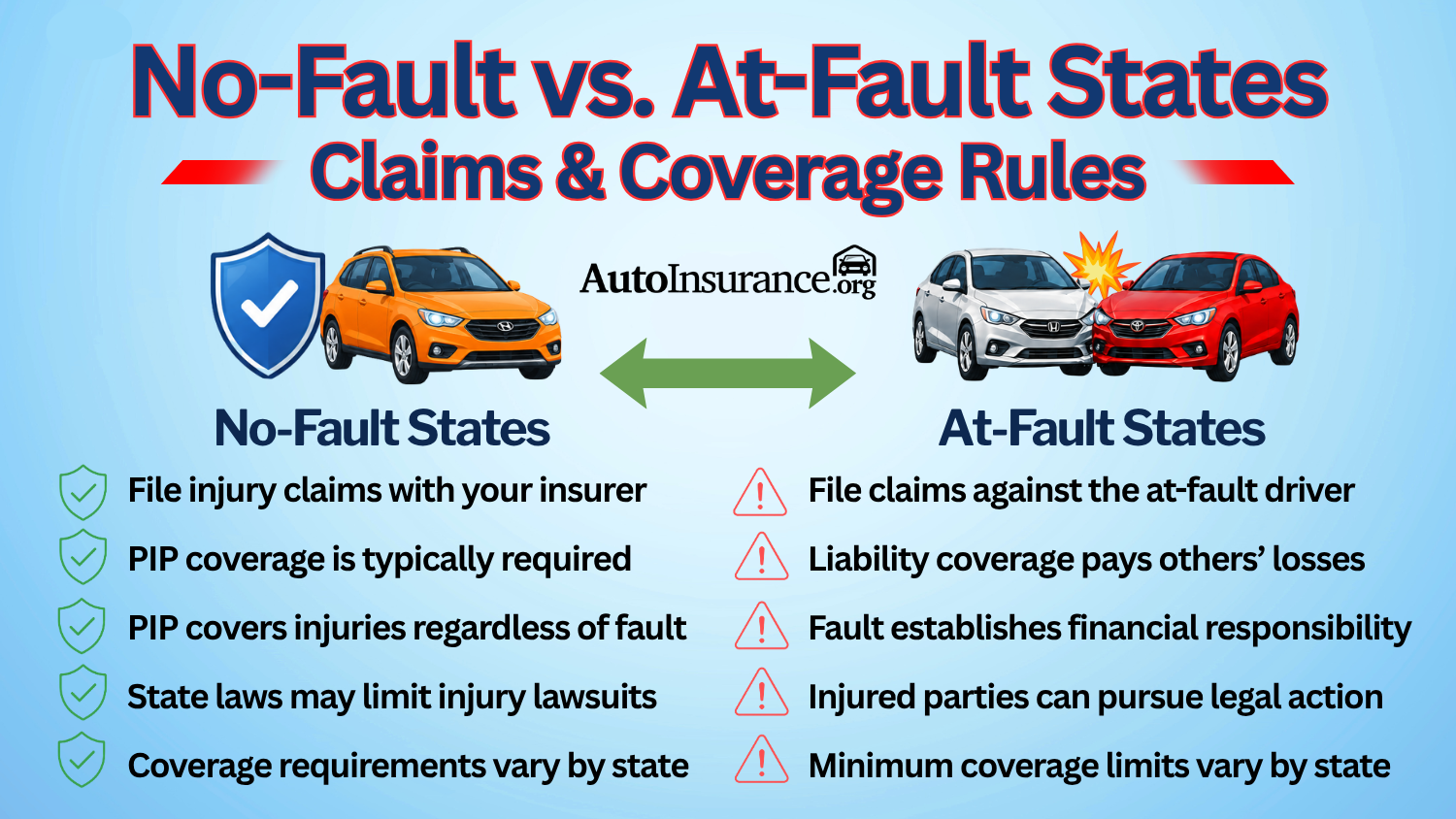
Car insurance in no-fault states works the same as in tort states, but it pays for the insured’s injuries regardless of fault. The main benefit of no-fault auto insurance is that you’re not dependent on the other driver’s insurance, which may have very low limits.
No-fault car insurance also diminishes the number of lawsuits filed. Since there’s no fault assigned in an accident, each driver must deal with their own car insurance company and available coverage.
At-fault states require liability coverage to pay for property damage and bodily injuries to others, and some require uninsured and underinsured motorist coverage.Kalyn Johnson Insurance Claims Support & Sr. Adjuster
However, the average cost of car insurance in no-fault states is often more expensive than rates in at-fault states because of high PIP requirements or a high number of uninsured drivers.
There are only 12 no-fault states: Florida, Hawaii, Kansas, Kentucky, Massachusetts, Michigan, Minnesota, New Jersey, New York, North Dakota, Pennsylvania, and Utah. Shop here for quotes in your state.
“No Pay, No Play” States
Most states require car insurance to drive legally. While there are typically consequences for driving without insurance, such as fines, driver’s license suspension, and jail time, some states take it a bit further.
In no pay, no play states, uninsured drivers involved in an accident can’t receive compensation for certain damages, such as pain and suffering. Some states also limit the physical damages that uninsured drivers can claim.
For example, Louisiana uninsured drivers can’t receive compensation for property damages up to $25,000 and bodily injuries up to $15,000. So, if a Louisiana driver is uninsured and hit by another driver, the uninsured driver must pay for repairs and medical costs themselves up to those limits.
On the other hand, Kansas allows uninsured drivers to be compensated for damages and injuries if they’ve been uninsured for less than 45 days and carried coverage for a year before.
The 11 no-pay, no-play states are:
- Alaska
- California
- Indiana
- Iowa
- Kansas
- Louisiana
- Michigan
- Missouri
- New Jersey
- North Dakota
- Oregon
Uninsured drivers in these 11 states have few options for recovering damages, even if they didn’t cause the accident.
Why Insurance Rates Are Going Up in Each State
Car insurance companies are for-profit businesses. The goal is to make more money in premiums than the company pays in claims. When a company has to spend more money, it has to charge higher rates.
Unfortunately, car insurance rates continue to increase yearly in almost every state. While the minimum required coverage doesn’t usually change, the cost of insurance rises due to increased inflation, more car accidents, and expensive claims.
Annual Auto Accidents & Insurance Claims by State
| State | Accidents | Traffic Deaths | Claims | Claim Cost |
|---|---|---|---|---|
| Alabama | 520K | 10,196 | 168K | $53,760 |
| Alaska | 60K | 8,219 | 28K | $13,160 |
| Arizona | 730K | 10,000 | 280K | $106,400 |
| Arkansas | 350K | 11,667 | 125K | $45,000 |
| California | 3.5M | 8,861 | 1.9M | $1,026,000 |
| Colorado | 480K | 8,276 | 360K | $270,000 |
| Connecticut | 290K | 8,056 | 140K | $67,200 |
| Delaware | 150K | 15,152 | 65K | $27,950 |
| Florida | 2.5M | 11,521 | 1.6M | $1,024,000 |
| Georgia | 850K | 7,944 | 790K | $734,700 |
| Hawaii | 120K | 8,571 | 65K | $35,100 |
| Idaho | 230K | 12,105 | 110K | $52,800 |
| Illinois | 950K | 7,540 | 800K | $672,000 |
| Indiana | 690K | 10,147 | 520K | $390,000 |
| Iowa | 300K | 9,375 | 200K | $134,000 |
| Kansas | 310K | 10,690 | 200K | $130,000 |
| Kentucky | 440K | 9,778 | 420K | $403,200 |
| Louisiana | 450K | 9,783 | 420K | $390,600 |
| Maine | 160K | 11,429 | 85K | $45,050 |
| Maryland | 490K | 8,033 | 430K | $378,400 |
| Massachusetts | 680K | 9,855 | 470K | $324,300 |
| Michigan | 830K | 8,300 | 710K | $610,600 |
| Minnesota | 640K | 11,228 | 380K | $224,200 |
| Mississippi | 340K | 11,333 | 230K | $156,400 |
| Missouri | 670K | 10,807 | 540K | $437,400 |
| Montana | 120K | 10,909 | 90K | $67,500 |
| Nebraska | 160K | 8,000 | 130K | $105,300 |
| Nevada | 270K | 8,438 | 260K | $249,600 |
| New Hampshire | 140K | 10,000 | 110K | $86,900 |
| New Jersey | 800K | 8,989 | 720K | $648,000 |
| New Mexico | 200K | 9,524 | 170K | $144,500 |
| New York | 1.1M | 5,641 | 1.1M | $1,100,000 |
| North Carolina | 840K | 7,851 | 850K | $858,500 |
| North Dakota | 90K | 11,539 | 60K | $40,200 |
| Ohio | 900K | 7,692 | 820K | $746,200 |
| Oklahoma | 380K | 9,500 | 350K | $322,000 |
| Oregon | 340K | 7,907 | 330K | $320,100 |
| Pennsylvania | 1.0M | 7,752 | 880K | $774,400 |
| Rhode Island | 120K | 10,909 | 85K | $60,350 |
| South Carolina | 520K | 10,000 | 510K | $499,800 |
| South Dakota | 90K | 10,000 | 70K | $54,600 |
| Tennessee | 700K | 10,000 | 700K | $700,000 |
| Texas | 3.2M | 10,848 | 2.4M | $1,800,000 |
| Utah | 240K | 7,273 | 220K | $202,400 |
| Vermont | 80K | 12,308 | 50K | $31,500 |
| Virginia | 780K | 9,070 | 620K | $496,000 |
| Washington | 750K | 9,615 | 510K | $346,800 |
| West Virginia | 150K | 8,333 | 120K | $96,000 |
| Wisconsin | 650K | 11,017 | 450K | $310,500 |
| Wyoming | 90K | 15,517 | 50K | $28,000 |
For example, many newer vehicles are more costly to repair since they come with expensive technology and safety features. Features like electronic stability control, adaptive cruise control, and multiple cameras make cars safer, but it also costs more to repair or replace these components.
Natural disasters and acts of nature are also on the rise. For example, more hurricanes, floods, and high winds cause damage that car insurance companies must cover. In turn, rates go up to balance the increased number of claims.
Most Common Auto Insurance Claims in the U.S.
| Coverage Type | Share | Cost Per Claim | Description |
|---|---|---|---|
| Collision | 30% | $4.5K | Vehicle impact |
| Property Damage | 25% | $4.2K | Others’ property |
| Comprehensive | 15% | $2.5K | Theft, weather, fire |
| Bodily Injury | 12% | $20K | Injuries to others |
| Personal Injury | 8% | $8K | Medical, passengers |
| Uninsured Motorist | 6% | $15K | Uninsured driver hit |
| Medical Payments | 3% | $2.5K | Medical, any fault |
| Other Types | 1% | $1K | Rental, roadside |
Drivers should expect to see a continued increase in car insurance rates. However, comparison shopping helps drivers find the cheapest car insurance available.
Learn More: Worst States for Traffic-Related Fatalities
How Moving to a Different State Affects Insurance Costs
Chances are your car insurance rates will change if you move to a different state. As we discussed, state laws and coverage requirements impact auto insurance rates. In addition, rates will increase when you move from a state with few natural disasters to a state like Florida, which often sees hurricanes and flooding.
For example, Virginia has some of the cheapest car insurance rates on average, and Michigan has some of the most expensive rates. As a result, drivers who move from Virginia to Michigan may get sticker shock. On the other hand, Michigan drivers moving to Virginia will see rates drop.
Speaking with your car insurance company when planning a move is essential. While some insurers provide coverage nationwide, others don’t cover every state. Checking with your insurer before you move allows you time to find the cheapest coverage for your new state.
It’s crucial that you don’t allow your insurance coverage to lapse during a move. So, get your new policy in your new state in place before canceling your previous one.
Free Insurance Comparison
Compare Quotes From Top Companies and Save
How to Get Cheap Auto Insurance Rates in Your State
Even if premiums are high where you live, there are many different ways to get the lowest car insurance rates by state.
First, find out what auto insurance discounts are available in your area. Most companies offer discounts for drivers who meet specific criteria, like insuring multiple vehicles or bundling home and auto policies.
Auto Insurance Discounts From Top Providers
| Company | Anti-Theft | Bundling | Good Driver | Multi-Car |
|---|---|---|---|---|
| Allstate | 10% | 25% | 40% | 10% |
| American Family | 25% | 40% | 25% | 23% |
| Erie | 15% | 25% | 30% | 25% |
| Farmers | 10% | 20% | 30% | 12% |
| Geico | 25% | 10% | 22% | 25% |
| Liberty Mutual | 12% | 25% | 20% | 25% |
| Nationwide | 5% | 20% | 40% | 15% |
| State Farm | 5% | 29% | 15% | 25% |
| Travelers | 15% | 15% | 10% | 8% |
| USAA | 15% | 11% | 30% | 10% |
Discount eligibility depends on your driver profile, vehicle, and policy, with availability and discount amounts varying by state and insurer. The savings shown are estimated averages, not guaranteed discounts.
Other popular savings include safe driver, good student, claims-free, and paid-in-full discounts. Drivers can also save with their vehicle’s safety features, such as airbags, cameras, and collision warning systems. Read More: Best Anti-Theft Auto Insurance Discounts
Discounts are just one way to lower the cost of car insurance by state. Take these steps to get cheaper premiums without relying on savings programs:
- Keep a Good Driving Record: Accidents and tickets can raise your rates for three to five years, and DUIs can affect rates for up to ten years.
- Modify Your Deductible: If you have full coverage, adjust your deductible to lower rates. A higher deductible means you pay more out of pocket, but rates are cheaper.
- Review Your Auto Insurance Policy: Full coverage is encouraged, but drivers with older vehicles may be able to reduce coverage and drop some add-ons.
- Shop Online for Auto Insurance: Insurers calculate premiums differently, so compare quotes and discounts from multiple companies to get the best deal.
- Think Carefully Before Filing a Claim: Filing a claim will raise your rates. Depending on the damage, paying for repairs yourself may be much cheaper.
Major life events, like moving or getting married, can also affect your premium rate. Compare quotes regularly to find the cheapest auto insurance by state as your life changes.
While national companies tend to offer the lower average rates, don’t overlook insurers local to your state. They may offer even better rates based on your unique profile. Find personalized auto rates by state now with our free tool.
Find the Cheapest States for Car Insurance
Auto insurance rates vary from state to state. Since each state makes its own laws and requirements, no two states are the same. Instead, minimum required car insurance coverage, fault designation, and state statistics like natural disasters, population, and theft determine rates.
For example, more rural states with low population and motor theft rates that don’t experience many natural disasters have the lowest car insurance rates.
We’ve found that Idaho has the lowest average car insurance rates, and Michigan has the highest average rates. Michigan’s high rates are due in part to the state’s high PIP requirements and the fact that the state is no-fault, so each driver has to use their own insurance in an accident.
Unfortunately, car insurance rates are increasing and will continue to rise. An increasing number of claims filed, more natural disasters, and higher inflation play a large part in the rate increase. Additionally, cars are more expensive to repair as technology advances.
However, drivers can save money on car insurance regardless of where they live. Adding discounts, reconsidering coverage needs, and comparison shopping help drivers find the lowest rates. A clean driving record is essential for getting cheap car insurance. Unfortunately, at-fault accidents, tickets, and DUIs raise rates for years, making it difficult to find affordable car insurance.
If you move to a new state, you must learn the coverage requirements and get new car insurance as soon as possible. Remember that your rates will most likely differ in your new state.
Frequently Asked Questions
What state has the highest auto insurance premiums?
Of all states, you’ll pay the highest average car insurance rates in Michigan. Auto insurance in Michigan costs around $163 monthly due to its high coverage requirements.
Are auto insurance rates different by state?
Yes, car insurance rates by state vary greatly. Since each state creates its own car insurance laws, rates are different in each state. Minimum requirements, weather, population, and thefts all affect your rates in each state.
What are the top 10 states with the highest car insurance rates?
States with the highest average rates for auto insurance are:
- Michigan
- Delaware
- Louisiana
- New Jersey
- Rhode Island
- Georgia
- California
- New York
- Texas
However, drivers in these states can still find affordable coverage if they shop around.
Is Florida auto insurance expensive?
Florida car insurance rates are higher than average. Since Florida is a no-fault state, car insurance rates are significantly higher to cover claims. In addition, severe weather and a large number of uninsured drivers cause rates to increase.
How are auto insurance rates determined by state?
Auto insurance rates are determined by various factors, including the state you reside in. Each state has its own set of regulations, laws, and statistical data that insurance companies use to assess risk. Factors such as the number of accidents, population density, frequency of theft, and average repair costs can influence rates. Additionally, state-specific regulations, like required coverage levels and tort systems, can also impact insurance rates.
Where is car insurance the cheapest in the United States?
Yes, there are states that generally have lower auto insurance rates. Some examples include Maine, Vermont, and North Carolina. These states typically have lower population densities, fewer accidents, and lower costs of living, which can contribute to more affordable insurance premiums.
Can I save money on auto insurance by moving to a different state?
Moving to a different state solely for the purpose of saving money on auto insurance is generally not recommended. While insurance rates may vary from state to state, there are numerous other factors to consider when relocating, such as job opportunities, cost of living, and personal preferences. It’s best to choose a place to live based on various factors, rather than focusing solely on insurance rates.
Get a FREE Quote in Minutes
Insurance rates change constantly — we help you stay ahead by making it easy to compare top options and save.