Buying Auto Insurance for a New Car (2026)
Auto insurance for new cars averages $77 per month for minimum coverage and $175 for full coverage in the U.S. You’ll need coverage before driving off the lot, and this guide explains policy types, grace periods, costs, and practical ways to save on your new-car insurance.
Read more





Find the Lowest Car Insurance Rates Today
Quote’s drivers have found rates as low as $42/month in the last few days!




Table of Contents
Table of Contents

Licensed Insurance Agent
Travis Thompson has been a licensed insurance agent for nearly five years. After obtaining his life and health insurance licenses, he began working for Symmetry Financial Group as a State Licensed Field Underwriter. In this position, he learned the coverage options and limits surrounding mortgage protection. He advised clients on the coverage needed to protect them in the event of a death, critica...
Travis Thompson

Managing Editor
Daniel S. Young began his professional career as chief editor of The Chanticleer, a Jacksonville State University newspaper. He also contributed to The Anniston Star, a local newspaper in Alabama. Daniel holds a BA in Communication and is pursuing an MA in Journalism & Media Studies at the University of Alabama. With a strong desire to help others protect their investments, Daniel has writt...
Daniel S. Young

Insurance Claims Support & Sr. Adjuster
Kalyn grew up in an insurance family with a grandfather, aunt, and uncle leading successful careers as insurance agents. She soon found she has similar interests and followed in their footsteps. After spending about ten years working in the insurance industry as both an appraiser dispatcher and a senior property claims adjuster, she decided to combine her years of insurance experience with another...
Kalyn Johnson
Updated September 2026
Arrange auto insurance for new cars before you drive home. If you already have a policy, you may get a 7– to 30-day grace period.
- State-average monthly rates range from about $24 to $290
- Compare quotes from at least three insurers
- Financed or leased cars may require full coverage
If you already have insurance, contact your company soon after buying the car so it can update the policy and explain how your coverage applies. You can also review the best auto insurance companies when comparing providers.
Shopping around helps you compare limits, deductibles, and prices before you choose. Cheapest auto insurance companies can help you find lower-cost options for a new car. Enter your ZIP code to review auto insurance providers for your needs and budget.
How to Buy Insurance for a New Car
If you’re learning how to buy auto insurance for a new car, gather vehicle information. Include the car, how you’ll use it, and any lender involved. Check our guide to see which cars may cost less: Auto Insurance Rates by Make and Model.
Check state laws to make sure you meet the minimum coverage before you buy new vehicle insurance coverage. Then decide whether you want additional protection based on lender requirements or local risks.
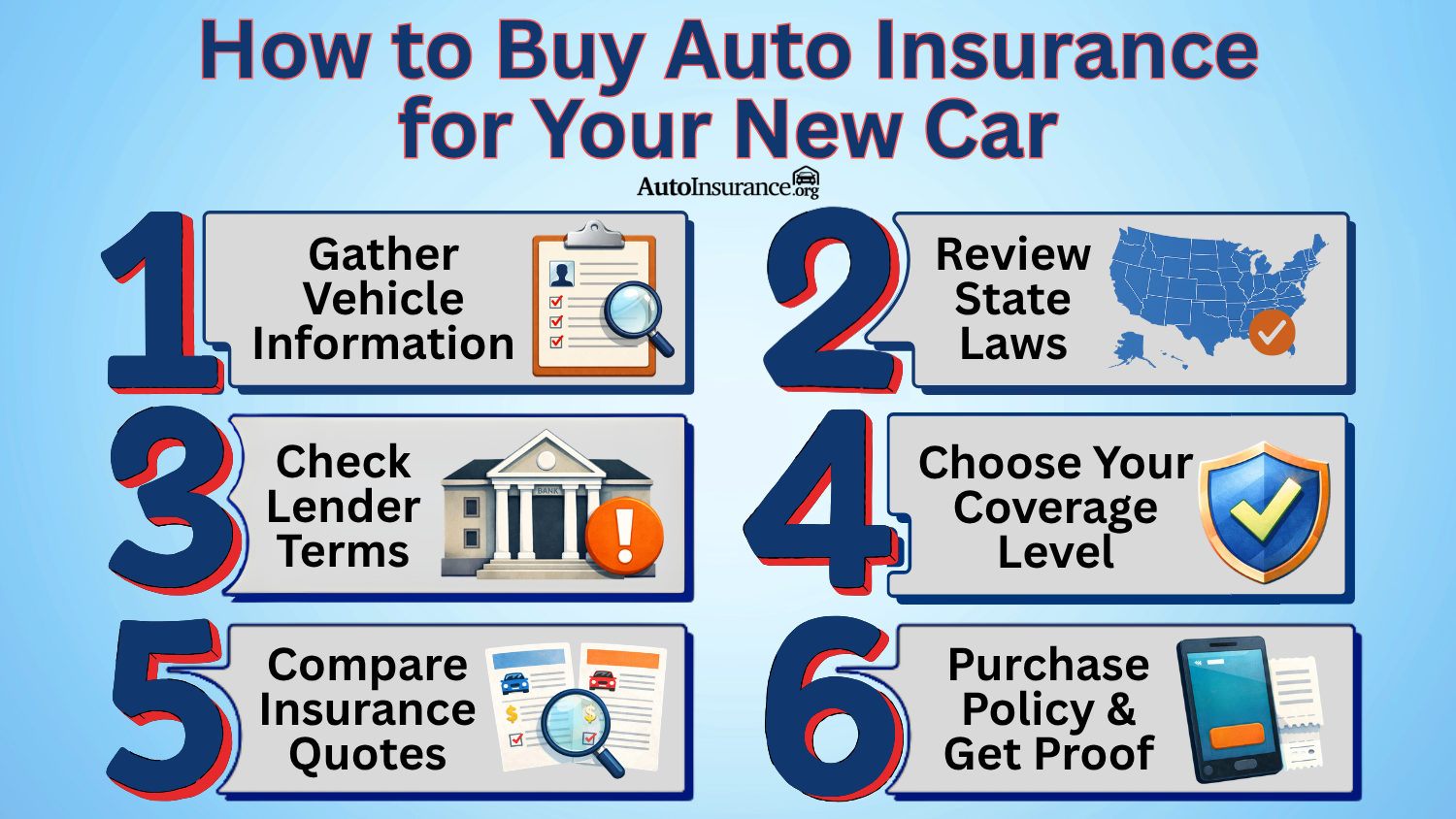
Get online quotes while you’re still shopping to see average prices in your area based on the car you’re looking to buy and the coverage you want.
Once you narrow down your choices, evaluate multiple auto insurance quotes based on coverage, deductibles, policy features, and claims satisfaction.
- Compare policy options from several insurance companies.
- Consider coverage options and limits for the new vehicle.
- Decide on deductibles you could comfortably pay after a claim.
Focus on setting up the policy before pickup. Before you drive away, confirm coverage has started and keep your proof of insurance handy.
Handling the details early can help you avoid paperwork or coverage problems at the dealership. Follow these tips to speed up the process and get your new car covered quickly.
Learn More: How to Get Auto Insurance
Check Current Policy Before Buying New Car Insurance
Have insurance already? Check whether it carries over to the new car and what your insurer needs after the purchase.
If there’s a loan or lease, the lender may have its own coverage rules. Find out what those are before pickup.
Registration may also affect what you need before buying a car. Our guide explains how registration can factor into the process: Does your car need to be registered to get auto insurance?
Before you head to the dealership, know what applies to your situation. If you don’t already have a policy, you’ll need coverage in place before pickup so the car is insured when you take it home.
Always Arrange Coverage Before You Pick Up the Vehicle
Before pickup, check that your new car is insured. Give the company the vehicle information it needs and confirm when the coverage starts.
Waiting until after you get the car can cause delays if the dealership asks for proof of insurance. For more on temporary proof of coverage, see our article: Auto Insurance Binder Defined.
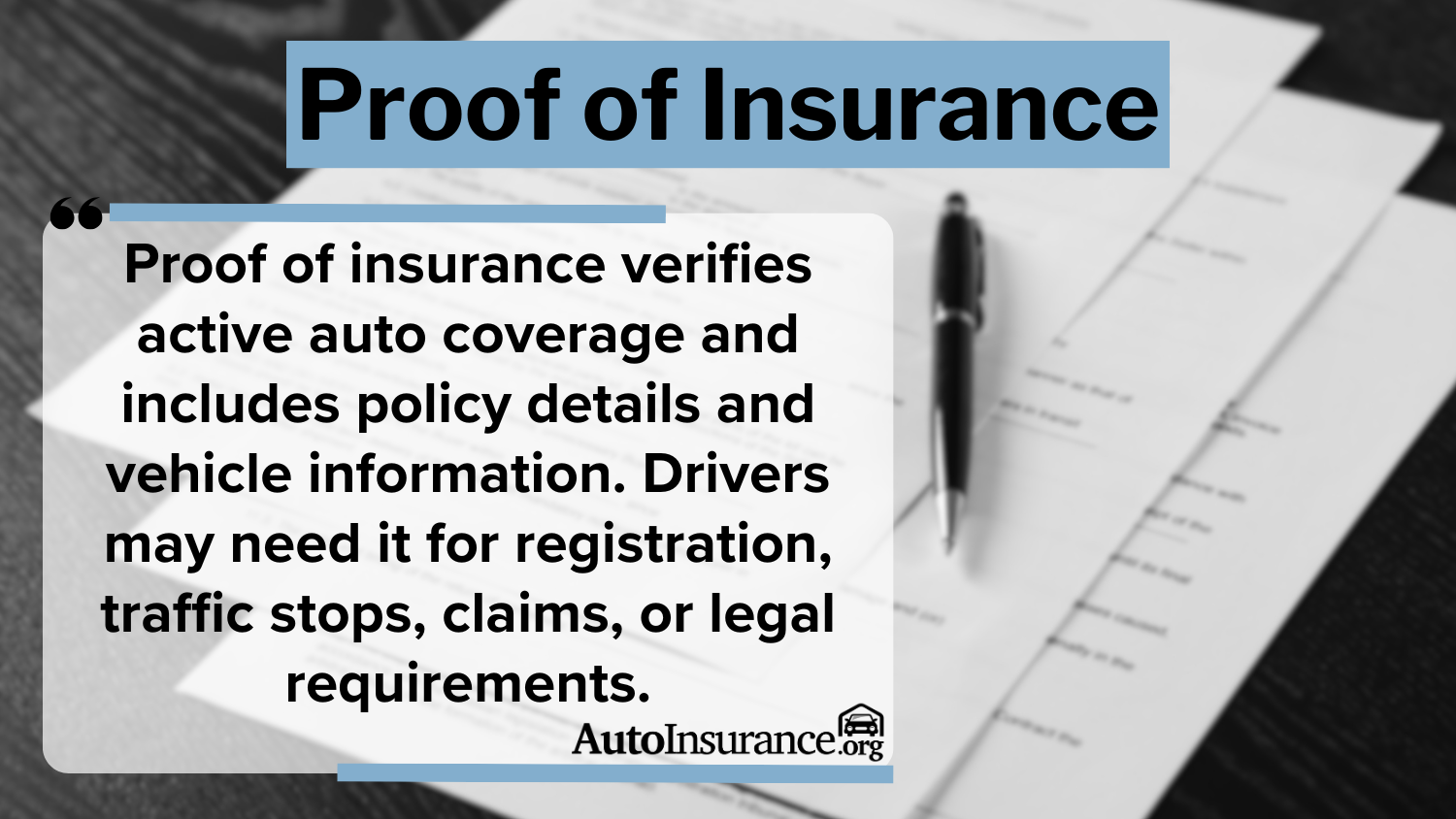
Before you go to the dealership, check that the policy is active and the car details are correct. If you’re financing or leasing, make sure the required coverage is already in place.
If you don’t have a policy yet, you’ll need one before taking the car home. Keep your proof of insurance handy, since the dealership may ask to see it before you can leave with the vehicle.
What You Need to Get New Car Insurance
Insurers need a few details before they can cover a new car. Your date of birth helps confirm the driver, while the home or garaging address tells the insurer where the car is usually parked. On This Topic: What Documents Do You Need to Get Auto Insurance?
Your date of birth helps the insurer match the policy to the correct driver, while the garaging address can affect the rate because insurance costs vary by location.
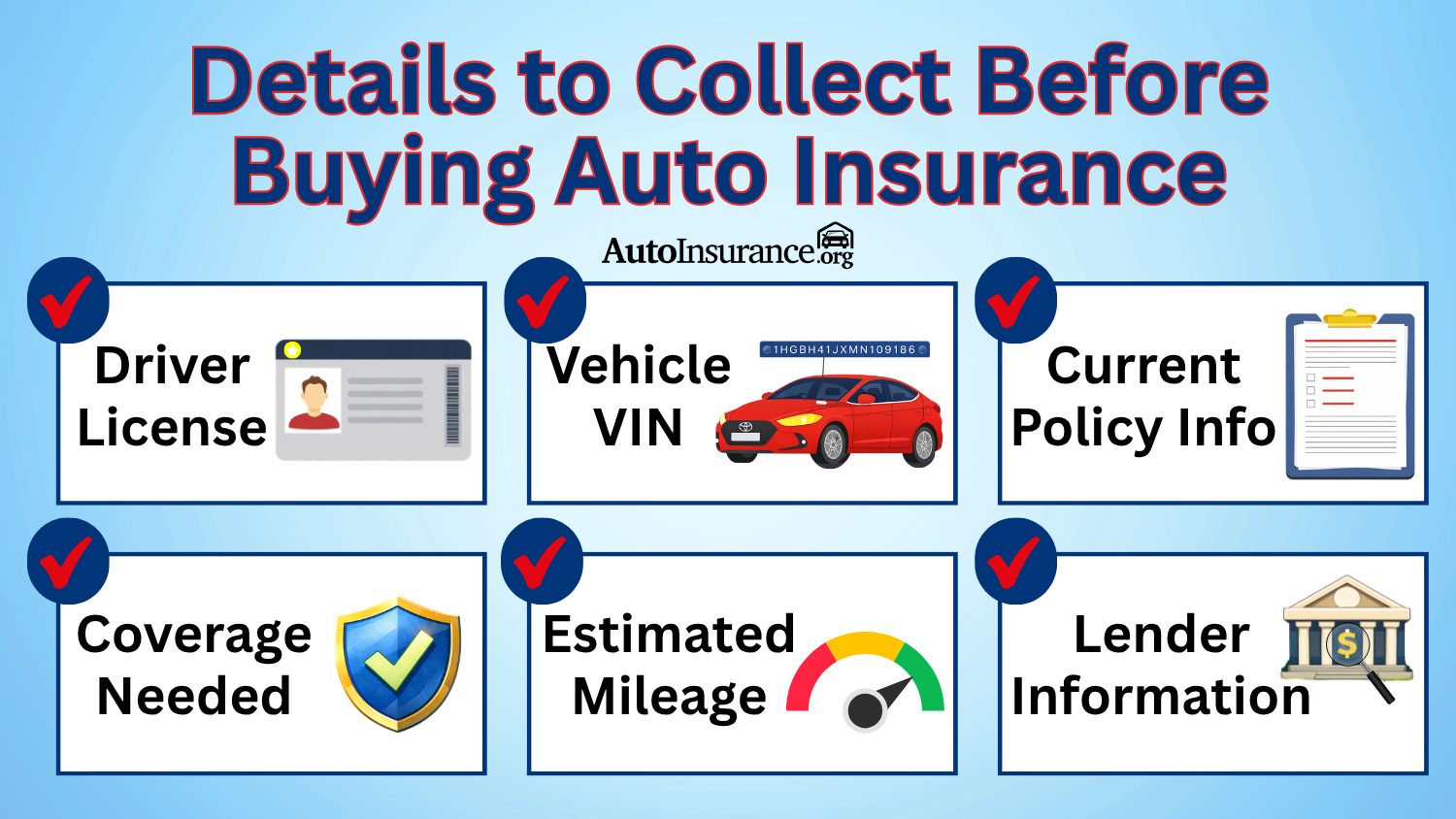
How do you get insurance on a new car? Start by giving the insurer the VIN and other details it needs to identify the vehicle. Your personal information also helps the company set up the policy and calculate the rate.
If the car is financed or leased, make sure you list the lender or leasing company correctly. Once everything is complete, you can review the coverage, activate the policy, and get proof that the new car is insured.
Confirm New Car Insurance Grace Period
Already have a policy? Check how long the grace period lasts before you pick up the new car. If you don’t have insurance yet, get coverage in place first.
Your current policy may cover a newly purchased car for a short time. An auto insurance grace period for a new car often lasts seven to 30 days. Read More: How many days after purchase do you have to get auto insurance?
Some of your existing coverage may carry over to the new car for a short time. Check with your insurer to confirm what transfers and whether any limits or deductibles change.
Let your insurer know about the new vehicle soon after you buy it. Once you know the deadline, add the car to the policy before the window closes.
A grace period can buy you a little time, but don’t wait to update your policy. Have the vehicle details ready and contact your insurer soon after the purchase.
Daniel Walker Licensed Insurance Agent
Having the vehicle and policy details ready can speed up the update and help avoid delays. It also gives the insurer what it needs to confirm the car, set the coverage, and finish the paperwork.
If you’re asking, “Do you get insurance before or after buying a new car?” it’s better to have coverage ready before pickup. A grace period is temporary, so don’t use it as extra time to shop for insurance.
What to Avoid When Insuring a New Vehicle
Getting proof of insurance for a new car is usually one of the final steps before you leave the dealership. Once the policy is active, show the dealer that the vehicle is covered.
Financing or leasing a new car can mean carrying more than the state minimum. Make sure the lender or lessor is listed correctly on the policy and check whether collision, comprehensive, or gap coverage is required. Do I need full coverage insurance to finance a car? Explains what lenders may expect before you drive away.
If you’re checking how to update your insurance when buying a new car, call your insurer or make the change online after the purchase. If the new car isn’t added correctly, you could run into coverage problems later.
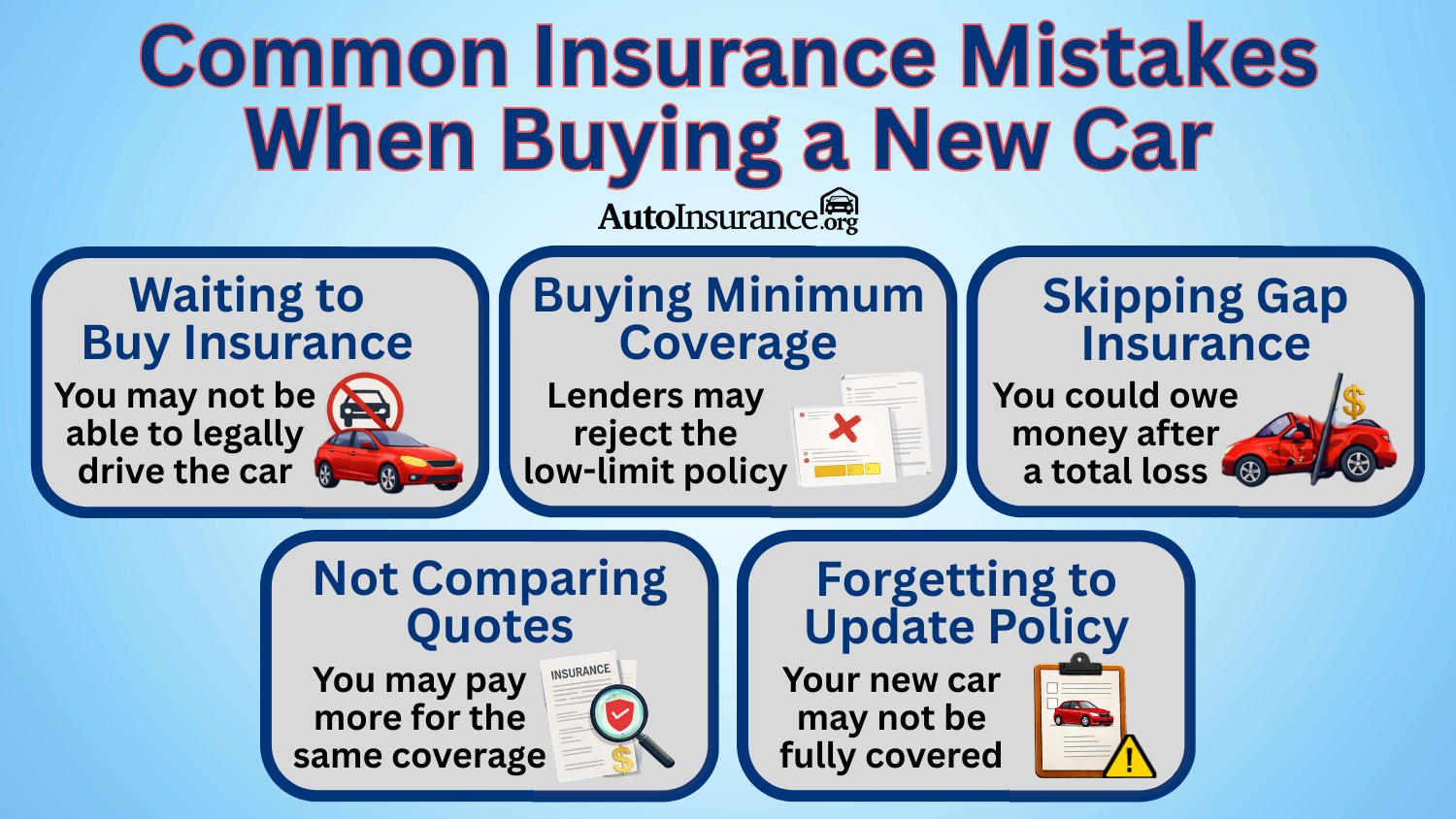
It’s best to have a new vehicle insured before driving it off the lot. If you’re wondering, “Do you get free insurance with a new car?” the answer is usually no, since coverage is generally a separate cost. See more choices with our free auto insurance comparison tool.
Dealer-arranged new car insurance can be convenient, but it’s still worth comparing other options first.
Free Insurance Comparison
Compare Quotes From Top Companies and Save
New Car Insurance Coverage Requirements
New car insurance starts with the coverage your state requires before you drive. Financing or leasing can add another layer of requirements, since the lender or lessor may require collision and comprehensive coverage.
Minimum coverage mainly pays for damage or injuries you cause to others. Full coverage also helps protect your own car after certain losses. See Our Article: When to Buy More Than Minimum Auto Insurance.
Liability Coverage
Liability auto insurance coverage pays when you’re responsible for someone else’s injuries or property damage. The minimum amount you need depends on your state.
Liability limits can look a little confusing at first, but the three numbers are just a quick way to show how much coverage you have. For example, 15/30/20 refers to the policy’s bodily injury and property damage limits.
- Bodily injury liability per person: $15,000
- Bodily injury liability per accident: $30,000
- Property damage liability: $20,000
In that example, the policy would cover up to $15,000 per person, $30,000 per accident, and $20,000 for property damage. The actual limits you need will depend on your state.
The map compares average monthly minimum and full coverage rates by state for a 45-year-old male driver with a clean record.
Do I need full coverage on a new car? Not always, but lenders and lessors often require collision and comprehensive coverage when you finance or lease the vehicle.
Liability only covers damage you cause to others. For your own car, broader coverage can help with crash damage, theft, hail, and vandalism.
Minimum coverage may satisfy your state’s legal requirements, but it mainly protects other people when you cause an accident. Minimum auto insurance requirements by state explains how those required limits can vary depending on where you live.
Collision and Comprehensive Coverage
If you finance or lease your new car, the lender may require collision and comprehensive insurance. These coverages help pay for damage to your car.
Collision generally covers crash damage to your vehicle, while comprehensive handles losses such as theft, hail, vandalism, and other non-collision events. Together, they protect a newer car from several costly types of damage.
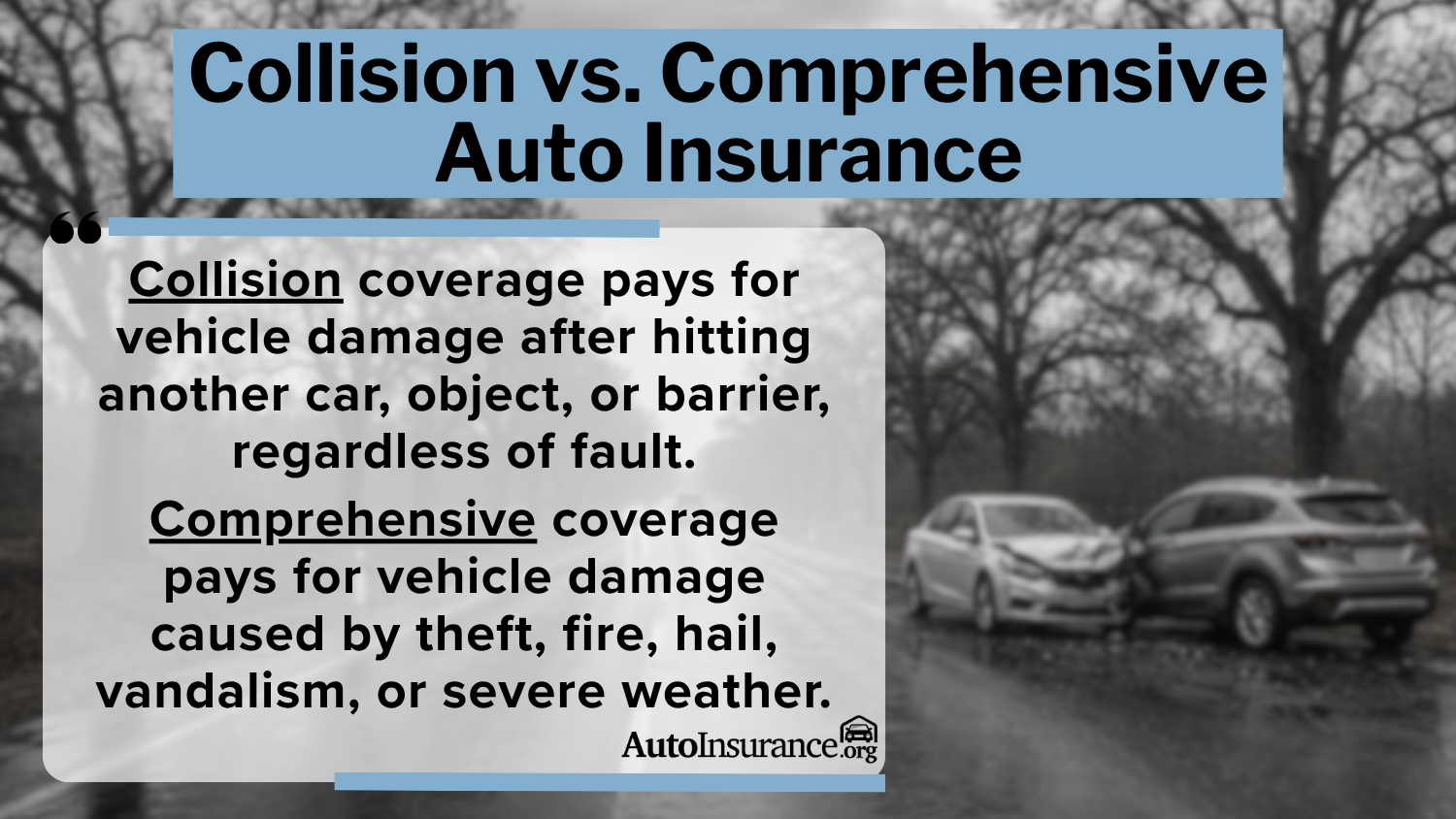
Full coverage generally includes liability, collision, and comprehensive insurance. Liability covers damage you cause to others, while collision and comprehensive help pay for damage to your own car.
If you finance or lease a new car, you may need that broader protection. Even when it isn’t, comparing full coverage rates can help you see how much extra protection costs with different insurers.
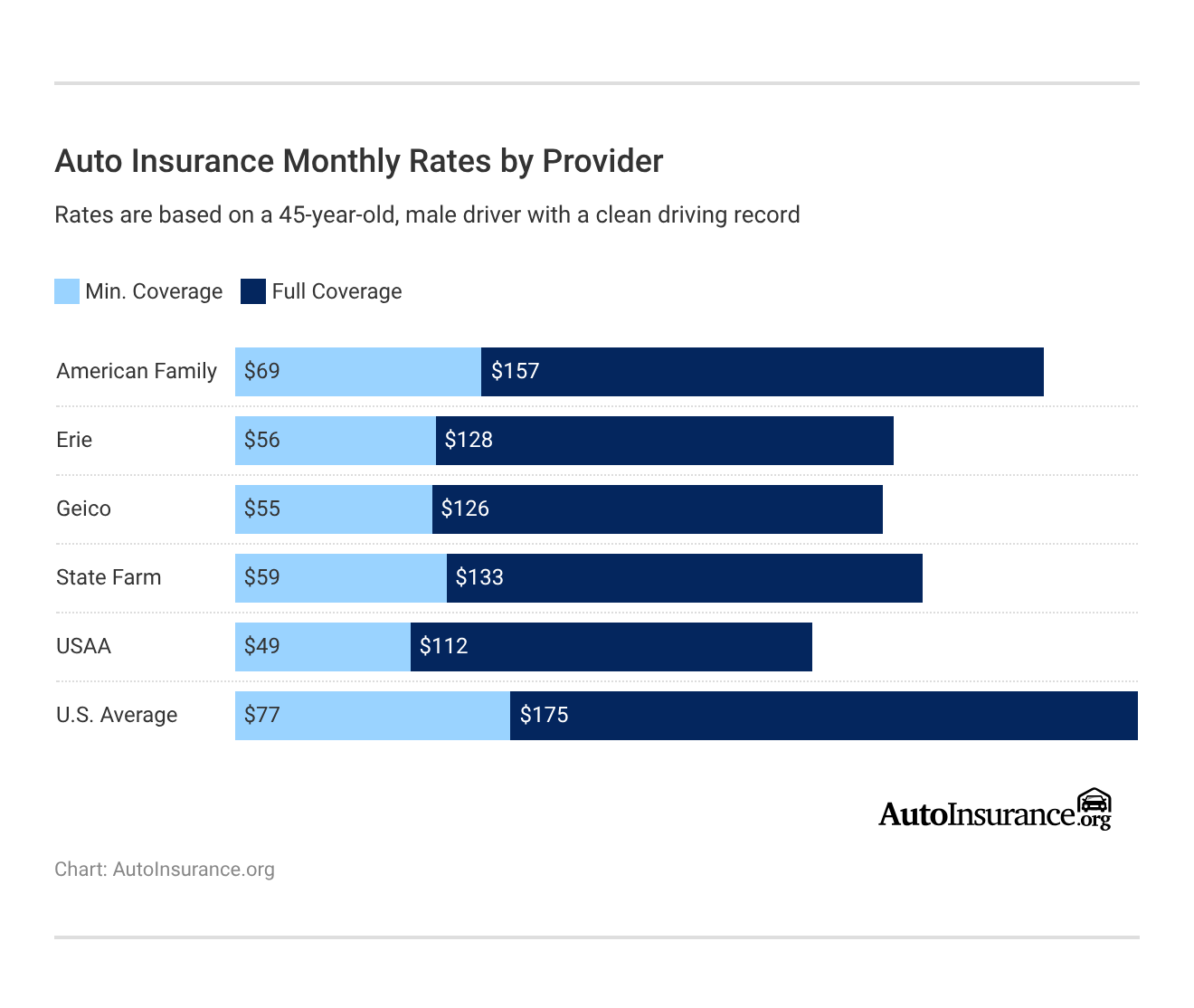
Geico, Erie, and State Farm are among the lower-cost full-coverage options for this driver profile. The price difference matters when collision and comprehensive are required, since those coverages add to the cost of a liability-only policy.
A lower rate is only useful if the policy still has the limits and deductibles you want. Read More: Geico Auto Insurance Review & Erie vs. Nationwide Auto Insurance
Full coverage costs more, but the extra protection can matter on a new car. Compare rates, then make sure the policy covers the risks you’d rather not pay for yourself.
Michelle Robbins Licensed Insurance Agent
Full coverage can make more sense for a new car when replacing or repairing the vehicle would be difficult to pay for yourself. If the car is financed or leased, you may not have a choice, since the lender can require collision and comprehensive until the loan or lease ends.
You can keep costs down by comparing companies, choosing a deductible you can afford after a claim, and checking for discounts that apply to the vehicle or policy. Minimum coverage may cost less, but it won’t pay for many types of damage to your own car.
Compare quotes from several companies before choosing a policy. That makes it easier to find affordable full coverage for your new car without cutting protection just to lower the premium. See more choices with our free auto insurance comparison tool.
Uninsured/Underinsured Motorist Coverage
Not every driver has enough insurance to cover the damage they cause. Uninsured and underinsured motorist coverage can help when the other driver has no policy or their limits aren’t high enough.
The two coverages sound similar, but they apply in different situations. One helps when the at-fault driver has no insurance, while the other can step in when that driver’s limits fall short.
If the other driver can’t fully cover the loss, your UM or UIM coverage may help with the remaining costs. The amount available depends on your policy limits and your state’s rules.
Uninsured motorist coverage for a new car can help when the other driver has no insurance or not enough to cover the damage. It can add another layer of protection for a vehicle you’ve just purchased.
It’s worth checking how this coverage works before you add it to a new-car policy. That way, you’ll know what help is available if you’re hit by someone who has little or no insurance.
Personal Injury Protection (PIP) Coverage
PIP insurance mainly helps with injury-related costs after an accident. Instead of focusing on car damage, it helps cover expenses tied to the people hurt in the crash.
That coverage can extend beyond just the driver. Depending on the state and the policy, PIP may also help passengers, household members, and even pedestrians injured by the insured vehicle.
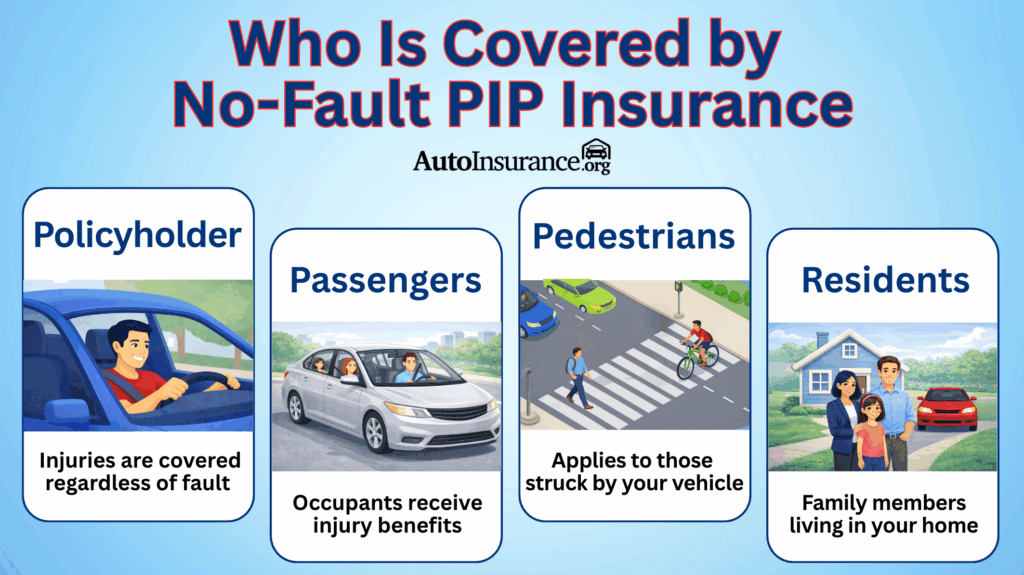
PIP can be useful in no-fault states because it may help pay medical costs sooner. Explore This Topic: Does Cheap No-Fault Auto Insurance Exist?
That said, PIP doesn’t work the same in every state. Coverage limits, benefits, and eligibility can vary, so check your policy to see what’s included.
Recommended Insurance Add-Ons for New Cars
A new car may need more than the basic coverages. Some add-ons can help with costs that your regular policy may not cover.
The right add-ons depend on how the car is financed, how often you drive, and which costs you could comfortably pay yourself. A Closer Look: Do All Vehicles Have Set Auto Insurance Requirements?
Gap Insurance
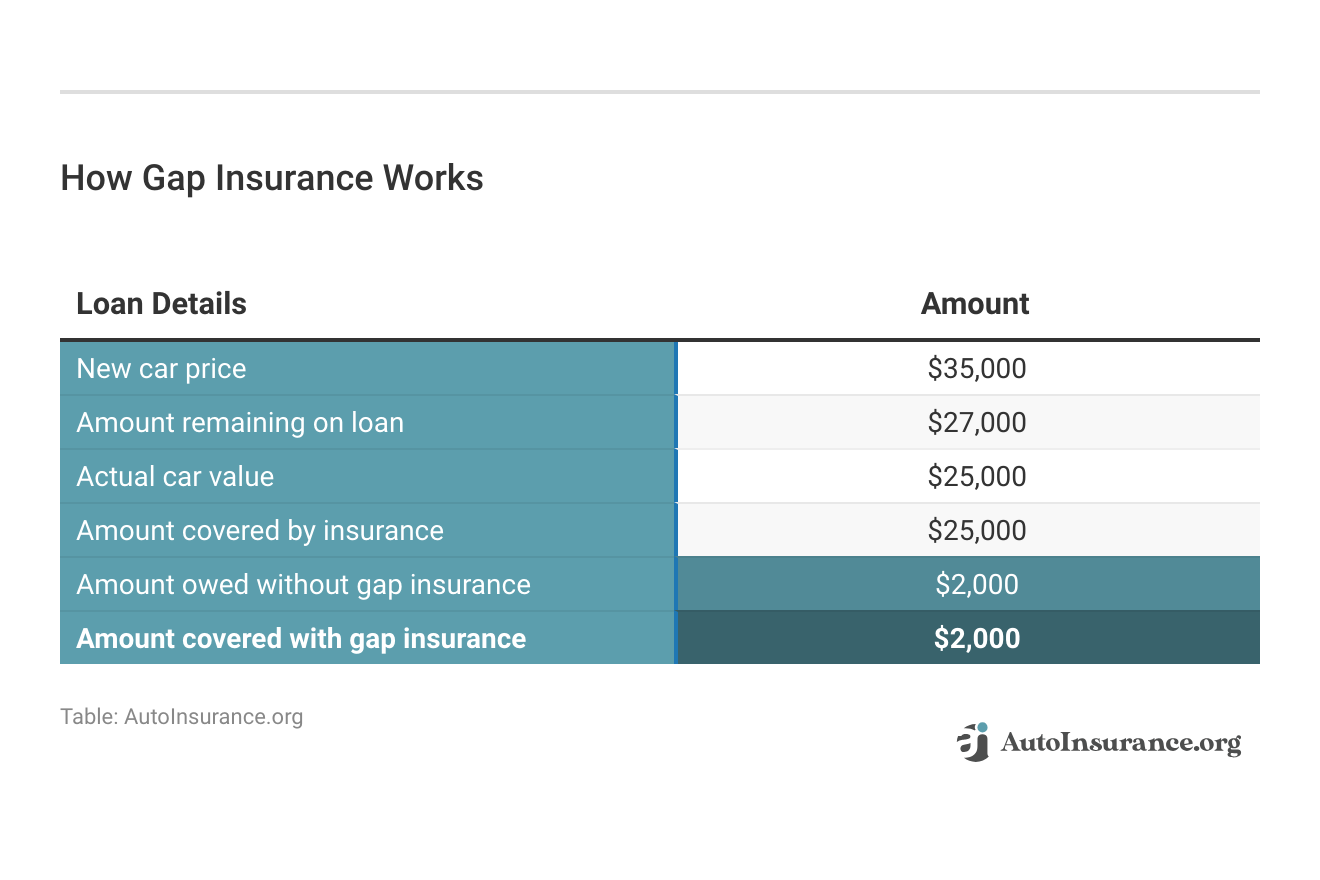
If your car is totaled and you owe more on your loan or lease than the vehicle is worth, guaranteed auto protection (GAP) insurance coverage will pay the difference, so you’re not stuck paying hundreds or thousands of dollars out of pocket.
If you still owe more than the car is worth, gap coverage can help keep a total loss from leaving you with part of the loan or lease to pay yourself.
If your loan balance is still higher than the car’s value, gap coverage can help reduce what you would otherwise owe after a total loss.
Gap coverage covers what you still owe, while new car replacement focuses on what it may cost to replace the vehicle. That can matter when a newer car is totaled soon after purchase.
New Car Replacement
What is new car replacement insurance? It can help if a newer vehicle is totaled and standard coverage doesn’t pay enough to buy a similar brand-new model. It is usually available only for cars that meet certain age and mileage limits.
New cars can lose value quickly, which is one reason this coverage may be worth considering. If your insurer offers it, check the age and mileage limits before adding it.
New car replacement focuses on getting you back into a comparable new vehicle after a total loss. It does not cover everyday transportation costs while your car is being repaired or replaced.
Rental reimbursement coverage can help. It may pay part of the cost of a temporary vehicle while your insured car is unavailable after a covered claim.
Rental Reimbursement Coverage
Rental reimbursement coverage can help pay for a rental car or other transportation while your vehicle is being repaired after a covered loss. It’s useful if you rely on your car every day and don’t have another vehicle available.
If your car is only in the shop for a short time, you may not use much of the benefit. But for longer repairs, it can keep transportation costs from adding up while you wait for your vehicle to be ready. This coverage can come in handy if you:
- Don’t have a backup vehicle available
- Drive every day for work, school, or errands
- Expect repairs to take several days
- Want to avoid paying rental costs out of pocket
Most policies set a daily cap and an overall limit for rental reimbursement. Check those numbers first so you know how much help you’d actually get while your car is in the shop.
It also helps to compare the daily limit with typical rental costs in your area. See more coverage choices by exploring auto insurance options from multiple providers.
A breakdown or covered claim can disrupt your day fast. Having the right add-ons can help with transportation costs and roadside problems when your car is out of commission.
Zach Fagiano Licensed Insurance Broker
Rental reimbursement can help while your car is being repaired, while roadside assistance is more useful when you’re stuck on the road. Having both can cover two very different kinds of inconvenience.
If you drive often, check whether your policy includes either option and what limits apply. Knowing that ahead of time can help you avoid surprise costs when something goes wrong.
Roadside Assistance Coverage
Locked out or stuck with a dead battery? Roadside assistance coverage may help with the service call. Towing can also be included, depending on the plan.
The exact services depend on the plan. Some include towing, jump-starts, flat-tire help, lockout service, or fuel delivery, while others may have more limited benefits.
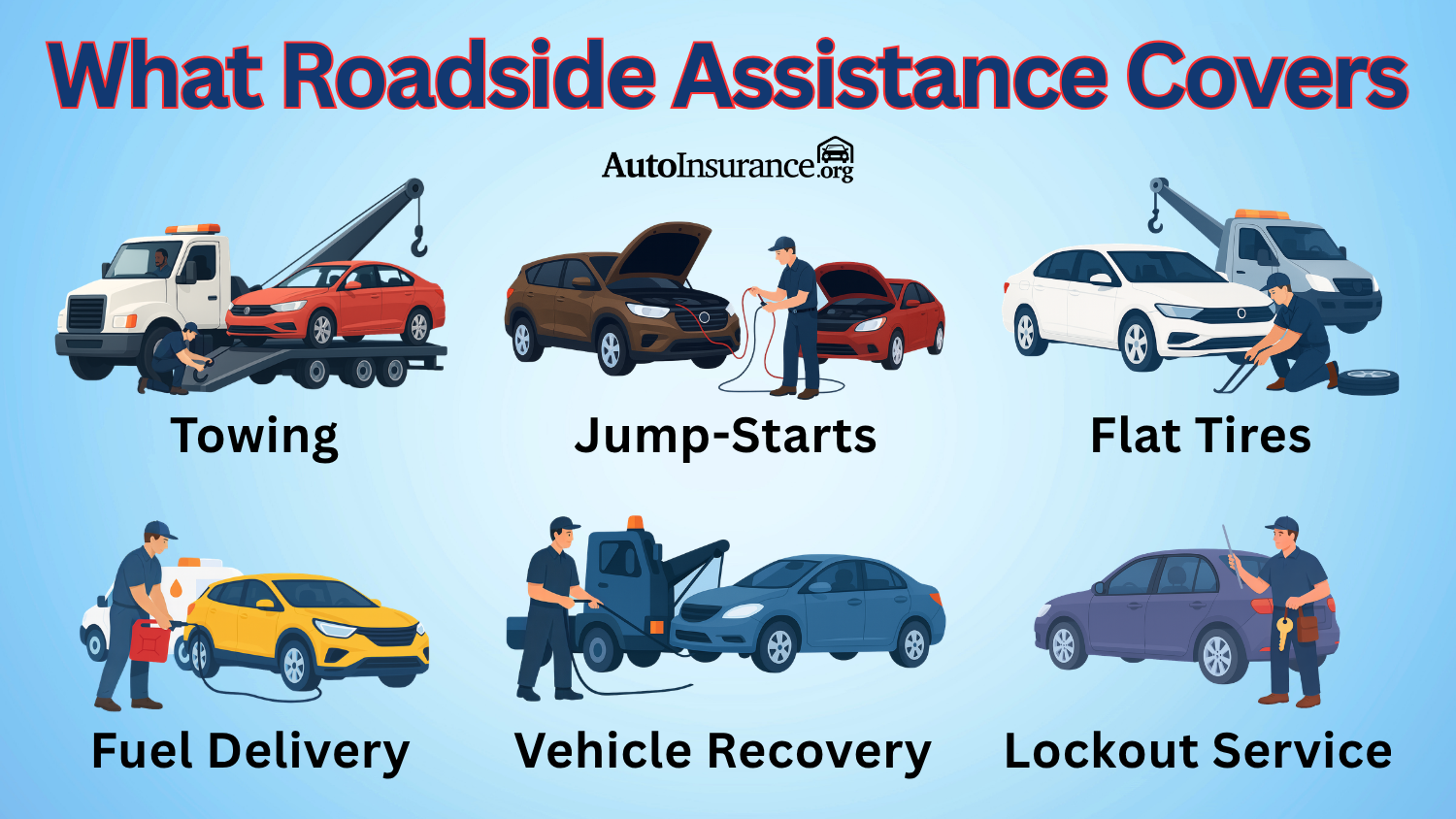
Before adding roadside assistance, check the towing limit and how many times you can use it. Also check what the plan doesn’t cover.
Roadside assistance for a new car may not be necessary if similar help already comes with the manufacturer, dealership, or another membership. Check what you already have before adding it to your policy.
How Much Different Cars Cost to Insure
New cars often come with safety features such as lane assist, backup cameras, and blind-spot warnings. Some insurers may offer discounts for qualifying vehicle safety features. Don’t Miss It: Why is Auto Insurance for New Cars so Expensive?
Will insurance be cheaper on a brand new car? Not always. A newer car may have safety features that help with the rate, but repair costs and vehicle value can still raise it. Insurers also look at things like:
- Coverage choices
- Credit history
- Driving record
- Vehicle make and model
- ZIP code
Age and gender can matter too, depending on the state and insurer. How much is car insurance for a new car? One company may charge more than another for the same car.
Rates can also change based on where you live, your driving history, and the coverage you choose. Key Facts: Factors That Affect Auto Insurance Rates.
Auto Insurance Monthly Rates by Vehicle Type
| Vehicle | Minimum Coverage | Full Coverage |
|---|---|---|
| EV/Hybrid | $85 | $175 |
| Luxury | $95 | $210 |
| Minivan | $60 | $135 |
| Pickup Truck | $65 | $140 |
| Sedan | $60 | $145 |
| Sports Car | $100 | $225 |
| SUV | $70 | $155 |
Sports cars can cost more to insure because performance, repair costs, vehicle value, and claim risk can raise rates. Get The Details: Best Auto Insurance for Sports Cars.
Is insurance cheaper for new or used cars? Sometimes. Used cars can be cheaper to insure. Repair costs still matter, and crossovers may be easier to fix because parts are easier to find.
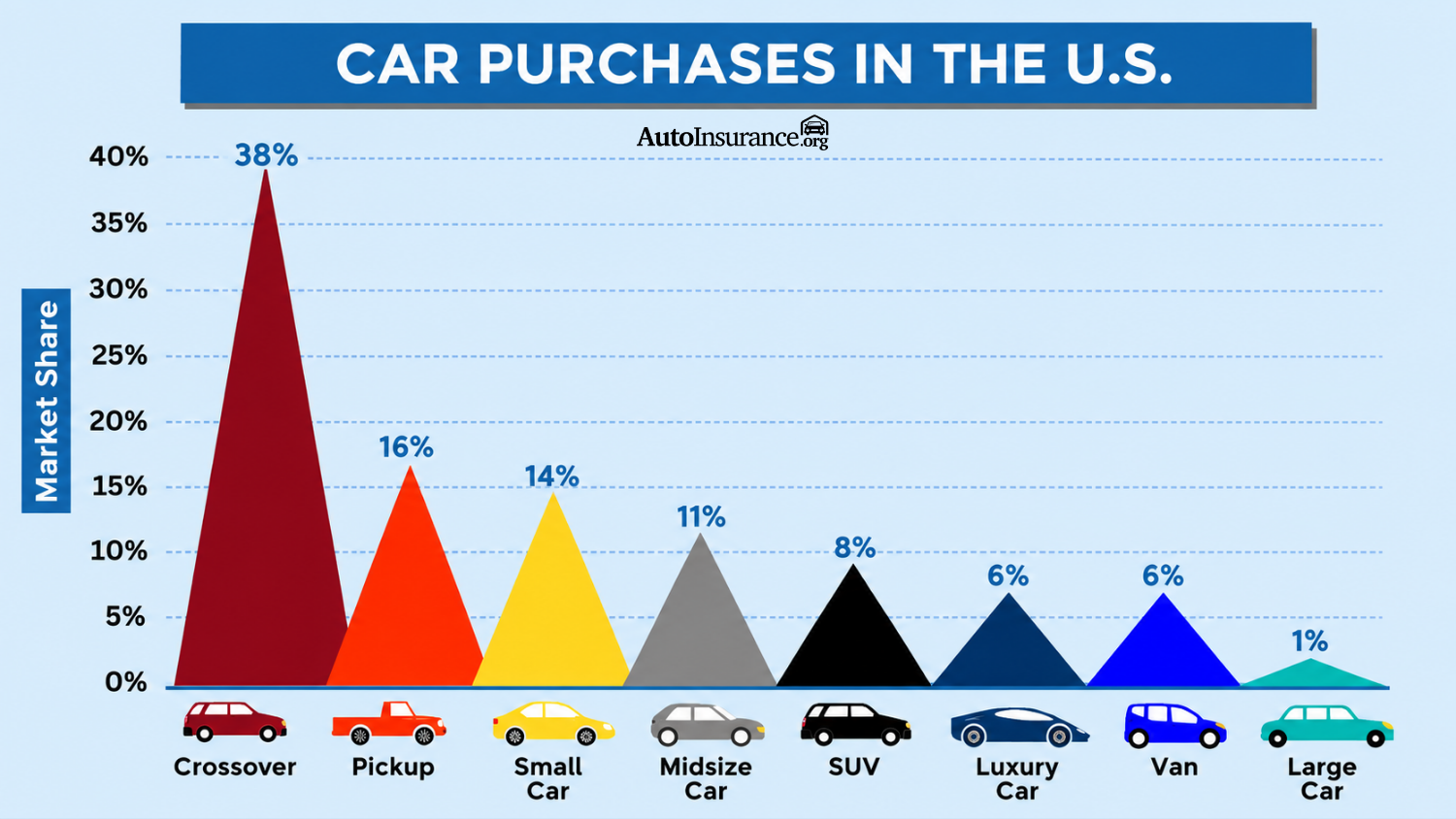
Crossovers make up the largest share in the graphic, while SUVs and vans have smaller shares. Family vehicles and SUVs may benefit from common parts and strong safety features. Which cars have the lowest auto insurance premiums? Can help you compare lower-cost models.
Vehicle type can affect the rate, but it’s not the only factor. Check auto insurance premiums from several providers so you can compare prices before choosing coverage.
Free Insurance Comparison
Compare Quotes From Top Companies and Save
Ways to Save on New Car Insurance
Saving on a new-car policy often starts with choosing coverage that fits the vehicle and checking which discounts you qualify for. Get Savings Now: Best Auto Insurance Discounts for a New Car.
You can also save by comparing insurers and checking your deductible. Credit can affect the rate too, so it helps to look at more than one company.
Compare Quotes
Quotes can vary a lot, even for the same driver and car. Compare the limits, deductibles, and coverage so you know what each company is offering. Keep Reading: How to Get Free Online Auto Insurance Quotes.
A few details are worth checking before you compare offers, especially if the prices look close:
- Check deductibles before comparing prices
- Compare more than the monthly premium
- Look for discounts that apply to your new car
- Review the policy details before choosing
- Use the same coverage limits for each company
Comparing car insurance quotes for a new car can help you see which insurer offers the best mix of price, coverage, and discounts. Check the policy details carefully so you know what you’re actually comparing before you decide.
A lower quote may come with different limits, deductibles, or extras. Check those details before you decide so you’re not choosing on price alone.
Get The Right Amount of Coverage
A new car may need more than a basic liability policy if it’s financed or leased. Lenders often require collision and comprehensive coverage to protect the vehicle. Helpful Info: Types of Auto Insurance Coverage.
New cars can cost more to fix or replace. Higher limits or broader coverage may be worth considering if paying for a major loss yourself would be difficult.
Start by checking what your lender and state actually require, then decide whether you need anything beyond that. Avoid adding optional coverage just because it’s available if the benefit doesn’t fit how you use the car.
You can also look at how the policy is set up and which savings may apply to your situation. A higher deductible or fewer add-ons may lower the cost if you still need the protection.
Saving on car insurance isn’t always about cutting coverage. The better move is to keep the protection you need and look for discounts that lower the price around it.
Maria Hanson Insurance and Finance Writer
Different insurers reward different things, so the savings available can vary a lot. Some offers are based on the driver, while others depend on the vehicle, policy setup, or payment method.
If you’re asking, “How can I save on new car insurance?” discounts are a good place to start. Check what you qualify for before changing the coverage you want for the car.
Ask About Discounts
Discounts can vary widely from one insurer to another, even when the categories look similar. Important Details: Best Auto Insurance Discounts.
How to get discounts on new car insurance varies by insurer. Savings may come from things like anti-theft features, bundling, safe driving, or insuring more than one vehicle.
The highest discount in one category does not always mean the lowest final premium. Your base rate, coverage limits, and the discounts you actually qualify for all affect what you end up paying.
Before you choose a company, check which savings can be used together and whether any rules apply. A few smaller discounts may end up helping more than one larger offer.
Improve Your Credit
Buying a new car can put more attention on your credit when you’re financing the purchase. More Details Here: How Credit Scores Affect Auto Insurance Rates
The impact isn’t the same with every company, and your state laws may restrict when insurers are allowed to use credit-based information when setting rates.
Auto Insurance Monthly Rates by Credit Score
| Company | Excellent (800+) | Good (670-799) | Fair (580-669) | Bad (<580) |
|---|---|---|---|---|
 | $78 | $85 | $107 | $169 |
 | $69 | $80 | $98 | $131 |
 | $56 | $65 | $79 | $103 |
 | $74 | $87 | $106 | $141 |
 | $55 | $60 | $76 | $120 |
 | $82 | $96 | $118 | $157 |
 | $63 | $73 | $90 | $117 |
 | $71 | $78 | $98 | $155 |
 | $59 | $64 | $81 | $128 |
 | $70 | $82 | $101 | $133 |
Credit affects companies differently. Erie and State Farm stay among the lower-cost options, while Allstate and Liberty Mutual show a bigger gap between excellent and poor credit.
If State Farm looks competitive for your profile, it may be worth reviewing its rates, coverage, and discounts in more detail. You can also compare it with Farmers to see how the two companies differ. Check Out These Pages: State Farm Auto Insurance Review & Farmers vs. State Farm Auto Insurance.
See what you could save on new car insurance after your credit improves or when your policy comes up for renewal. A new quote can show whether another company now offers a better rate. Use our auto insurance quote tool to compare companies for your new car and see which options fit your coverage needs and budget.
Choosing Auto Insurance for a New Car
A new car needs the right coverage before you drive it home, and financed or leased vehicles may need more than the state minimum. Liability vs. full coverage auto insurance can help you compare those two coverage levels before choosing a policy.
Once you know what protection you need, compare a few quotes and check which discounts make sense for the car. Compare quotes to review your options without paying for extras you don’t really need.
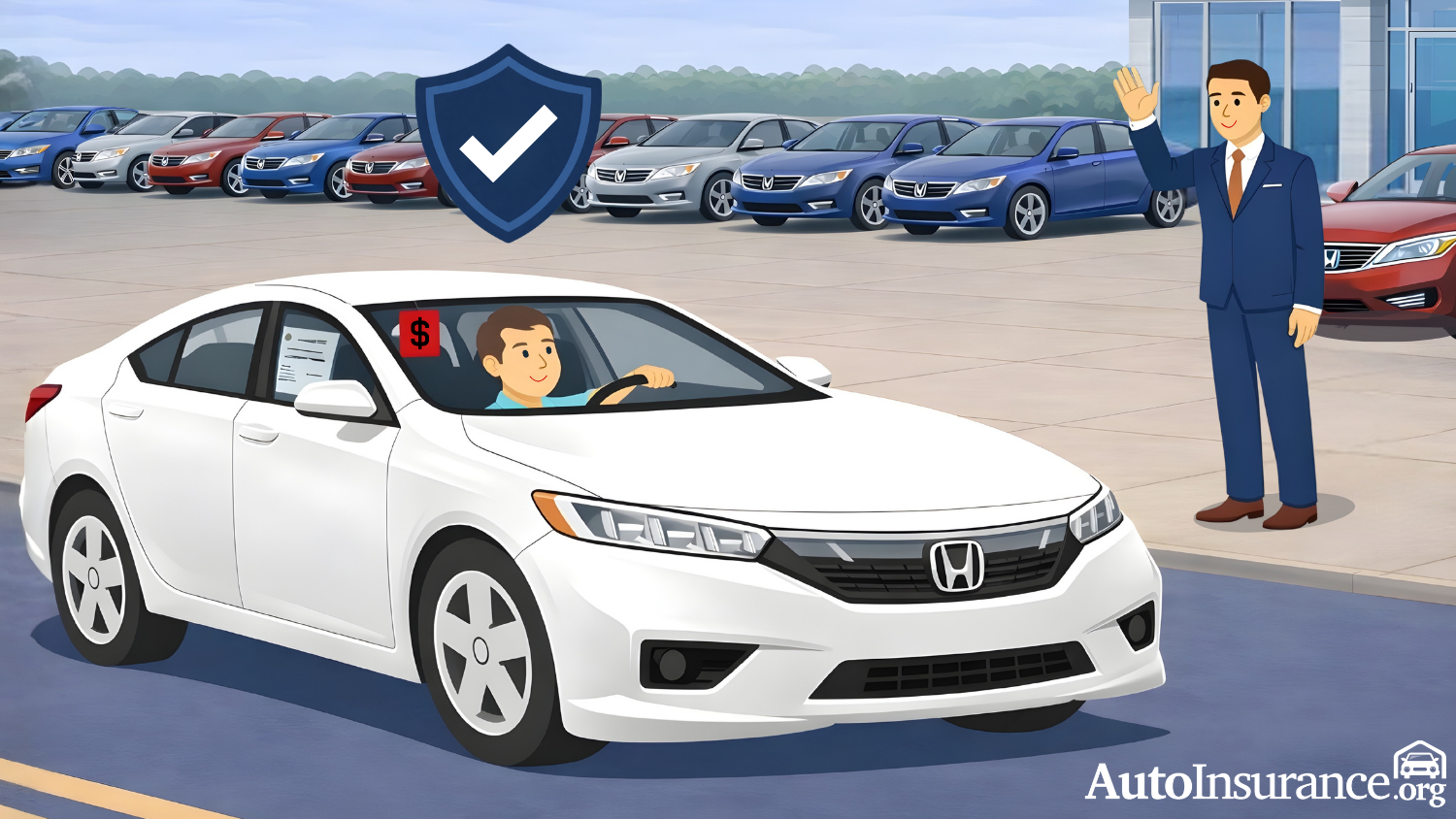
Frequently Asked Questions
Do I need car insurance before I buy a new car?
Yes, in most cases. You should have insurance ready before you drive the new car home. If you already have a policy, your insurer may give you 7 to 30 days to add the vehicle, but financed or leased cars can have stricter requirements.
When should I shop for new car insurance?
Start shopping before you take possession of the car so you have time to compare quotes and arrange coverage. If you already have a policy, you may have a short grace period, but it’s still better to update the new vehicle as soon as possible.
Can I purchase auto insurance for my new car online?
Yes. Many insurers let you get quotes and purchase coverage online by providing information about yourself and the new car. Find Out More: How to Get an Auto Insurance Quote Without Giving Personal Information.
How does car insurance work when buying a new vehicle?
You can compare quotes before buying the car and choose the coverage you want before pickup. Once the purchase is complete, make sure the policy is active and the new vehicle is listed correctly before you drive it home.
Can I buy a new car and insurance on the same day?
Yes. You can buy a new car and arrange insurance on the same day, as long as the policy is active before you drive the vehicle home. If you finance or lease the car, make sure any required coverage is in place before pickup. Compare quotes now to see what options are available near you.
How do I get insurance for my car I just bought?
Contact your insurer and provide the new car’s VIN, purchase date, and any lender information. If you already have a policy, add the car as soon as possible to avoid a coverage gap. Important Read: How to Transfer Auto Insurance to a New Car.
How long is the grace period for adding a new car to insurance?
How long you have to add a new car to your insurance policy depends on the insurer. If you’re trying to figure out whether you have a grace period, check your current policy or contact the company directly.
What coverage and limits do I need for a new car?
Coverage to consider for a new car includes liability, collision, and comprehensive coverage. How much auto insurance coverage you need for a new car depends on the vehicle, your budget, and any lender requirements.
The best insurance for a new car gives you enough protection without paying for coverage you don’t need. For more on choosing policy limits, see: Insurance Coverage Limit.
What is a good deductible for new car insurance?
A $500 or $1,000 deductible is common for new car insurance, but the right amount depends on your budget. A higher deductible can lower your premium, but you’ll pay more out of pocket after a covered claim. Find Out More: Auto Insurance Deductibles.
Can I transfer my existing auto insurance policy to cover my new car?
In many cases, your existing policy can extend temporary coverage to a new car, but you should contact your insurer as soon as possible to add the vehicle. Depending on the company, a 7–30 day grace period may apply.
The new car may come with a different price and different coverage needs. If you have a loan or lease, check the lender’s rules before pickup. Enter your ZIP code to see auto insurance options available in your area.
How much does insurance cost for a new car, and how can I save?
Are there any discounts available for insuring a new car?
Related Articles
-
Sep 2026

How to Evaluate Auto Insurance Quotes in 2026 (4 Simple Steps)
-
Jun 2025
Best Auto Insurance for Clergy in 2026 (Top 8 Companies)
-
Dec 2024
Best Auto Insurance After a DUI in Arizona (Top 10 Companies for 2026)
-
Dec 2024
Best States for Affordable DUI Auto Insurance (2026)
-
Feb 2025
Best Auto Insurance for Drivers With a Canadian License in 2026 (Top 10 Companies Ranked)
-
Apr 2025
Ford F-150 vs. Toyota Tundra Auto Insurance in 2026 (Which Truck Is Cheaper to Insure?)
Get a FREE Quote in Minutes
Insurance rates change constantly — we help you stay ahead by making it easy to compare top options and save.