Why did my auto insurance rates increase when I moved? (2026)
Some reasons why auto insurance rates increase when you move are risk factors such as traffic, crime, and weather. For example, moving from a rural area to an urban area can cause premiums to increase by up to 40%. We'll overview how moving affects insurance and how to find cheap car insurance when moving here.
Read more




Table of Contents
Table of Contents

Insurance and Finance Writer
Maria Hanson grew up with a unique passion and understanding of both the automotive and insurance industries. With one grandfather in auto mechanics and another working in insurance, you could say automotive insurance is in her blood. Her love of research and finance serves her well in studying insurance trends and liability. Maria has expanded her scope of expertise to home, health, and life...
Maria Hanson

Licensed Insurance Agent
Jeffrey Manola is an experienced insurance agent who founded TopQuoteLifeInsurance.com and NoMedicalExamQuotes.com. His mission when creating these sites was to provide online consumers searching for insurance with the most affordable rates available. Not only does he strive to provide consumers with the best prices for insurance coverage, but he also wants those on the market for insurance to ...
Jeffrey Manola
Updated December 2024
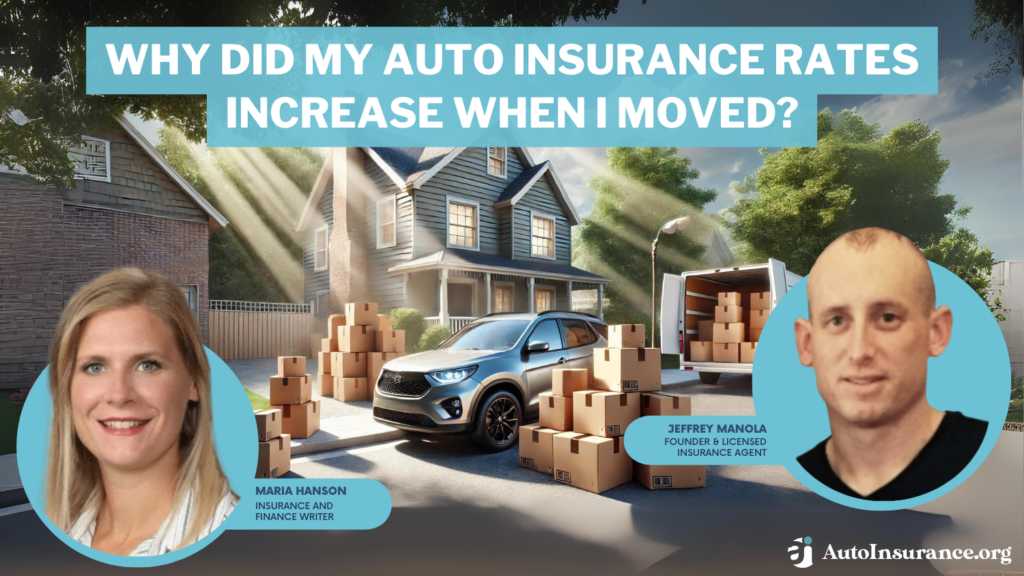
Why did my car insurance go up when I moved? The biggest reason auto insurance rates increase when you move is that insurers must reassess risk in your new location.
The best auto insurance companies set rates based on your vehicle, driving history, and applicable state regulations. Your ZIP code also provides information that helps determine the cost of your coverage. Below, we’ll explain more about other factors that affect auto insurance rates, discuss how state auto insurance laws differ, and explain why you should notify your insurance when relocating.
If you’re still wondering, “Does moving impact my insurance rate?” enter your ZIP code into our quote tool above to compare rates.
- Insurers consider location and driving information to set rates
- Regulations vary by state, so moving to a new area might change your rates
- You must notify your provider if you move to reassess coverage
Reasons Why Auto Insurance Rates Increase When You Move
Why does changing my address increase my car insurance premiums? Location is one of the most significant considerations insurance companies use when deciding which policies to offer and how much to charge for coverage.
How much will my car insurance change if I move? Take a look at the table below to see just how drastic increases can be by state:
Most Expensive and Cheapest Monthly Auto Insurance Rates in Each State by City
| State | Cheapest City | Lowest Rates | Expensive City | Highest Rates |
|---|---|---|---|---|
| Alabama | Ozark | $35 | Birmingham | $103 |
| Alaska | Angoon | $38 | Anchorage | $105 |
| Arizona | Lake Havasu City | $40 | Phoenix | $116 |
| Arkansas | Cotter | $42 | Little Rock | $112 |
| California | San Luis Obispo | $46 | Beverly Hills | $140 |
| Colorado | Grand Junction | $35 | Denver | $115 |
| Connecticut | Groton | $64 | Hartford | $123 |
| Delaware | Bethany Beach | $54 | Groton | $129 |
| District Of Columbia | Washington | $82 | Washington | $156 |
| Florida | Waldo | $47 | Miami | $142 |
| Georgia | Moody AFB | $53 | Atlanta | $132 |
| Hawaii | Anahola | $30 | Captain Cook | $83 |
| Idaho | Boise | $21 | Kamiah | $86 |
| Illinois | Kewanee | $22 | Chicago | $77 |
| Indiana | Lafayette | $35 | Gary | $92 |
| Iowa | Coralville | $32 | Council Bluffs | $92 |
| Kansas | Salina | $35 | Kansas City | $111 |
| Kentucky | Owensboro | $53 | Lookout | $145 |
| Louisiana | Hornbeck | $46 | New Orleans | $173 |
| Maine | Fort Fairfield | $39 | Surry | $101 |
| Maryland | Smithsburg | $69 | Baltimore | $129 |
| Massachusetts | Nantucket | $32 | Boston | $80 |
| Michigan | Saint Louis | $114 | Detroit | $238 |
| Minnesota | Albert Lea | $51 | Minneapolis | $124 |
| Mississippi | Starkville | $36 | Hermanville | $102 |
| Missouri | Sedalia | $39 | Saint Louis | $105 |
| Montanna | East Helena | $29 | Wyola | $107 |
| Nebraska | Grand Island | $36 | Omaha | $86 |
| Nevada | Fallon | $34 | Las Vegas | $124 |
| New Hampshire | Keene | $28 | Manchester | $104 |
| New Jersey | Brookside | $35 | Newark | $86 |
| New Mexico | Alamogordo | $88 | Albuquerque | $138 |
| New York | Corning | $37 | Brooklyn | $105 |
| North Carolina | Alexander | $48 | Charlotte | $114 |
| North Dakota | Fargo | $72 | Fort Yates | $138 |
| Ohio | Tiffin | $31 | Columbus | $82 |
| Oklahoma | Manitou | $38 | Tulsa | $118 |
| Oregon | La Grande | $52 | Portland | $102 |
| Pennsylvania | Bellefonte | $37 | Philadelphia | $112 |
| Rhode Island | Middletown | $61 | Providence | $143 |
| South Carolina | Seneca | $48 | Miley | $117 |
| South Dakota | Watertown | $18 | Pine Ridge | $109 |
| Tennessee | Johnson City | $26 | Memphis | $102 |
| Texas | San Angelo | $49 | Laredo | $133 |
| Utah | Cedar City | $43 | Salt Lake City | $96 |
| Vermont | Colchester | $34 | Vershire | $81 |
| Virginia | Lexington | $30 | Alexandria | $93 |
| Washington | Port Townsend | $35 | Seattle | $80 |
| West Virginia | Martinsburg | $33 | Gilbert | $94 |
| Wisconsin | Kaukauna | $43 | Milwaukee | $116 |
| Wyoming | Sheridan | $24 | Alta | $104 |
So if you noticed an increase in your rates after a move, it could be due to one of these local factors.
Population Density
So, why does auto insurance go up when moving to a bigger city? Having more drivers on the road contributes to crowded roadways, heavy traffic, and high rates of collisions.
As a result, insurance companies charge more for coverage if you live or drive in a densely populated city to offset the cost of potential claims in these areas. Since urban centers are more populated than rural or suburban areas, moving from one to the other can influence what you pay.
Commute
Will my car insurance change if I move and end up with a longer commute? Another factor that hinges on your location is the duration or distance of your commute.
The more time you spend in your car, the higher your likelihood of being in a collision. A longer commute could mean paying more for coverage, even if you relocate to an area with better driving conditions or a safer environment. Learn more about the most expensive commutes in America.
Crime Rates
Does car insurance change when you move to an area with more or less crime? When calculating rates, insurance companies look at an area’s vehicle-related crime statistics, such as theft or vandalism.
Statista has calculated those crime statistics for you. If your vehicle is statistically more likely to be damaged or stolen, companies will charge a higher rate to insure it. Consider the safety of your new neighborhood, as local crime rates can significantly influence the cost of coverage.
Weather
Will my car insurance go up if I move to an area prone to bad weather? It’s easy to overlook the impact of weather on your car insurance rates, but hail, flooding, and strong winds can leave your vehicle vulnerable to damage.
Regions that experience severe natural disasters, such as tornadoes, hurricanes, and wildfires, handle more claims, so moving to one of these regions could explain an increase in your rates.Michelle Robbins Licensed Insurance Agent
Read More: Does car insurance cover storm damage?
Free Insurance Comparison
Compare Quotes From Top Companies and Save
How States Regulate Auto Insurance
You may ask yourself, “Do I have to change my car insurance when I move to another state?” In addition to driver information and location statistics, companies must follow state regulations to determine policy requirements. For example, if you move to a new state, you might need to purchase a new policy or additional coverage to comply with a new set of rules.
State laws regarding auto insurance vary, but they can dictate the amounts or types of auto insurance coverage needed, the cost of your policy, and whether you are at fault in a collision. Here are legal distinctions that you might encounter after an out-of-state move.
At-Fault and No-Fault Systems
All states fall under one of two broad systems for determining liability for vehicle-related bodily injury. First, most states are known as at-fault states, where the driver who caused the accident is legally liable for damages. If you are at fault, you must cover the cost of any medical expenses.
So, why did my insurance go up when I moved to a no-fault state?
In no-fault states, each driver must carry personal injury protection to protect themselves and their passengers after a collision. There are only 12 no-fault states in the country, but the rates for insurance in these places are notably higher since you are required to pay for additional coverage.
Read More:
Mandatory Minimums
Do I need to change insurance when I move? Almost all states have established minimum car insurance requirements to help protect drivers in case of a collision. In these regions, you must purchase specific types of insurance and carry minimum coverage amounts to drive legally, generally liability insurance.
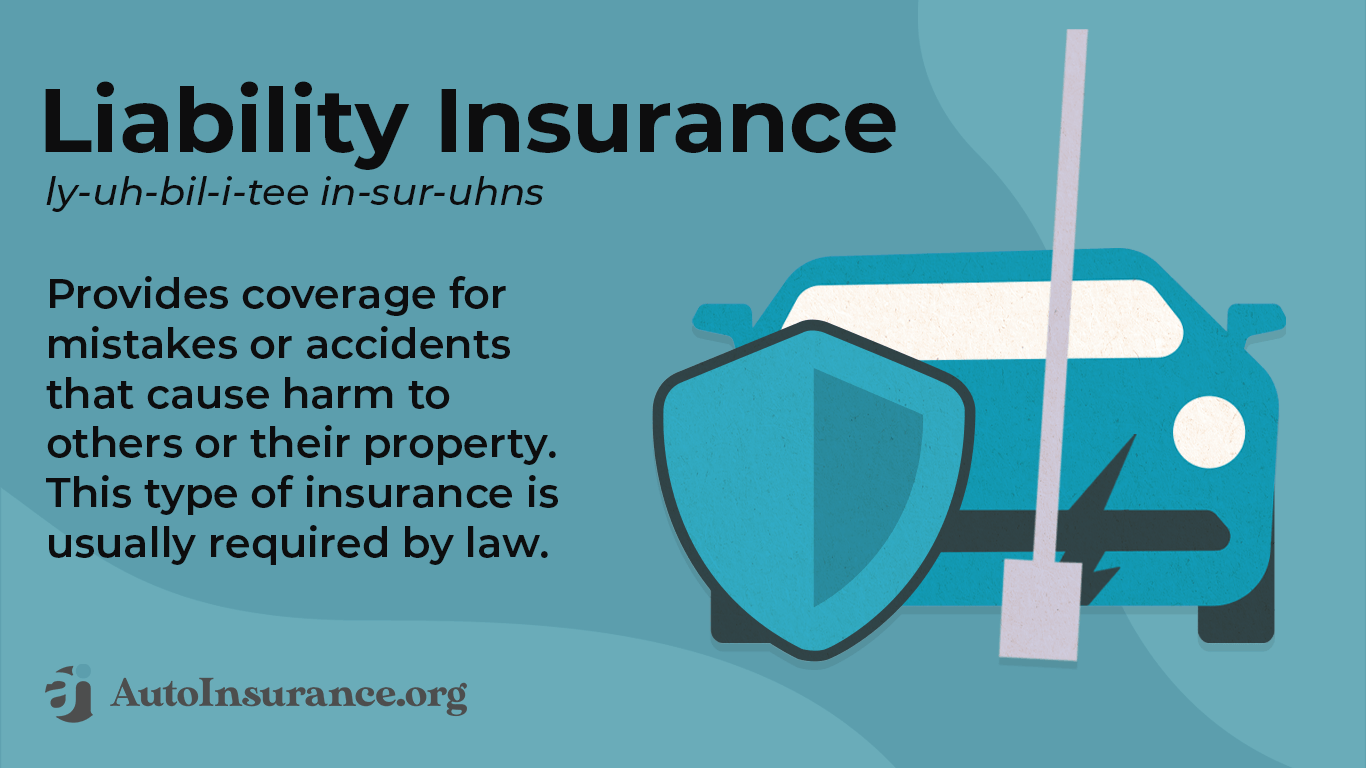
Depending on where you move, you may be required to have:
- Bodily injury liability: Covers medical costs for any injuries for which you are at fault.
- Property damage liability: Pays for any damage to vehicles or other property that you cause.
- Personal injury protection: Personal injury protection covers medical expenses for you and any passengers injured during a collision.
- Uninsured/underinsured motorist protection: Pays for your medical costs if an uninsured driver is at fault. It also covers your medical expenses if an at-fault driver has insufficient insurance.
You might have to purchase one or more of these policies based on where you move. Keep in mind that many insurance companies offer policies in some states but not in others. If you move out of a company’s coverage area, you might need to find a new one to remain insured.
Check out the table below to see each state’s minimum coverage requirements and whether it’s a no-fault or at-fault state:
Minimum Liability Auto Insurance Requirements by State
| States | Coverages | Liability Limits | PIP Limit | No-Fault/At-Fault |
|---|---|---|---|---|
| Alabama | Bodily injury & property damage liability | 25/50/25 | X | At-Fault |
| Alaska | Bodily injury & property damage liability | 50/100/25 | X | At-Fault |
| Arizona | Bodily injury & property damage liability | 25/50/15 | X | At-Fault |
| Arkansas | Bodily injury & property damage liability, personal injury protection (PIP) | 25/50/25 | $5,000, optional | At-Fault |
| California | Bodily injury & property damage liability | 15/30/5 | X | At-Fault |
| Colorado | Bodily injury & property damage liability | 25/50/15 | X | At-Fault |
| Connecticut | Bodily injury & property damage liability, uninsured motorist, underinsured motorist | 25/50/25 | X | At-Fault |
| Delaware | Bodily injury & property damage liability, personal injury protection (PIP) | 25/50/10 | $30,000 | At-Fault |
| Florida | Property damage liability, personal injury protection (PIP) | 10/20/10 | $10,000 | No-Fault |
| Georgia | Bodily injury & property damage liability | 25/50/25 | X | At-Fault |
| Hawaii | Bodily injury & property damage liability, personal injury protection (PIP) | 20/40/10 | $10,000 | No-Fault |
| Idaho | Bodily injury & property damage liability | 25/50/15 | X | At-Fault |
| Illinois | Bodily injury & property damage liability, uninsured motorist, underinsured motorist | 25/50/20 | X | At-Fault |
| Indiana | Bodily injury & property damage liability | 25/50/25 | X | At-Fault |
| Iowa | Bodily injury & property damage liability | 20/40/15 | X | At-Fault |
| Kansas | Bodily injury & property damage liability, personal injury protection (PIP) | 25/50/25 | $9,000 | No-Fault |
| Kentucky | Bodily injury & property damage liability, personal injury protection (PIP), uninsured motorist, underinsured motorist | 25/50/25 | $10,000 | No-Fault |
| Louisiana | Bodily injury & property damage liability | 15/30/25 | X | At-Fault |
| Maine | Bodily injury & property damage liability, uninsured motorist, underinsured motorist, medical payments | 50/100/25 | X | At-Fault |
| Maryland | Bodily injury & property damage liability, personal injury protection (PIP), uninsured motorist, underinsured motorist | 30/60/15 | $2,500, optional | At-Fault |
| Massachusetts | Bodily injury & property damage liability, personal injury protection (PIP) | 20/40/5 | $8,000 | No-Fault |
| Michigan | Bodily injury & property damage liability, personal injury protection (PIP) | 20/40/10 | $50,000 | No-Fault |
| Minnesota | Bodily injury & property damage liability, personal injury protection (PIP), uninsured motorist, underinsured motorist | 30/60/10 | $40,000 | No-Fault |
| Mississippi | Bodily injury & property damage liability | 25/50/25 | X | At-Fault |
| Missouri | Bodily injury & property damage liability, uninsured motorist | 25/50/25 | X | At-Fault |
| Montana | Bodily injury & property damage liability | 25/50/20 | X | At-Fault |
| Nebraska | Bodily injury & property damage liability, uninsured motorist, underinsured motorist | 25/50/25 | X | At-Fault |
| Nevada | Bodily injury & property damage liability | 25/50/20 | X | At-Fault |
| New Hampshire | Financial responsibility only | 25/50/25 | X | At-Fault |
| New Jersey | Bodily injury & property damage liability, personal injury protection (PIP), uninsured motorist, underinsured motorist | 15/30/5 | $15,000 | No-Fault |
| New Mexico | Bodily injury & property damage liability | 25/50/10 | X | At-Fault |
| New York | Bodily injury & property damage liability, personal injury protection (PIP), uninsured motorist, underinsured motorist | 25/50/10 | $50,000 | No-Fault |
| North Carolina | Bodily injury & property damage liability, uninsured motorist, underinsured motorist | 30/60/25 | X | At-Fault |
| North Dakota | Bodily injury & property damage liability, personal injury protection (PIP), uninsured motorist, underinsured motorist | 25/50/25 | $30,000 | No-Fault |
| Ohio | Bodily injury & property damage liability | 25/50/25 | X | At-Fault |
| Oklahoma | Bodily injury & property damage liability | 25/50/25 | X | At-Fault |
| Oregon | Bodily injury & property damage liability, personal injury protection (PIP), uninsured motorist, underinsured motorist | 25/50/20 | $15,000 | At-Fault |
| Pennsylvania | Bodily injury & property damage liability, personal injury protection (PIP) | 15/30/5 | $5,000 | No-Fault |
| Rhode Island | Bodily injury & property damage liability | 25/50/25 | X | At-Fault |
| South Carolina | Bodily injury & property damage liability, uninsured motorist | 25/50/25 | X | At-Fault |
| South Dakota | Bodily injury & property damage liability, uninsured motorist, underinsured motorist | 25/50/25 | X | At-Fault |
| Tennessee | Bodily injury & property damage liability | 25/50/15 | X | At-Fault |
| Texas | Bodily injury & property damage liability, personal injury protection (PIP) | 30/60/25 | $2,500, optional | At-Fault |
| Utah | Bodily injury & property damage liability, personal injury protection (PIP) | 25/65/15 | $3,000 | No-Fault |
| Vermont | Bodily injury & property damage liability, uninsured motorist, underinsured motorist | 25/50/10 | X | At-Fault |
| Virginia | Bodily injury & property damage liability, uninsured motorist, underinsured motorist | 25/50/20 | X | At-Fault |
| Washington | Bodily injury & property damage liability | 25/50/10 | $10,000, optional | At-Fault |
| Washington, D.C. | Bodily injury & property damage liability, uninsured motorist | 25/50/10 | $50,000, optional | At-Fault |
| West Virginia | Bodily injury & property damage liability, uninsured motorist, underinsured motorist | 25/50/25 | X | At-Fault |
| Wisconsin | Bodily injury & property damage liability, uninsured motorist, medical payments | 25/50/10 | X | At-Fault |
| Wyoming | Bodily injury & property damage liability | 25/50/20 | X | At-Fault |
So, why did my car insurance go up when I change my address? You might have moved to an area with additional minimum coverage requirements, resulting in higher rates.
Why You Should Notify Your Insurance Company When Moving
Since location is a vital component when determining policy options, you must report any change of address. Even if you are only moving a short distance, your insurance company will still need to reassess your policy and rates to ensure adequate and appropriate coverage for your new location.
If you forgot or chose not to notify the company about your relocation, you might have your claims denied, your policy canceled, or your rates adjusted to pay back the cost of any increase. Notify your insurance company when you move to protect yourself and prevent unanticipated costs.
Read More: How to Change Auto Insurance When Moving Out of State
So, why does changing address increase car insurance rates? Every area has different risk levels, which insurers will reassess if you change your address.
More About How Moving and Car Insurance Affect Each Other
We hope we have helped you answer, “Why does my car insurance go up when I move?” If you are concerned about why your car insurance went up when you moved, consider location factors that impact your rates.
Pay attention to location conditions and state laws to understand what changes you might experience in your coverage. If you find yourself wondering, “Why is my car insurance going up?” enter your ZIP code into our quote comparison tool below to get started.
Frequently Asked Questions
Why does car insurance go up when you move?
After checking your recent insurance bill, you might be wondering, “Why did my car insurance go up after I moved?”
Whenever you move, providers must reassess your risk level, since your new location may have additional risk factors that affect auto insurance rates, such as traffic, high population, and weather.
Will my insurance go up if I change address?
Your rates won’t always go up if you move. For example, if you’re moving to a new state, car insurance rates won’t always increase, particularly if you’re moving to a more rural state.
Why should I notify my insurance company when moving?
It is crucial to notify your insurance company when you move so that they can reassess your policy and rates based on your new location. Failure to notify them may result in denied claims, policy cancellation, or adjusted rates. Reporting your change of address ensures that you have adequate and appropriate coverage for your new location.
How can I prevent unanticipated costs when moving?
To prevent unanticipated costs, notify your insurance company when you move. This allows them to adjust your policy and rates accordingly. By keeping your insurance company informed, you can protect yourself from policy issues and ensure that you have the right coverage in your new location.
So, why does my car insurance go up when you change address even after notifying my company? Any time you change your address, your insurer will adjust rates to match your new location’s risk.
How long do I have to change my car insurance after moving with Progressive?
The typical time period is 30-90 days. However, call your Progressive agent to find out how to change your auto insurance to a new area.
Read More: Progressive Auto Insurance Review
Will my auto insurance rates always increase when I move?
Do car insurance rates change when you move always? No, not necessarily. While moving can result in higher insurance rates due to various factors, it is also possible for rates to remain the same or even decrease, depending on the specific circumstances of your move.
Why is car insurance so expensive all of a sudden?
A top question readers ask, “Why does my auto insurance keep going up?” Lately, car insurance rates have steadily risen in response to inflation and increased repair costs. However, other factors may contribute to higher rates, such as credit score changes, driving record, and changes in auto insurance discounts or coverage.
Does moving impact car insurance, even within the same ZIP code?
Even if you move within the same city or ZIP code, it’s still important to notify your insurance company. Certain factors, such as changes in parking arrangements, proximity to work, or even adjustments in population density within the same area, can affect your insurance rates.
So why did car insurance go up after moving only a ZIP code over? Every location has different risk levels, even if it’s just a ZIP code over, whether it’s crime, traffic, or population density.
Can I keep my current auto insurance policy if I move to a neighboring state?
In most cases, you will need to switch auto insurance companies if you move to a neighboring state. While some insurance companies may offer coverage across state lines, it’s best to check with your provider to determine if they operate in the state you are moving to.
Should I get insurance on a long distance move?
Usually, it’s a good idea to look for third-party insurance coverage to protect your valuables as you transport them across the country.
Should I change car insurance when I move?
Why did my car insurance go up without an accident?
Why did my insurance go up for no reason?
Why did my car insurance go up $100?
How much of your monthly income should go to car insurance?
What is the most expensive state to register a car in?
How long do I have to change my car insurance after moving with Geico?
Does car insurance cost change per state?
When will my car insurance go down?
Get a FREE Quote in Minutes
Insurance rates change constantly — we help you stay ahead by making it easy to compare top options and save.