
How to Create a Surety Bond for Auto Insurance in 2026 (6 Basic Steps)
Learn how to create a surety bond for auto insurance, with premiums typically ranging from 1% to 15% of the bond amount. Steps include looking at state’s requirements, choosing a provider, and making an application, undergoing a credit check, paying the premium, and filing the bond.
Read more





Table of Contents
Table of Contents

Farmers CSR for 4 Years
Leslie Kasperowicz holds a BA in Social Sciences from the University of Winnipeg. She spent several years as a Farmers Insurance CSR, gaining a solid understanding of insurance products including home, life, auto, and commercial and working directly with insurance customers to understand their needs. She has since used that knowledge in her more than ten years as a writer, largely in the insuranc...
Leslie Kasperowicz

Licensed Insurance Broker
Zach Fagiano has been in the insurance industry for over 10 years, specializing in property and casualty and risk management consulting. He started out specializing in small businesses and moved up to large commercial real estate risks. During that time, he acquired property & casualty, life & health, and surplus lines brokers licenses. He’s now the Senior Vice President overseeing globa...
Zach Fagiano
Updated December 2024
How to create a surety bond for auto insurance is a valuable option for drivers who cannot meet traditional insurance requirements. This bond is a safety measure securing the obligations of the driver and also covers them in the event a claim is made.

Factors such as the driver’s credit history, vehicle type, state regulations, and credit scores affect auto insurance rates and all play a role in determining the cost of a surety bond.
In this article, we will walk you through the process of creating a surety bond for auto insurance, including the factors that influence pricing and how to choose the right bond provider.
Enter your ZIP code into our free quote tool above to find the best auto insurance providers for your needs and budget.
- Step #1: Determine Bond Requirements – Research state regulations
- Step #2: Select Surety Bond Provider – Find a reputable surety company
- Step #3: Complete the Application – Fill out the application form
- Step #4: Credit and Background Check – The company will review your credit
- Step #5: Pay the Premium – Pay the percentage bond premium
- Step #6: Submit to Authorities – File the bond with the relevant state agency
6 Steps to Create a Surety Bond for Auto Insurance
Securing a surety bond auto insurance is an essential step for meeting legal and regulatory requirements in the auto insurance industry. Whether you’re an insurance agent, broker, or driver, surety car insurance guarantees that you will fulfill your obligations under the law.
The process involves a series of steps, from understanding bond requirements to submitting it to the appropriate authorities. By following these steps, you can smoothly complete the process and remain in compliance with state requirements.
Step #1: Determine Bond Requirements
When looking to secure a surety bond for vehicle insurance purposes, begin by reviewing the minimum auto insurance requirements by state, along with the requirements set forth by your jurisdiction or the relevant administrative body.
These recommendations are often very different and usually specify the bond’s value, the reasons behind it, and any special requirements to be complied with. For example, certain states require auto insurance agents or brokers to post a surety bond to receive their licenses, while others may require individuals to obtain a financial responsibility bond to operate a vehicle without traditional auto insurance.
It’s essential to research regulations to meet legal requirements before applying for a bond in insurance. Knowing the cheapest car to get insured and bonded can also help save money while ensuring compliance.
Step #2: Select Surety Bond Provider
Choosing a reputable agency with experience in auto insurance surety bonds is vital to ensure a smooth process. When selecting a provider, it’s important to consider factors such as customer reviews, pricing, and the company’s licensure and financial stability.
Additionally, comparing auto insurance rates can help you find the most cost-effective option while meeting your bond requirements. Checking reviews can provide insights into the company’s reliability and customer service. On top of that, there is a need to compare the prices to make sure that one is getting the right price and also to verify the credentials of the provider to make sure that they can be relied on.
Creating a surety bond for auto insurance involves working with a licensed bond provider to guarantee financial responsibility and meet state insurance requirements.Michelle Robbins Licensed Insurance Agent & Agency Owner
A dependable agency will charge appropriately and help one with the application process, and the bond will be issued as expected without delays or hidden charges.
Step #3: Complete the Application
This application asks for some general personal information, business information (if any), and financial information such as income and tax returns. The information provided assists the surety company in evaluating your credit rating and financial health.
Completing the application carefully and honestly is crucial, as negligence or missing information can lead to delays or even bond cancellation; be sure to know what documents you need to get auto insurance to avoid setbacks.
Depending on the case and type of bond, additional paperwork may be required by the providers, such as, but not limited to, a certificate of insurance and business registration.
Step #4: Credit and Background Check
As part of the application process, a surety company will perform credit checks in order to assess the potential risk involved in underwriting the bond. Generally, your credit score, your industry experience, and any previous actions on bond claims about you are evaluated.
Generally, if you have a good credit record, you will be required to pay lower premium amounts because such an individual is considered not to be a financial risk. On the contrary, if the assigned risks are high, which is indicated by a low credit score, the premium payment is normally raised, or more collaterals are required.
This review is important because it helps the surety assess your ability to fulfill the bond’s obligations. In some cases, the company may also consider other factors, such as your business experience or the type of bond requested. To learn more, explore the best companies for credit-based auto insurance.
Step #5: Pay the Premium
The next step is paying the bond premium, an amount determined as a portion of the total bond value and influenced by factors like your credit rating and the bond’s size.
Auto insurance premiums for surety bonds are generally calculated annually, so you may need to pay the full amount upfront or in installments. Be sure to understand the premium payment terms and make your payment on time.
Once the premium is paid, the surety insurance company will issue the bond, which confirms that you have met the necessary financial obligations for auto insurance.
Step #6: Submit to Authorities
Submit the surety bond with the correct regulatory agency, which varies based on your location and bond type; this could be the Department of Motor Vehicles, the Department of Insurance, or another relevant state authority.
Once filed, the agency will review the bond to ensure it meets all legal and compliance standards. If everything is in order, they will approve the bond, and you’ll officially be in compliance with the state’s auto insurance laws.
It’s important to submit the bond on time to avoid delays in getting your license or insurance policy activated and ensure compliance with auto insurance laws.
Free Insurance Comparison
Compare Quotes From Top Companies and Save
Understanding SR-22 Insurance Bonds and Traditional Auto Insurance
An SR-22 auto insurance bond and conventional auto insurance protection serve the purpose of providing financial coverage but are geared toward two distinct types of drivers.
Standard car insurance limits the policyholder’s risk because the insurance company pays for expenses due to accidents up to the limits set in the policy. This protects the drivers from large out-of-pocket expenses after an accident, depending on the terms of their insurance.
By contrast, an SR-22 bond serves as a financial responsibility certificate for drivers with serious violations. Instead of covering accident damages directly, an SR-22 bond confirms that the driver has funds set aside to handle accident expenses personally.
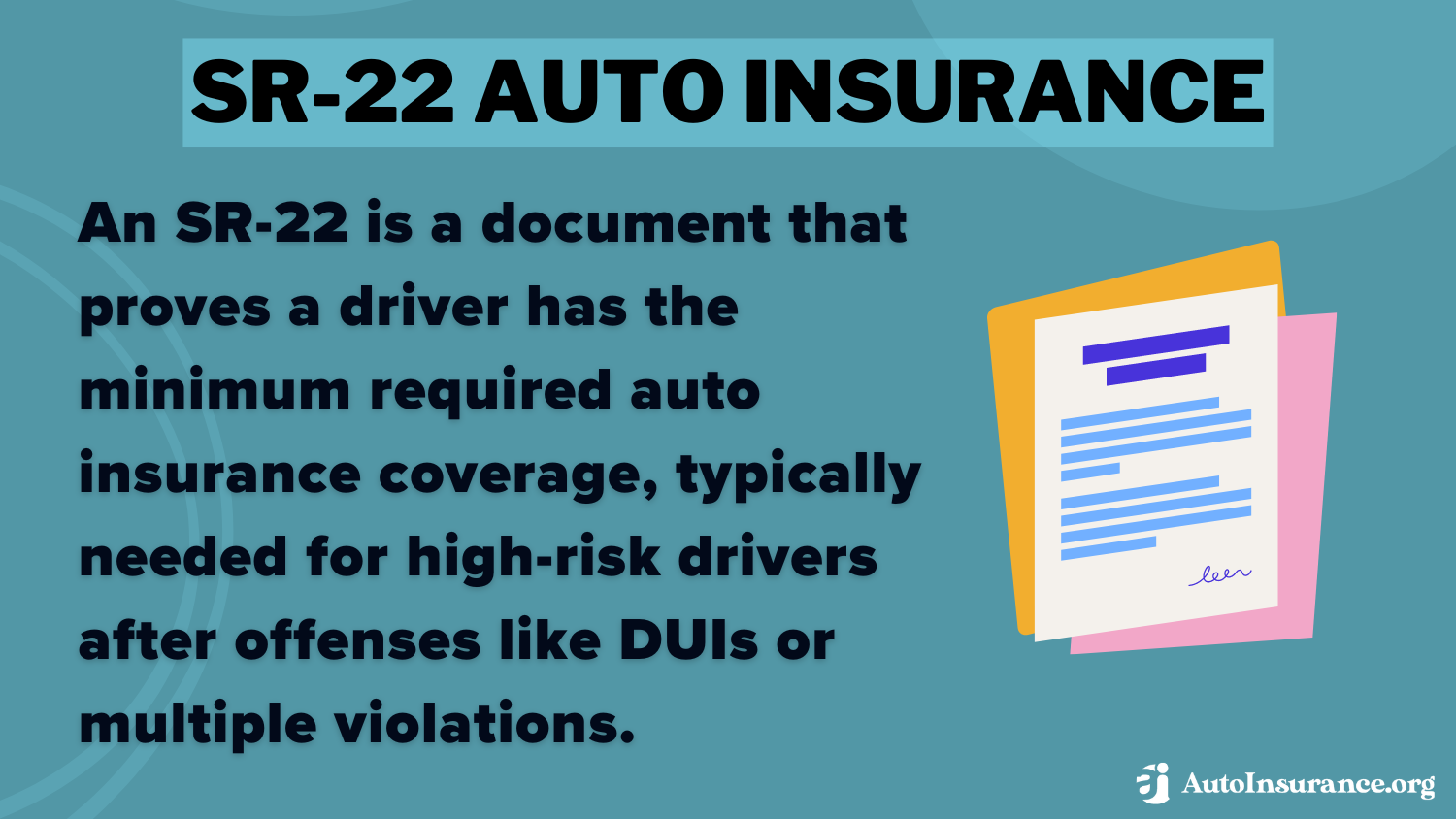
Initially, the SR-22 bond may seem cheaper than the usual auto insurance coverage, but it has a lot of financial risks attached to it. After an accident, the driver is presumed to pay for damages out of their own pocket. These reasons cause high personal costs which are out of the driver’s or owner’s control.
An SR-22 bond is, therefore, a way for these drivers who pose a higher risk to comply with the law in order to keep their driving licenses under tighter economic terms.
Creating a Surety Bond for Auto Insurance
A surety bond for car insurance, such as an SR-22 bond insurance, is mostly demanded from high-risk drivers who have serious driving offenses like driving under the influence or driving without insurance.
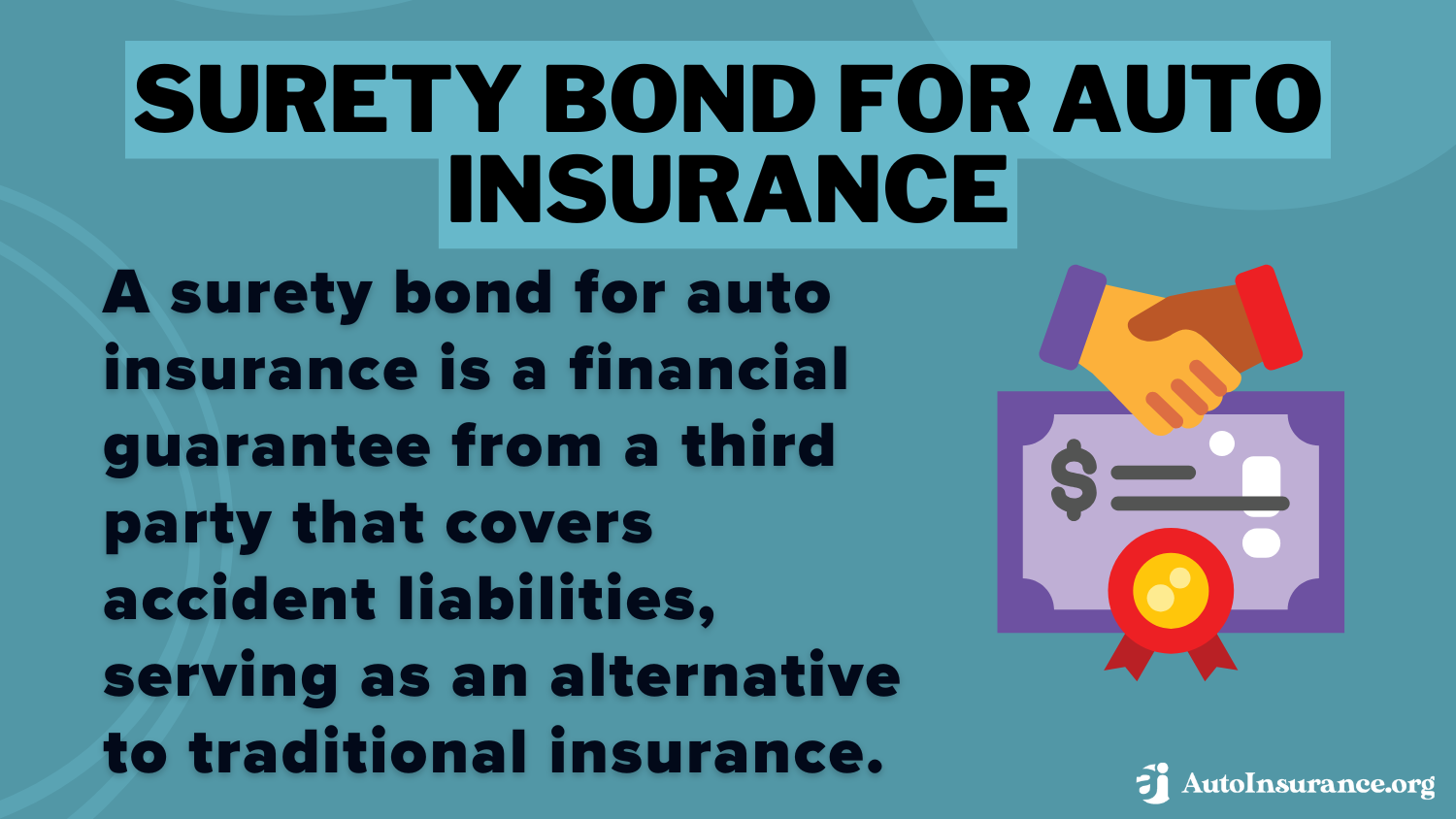
An SR-22 bond is sometimes issued by the court in order to guarantee that you will be able to afford any damages that may ensue from an accident, thus fulfilling the requirements of financial responsibility. To create a car bond insurance, work with an insurance provider or bonding company to issue and file the bond.
Common Penalties for a First-Time DUI Offense
| Penalty for First DUI | Penalty |
|---|---|
| Community service | Determined in court |
| DUI program | Alcohol Diversion Program possible |
| Fine | Up to $1,000 |
| Jail time | BAC over .20: 10 days BAC over .25: 15 days BAC over .30: 20 days up to 180 days |
| License mandatory reinstatement | $98 min, SR22 insurance, and retake driver test |
| License revoked | 6 months |
| Probation | Determined in court |
| Required interlock device | Yes |
| Vehicle impounded | No law |
If you’ve been caught driving without insurance or have multiple violations, a surety bond may be your only option to restore your driving privileges. While it can be costly, some states allow drivers to self-insure with a bond instead of carrying traditional insurance.
Remember that rates for auto insurance will likely rise when a bond is required, but affordable SR-22 options can be found if you shop around. Make sure to check the specific requirements for your state, whether you need an SR-22 bond in California or a vehicle surety bond in Wisconsin.
For those drivers facing serious legal violations, which result in a loss of driving privileges and, more importantly, the need to fulfill the requirements of the financial responsibility law, it is very important to learn how to create a surety bond for auto insurance.
Understanding Surety Bonds for Auto Insurance: Costs and Duration
When learning how to create a surety bond for auto insurance, it’s important to understand that this option can be a cost-effective alternative to traditional car insurance, particularly for high-risk drivers or those with poor credit.
While the cost of surety bonds for vehicles is generally lower than standard auto insurance premiums, it can vary depending on the state and influenced by factors such as your credit history. Drivers with good credit typically pay less for a surety bond, while those with poor credit may face higher rates. Bonding insurance rates may vary, so compare the best coverage and price options.
Additionally, if you are using a self-insured bond, you may need to make a one-time deposit to your state’s DMV, which is usually equal to or greater than the state’s liability auto insurance minimum. As for the bond’s duration, it is generally temporary, expiring within three to five years, unless special conditions apply, such as the need for a voluntary SR-22 bond.
Nonetheless, when moving out of the state, the bond was originally secured, the bond’s provisions shall still remain in effect, and you have to adhere to all the requirements of the bond.
The importance of understanding how to create a surety bond for auto insurance cannot be overlooked since it also involves the cost of obtaining the bond, the credit rating, and the duration of the bond, among other factors that one has to manage so as to comply with the laws of the state.
Free Insurance Comparison
Compare Quotes From Top Companies and Save
Insurance and Third-Party Bond Companies Create Auto Insurance Bonds
If you need to create a surety bond for auto insurance, such as an SR-22 bonds, the process isn’t something you handle on your own. Instead, an auto insurance company or a third-party bonding company will assist in securing the bond on your behalf.
To begin, you’ll need to choose a licensed provider that specializes in auto bonds insurance. Once you’ve selected a company, you’ll fill out an application that includes personal and financial details to assess your risk level.
Depending on your credit score and the type of bond, you may need to pay a premium or fee. Afterward, the provider will file the bond with the appropriate state agency to ensure you meet legal financial responsibility requirements.
For policyholders looking to meet state auto insurance requirements, consider a surety bond as a reliable alternative to traditional insurance—just be sure to choose a reputable bond provider for peace of mind.
Understanding how to create a surety bond for auto insurance is crucial, especially for high-risk drivers who need high-risk auto insurance as an alternative to standard coverage.
Essential Steps for Creating a Surety Bond for Auto Insurance
When learning how to create a surety bond for auto insurance, the process begins with selecting a trustworthy bond vehicle provider. You’ll need to complete an application with financial and business information to assess your risk.
The bond provider will then determine the required bond amount and premium, which is typically a small percentage of the total bond value. After securing the bond, it’s important to keep up with regular premium payments to ensure continuous coverage.
Creating a surety bond auto insurance involves careful planning, working with a trusted provider, and fulfilling ongoing financial obligations, all of which help protect both your business and the public while meeting regulatory requirements. Additionally, it’s important to understand what are the recommended auto insurance coverage levels to ensure adequate protection.
Explore your auto insurance options by entering your ZIP code into our free comparison tool below today.
Frequently Asked Questions
What is the primary purpose of a surety bond?
The primary purpose is to guarantee that a principal will meet their obligations, protecting the obligee if the principal defaults.
What is surety bond insurance coverage?
Car insurance surety bond covers the risk of a principal failing to meet their contractual obligations, ensuring the obligee is compensated for any financial loss.
Start saving on your auto insurance by entering your ZIP code below and comparing quotes.
What is an SR-22 bond used for?
An SR-22 bond is required to show that a driver has the minimum car insurance after serious violations such as DUI or driving without insurance, reflecting the DUI definition and implications.
Why do people buy surety bonds?
People buy surety bonds, including vehicle bond insurance, to meet legal requirements and protect clients by ensuring businesses fulfill their obligations.
What is the policy of surety bonds?
The policy of a surety bond outlines the terms of the bond, including the principal’s obligations, the surety’s responsibilities, and the conditions for making claims.
Is a surety bond the same as insurance?
A surety bond is not insurance; it guarantees the principal’s performance to the obligee and requires repayment if a claim is made, just as you would learn how to file an auto insurance claim.
How to compute surety bonds?
To compute a surety bond, determine the required bond amount and the premium, which is a percentage of the bond amount based on the principal’s risk and creditworthiness.
What is an example of a surety bond?
An example is a contractor’s performance bond, which guarantees the contractor will complete a project according to contract terms. If they fail, the surety compensates the project owner.
What is a surety bond from an insurance company?
A surety bond from an insurance company is a guarantee that the principal will fulfill their contractual or legal obligations. If the principal fails, the auto insurance companies compensates the obligee.
Who are the parties involved in a surety bond?
The parties in a surety bond are the principal (the party fulfilling obligations), the obligee (the protected party), and the surety (the bond issuer guaranteeing the principal’s performance).
If you’re just looking for coverage to drive legally, enter your ZIP code below to compare cheap auto insurance quotes near you.
Get a FREE Quote in Minutes
Insurance rates change constantly — we help you stay ahead by making it easy to compare top options and save.