Best Auto Insurance for Law Enforcement: Top Companies & Coverage (2026)
Erie, USAA, and Liberty Mutual offer the best auto insurance for law enforcement, with USAA at $49 per month for minimum coverage for eligible drivers. These insurers offer claims support, flexible policy options, and potential military, association, or police association member discounts for qualifying officers.
Read more





Table of Contents
Table of Contents

Feature Writer
Rachel Bodine graduated from college with a BA in English. She has since worked as a Feature Writer in the insurance industry and gained a deep knowledge of state and countrywide insurance laws and rates. Her research and writing focus on helping readers understand their insurance coverage and how to find savings. Her expert advice on insurance has been featured on sites like PhotoEnforced, All...
Rachel Bodine

Managing Editor
Daniel S. Young began his professional career as chief editor of The Chanticleer, a Jacksonville State University newspaper. He also contributed to The Anniston Star, a local newspaper in Alabama. Daniel holds a BA in Communication and is pursuing an MA in Journalism & Media Studies at the University of Alabama. With a strong desire to help others protect their investments, Daniel has writt...
Daniel S. Young

Licensed Insurance Agent
Scott W Johnson is an independent insurance agent in California. Principal Broker and founder of Marindependent Insurance Services, Scott brings over 25 years of experience to his clients. His Five President’s Council awards prove he uses all he learned at Avocet, Sprint Nextel, and Farmers Insurance to the benefit of his clients. Scott quickly grasped the unique insurance requirements of his...
Scott W. Johnson
Updated October 2026
Erie ranks first for law enforcement auto insurance, with a 743/1,000 claims satisfaction score and minimum coverage at $56 per month.
- Erie gives police officers reliable claims support and stable pricing
- USAA offers eligible officers military savings and rates at $49 per month
- Liberty Mutual offers eligible police association members savings
USAA offers the cheapest law enforcement coverage to eligible military members, veterans, and qualifying family members. These companies offer reliable claims service, flexible coverage, and discounts for officers seeking the best auto insurance for first responders.
Claims support and optional coverage matter alongside premiums, especially for accident repairs and added vehicle protection.
Top 10 Companies: Best Auto Insurance for Law Enforcement
| Company | Rank | Claims Satisfaction | AM Best | Best for |
|---|---|---|---|---|
 | #1 | 743 / 1,000 | A | Claims Service |
 | #2 | 741 / 1,000 | A++ | Military Savings |
 | #3 | 730 / 1,000 | A | Flexible Policies |
 | #4 | 729 / 1,000 | A+ | Smart Savings |
 | #5 | 726 / 1,000 | A+ | Travel Protection |
 | #6 | 716 / 1,000 | A++ | Local Agents |
 | #7 | 697 / 1,000 | A++ | Federal Savings |
 | #8 | 693 / 1,000 | A+ | Driver Protection |
 | #9 | 690 / 1,000 | A | Policy Bundles |
 | #10 | 673 / 1,000 | A+ | Loyalty Rewards |
Claims satisfaction scores are based on the 2025 J.D. Power U.S. Auto Claims Satisfaction Study and use a 1,000-point scale.
Enter your ZIP code into our free quote tool to compare rates and coverage options from companies offering the best car insurance for law enforcement officers.
Cost of Car Insurance for Law Enforcement Officers
Coverage limits and deductibles affect how accurately rates can be compared. USAA has the lowest minimum-coverage rate shown at $49 per month for eligible military families.
Several factors affect auto insurance rates, including where you live, your driving record, and your policy. Police officers may also qualify for occupation or association discounts, but availability depends on the insurer and state.
Law Enforcement Auto Insurance Monthly Rates by Coverage Level
| Company | Minimum Coverage | Full Coverage |
|---|---|---|
| $65 | $147 |
| $78 | $175 |
| $56 | $128 |
| $74 | $172 |
| $55 | $126 |
| $82 | $186 |
| $63 | $151 |
| $71 | $166 |
| $59 | $133 |
| $49 | $112 |
Auto insurance rates depend on location, driving history, and coverage. Officers looking for cheap car insurance for law enforcement officers should start with minimum-coverage quotes and check whether discounts could lower their premiums.
Minimum coverage costs less upfront, while full coverage provides added protection for an officer’s personal vehicle. Full coverage generally costs more because it includes collision and comprehensive protection for your vehicle.
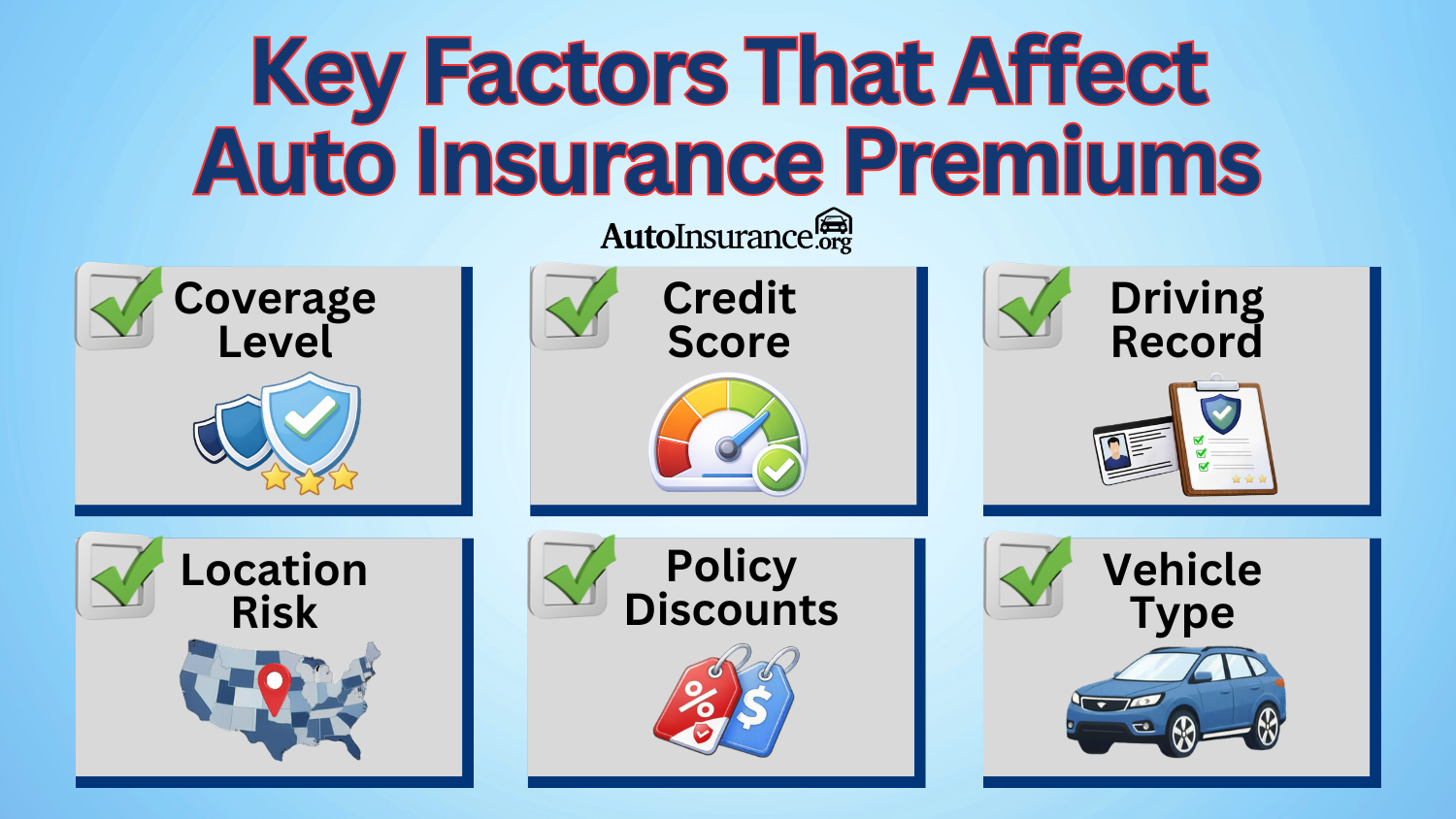
The right coverage level depends on your vehicle’s value, budget, and insurance needs. Choosing the best car insurance for police officers also means reviewing coverage limits and deductibles.
Finding the cheapest car insurance for law enforcement depends on several factors, including location, driving history, age, credit profile, and available discounts.
How Violations Affect Police Officer Premiums
A clean driving record usually leads to lower auto insurance rates, while accidents, tickets, and DUI convictions can substantially increase insurance costs.
USAA remains the lowest-priced insurer shown across the driving-record categories. Rate increases after violations vary considerably by insurer.
Law Enforcement Auto Insurance Monthly Rates by Driving Record
| Company | Clean Record | One Accident | One DUI | One Ticket |
|---|---|---|---|---|
| $65 | $90 | $137 | $82 |
| $78 | $131 | $183 | $103 |
| $56 | $80 | $104 | $68 |
| $74 | $127 | $184 | $98 |
| $55 | $86 | $116 | $71 |
| $82 | $143 | $197 | $109 |
| $63 | $101 | $136 | $81 |
| $71 | $106 | $130 | $92 |
| $59 | $77 | $99 | $72 |
| $49 | $65 | $79 | $59 |
Since each insurer prices violations differently, learn how a speeding ticket affects auto insurance to understand how an accident, DUI, or ticket could change your premium.
When choosing the best car insurance for law enforcement, officers should check how each insurer prices accidents, tickets, and DUI convictions, since these violations can affect premiums differently.
How Credit Can Change an Officer’s Premium
In many states, insurers use credit-based insurance scores when setting premiums. The credit tiers below are comparison categories and may differ from the scoring models individual insurers use.
USAA has the lowest excellent-credit rate shown, while premiums increase as credit tiers decline.
Law Enforcement Auto Insurance Monthly Rates by Credit Score
| Company | Excellent (800+) | Good (670–799) | Fair (580–669) | Poor (<580) |
|---|---|---|---|---|
| $65 | $80 | $100 | $154 |
| $78 | $96 | $120 | $159 |
| $56 | $69 | $86 | $155 |
| $74 | $91 | $114 | $193 |
| $55 | $68 | $85 | $117 |
| $82 | $101 | $126 | $194 |
| $63 | $78 | $98 | $114 |
| $71 | $88 | $110 | $150 |
| $59 | $73 | $91 | $230 |
| $49 | $60 | $75 | $119 |
State Farm shows a much larger difference, with its monthly rate rising from $59 for excellent credit to $230 for poor credit, an increase of $171 per month for the same coverage profile.
Because each company weighs credit differently, see how credit scores affect auto insurance rates, especially if your credit has recently changed.
Driver Demographics and Law Enforcement Auto Insurance Costs
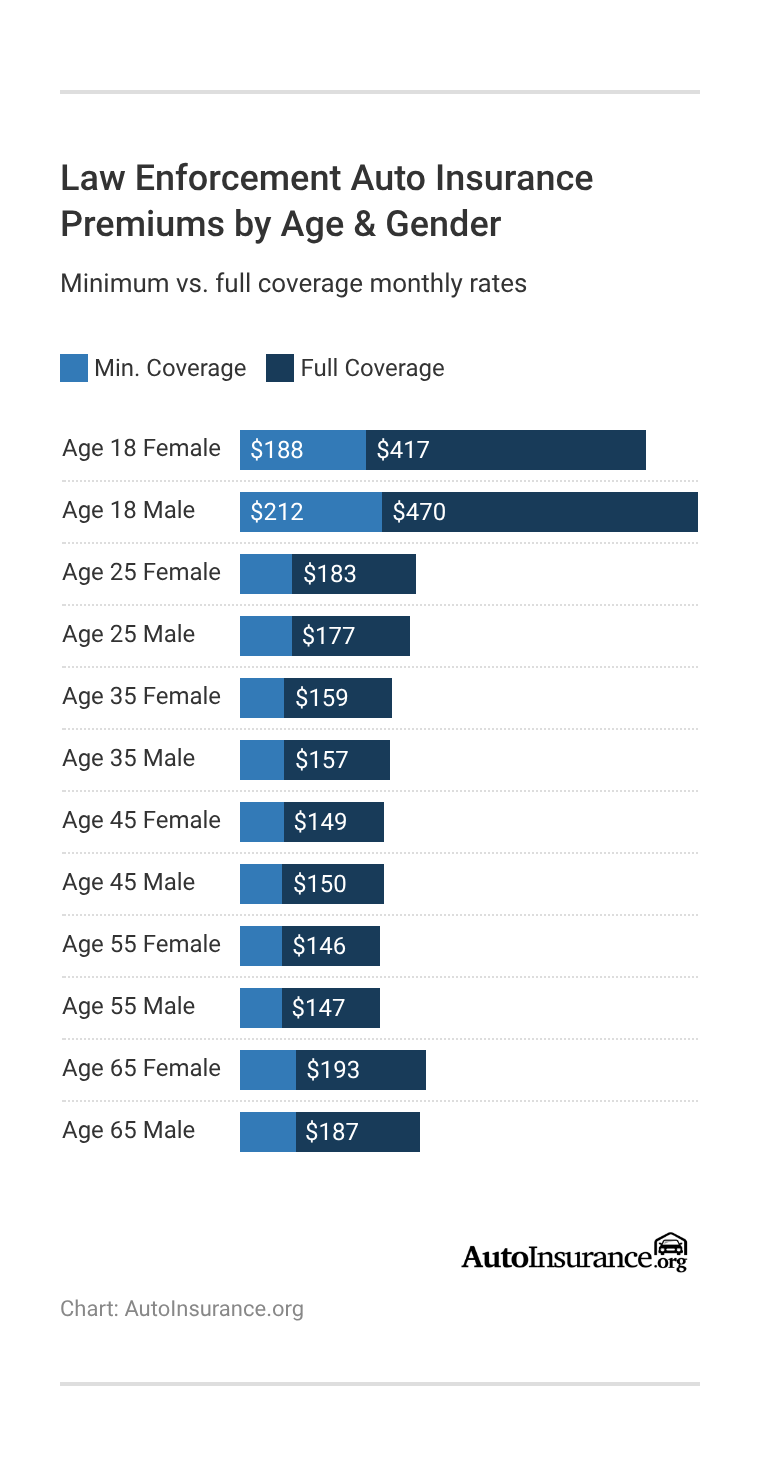
Law enforcement officers generally pay the most at age 18 in this comparison, with premiums dropping sharply by age 25 and continuing to decline through age 55 before rising again at age 65.
For example, an 18-year-old male pays $212 per month for minimum coverage and $470 for full coverage, compared with $62 for minimum coverage and $147 for full coverage for a 55-year-old male.
Age and gender affect insurance rates, though the gap narrows with age. When shopping for car insurance for retired police officers, check whether insurers offer senior, safe-driver, or association discounts based on your eligibility.
At age 45, for example, minimum coverage is $65 per month for women and $64 for men, while full coverage is $149 and $150, respectively. Age and other rating factors can affect premiums differently by insurer.
How Location Affects Car Insurance Costs for Police Officers
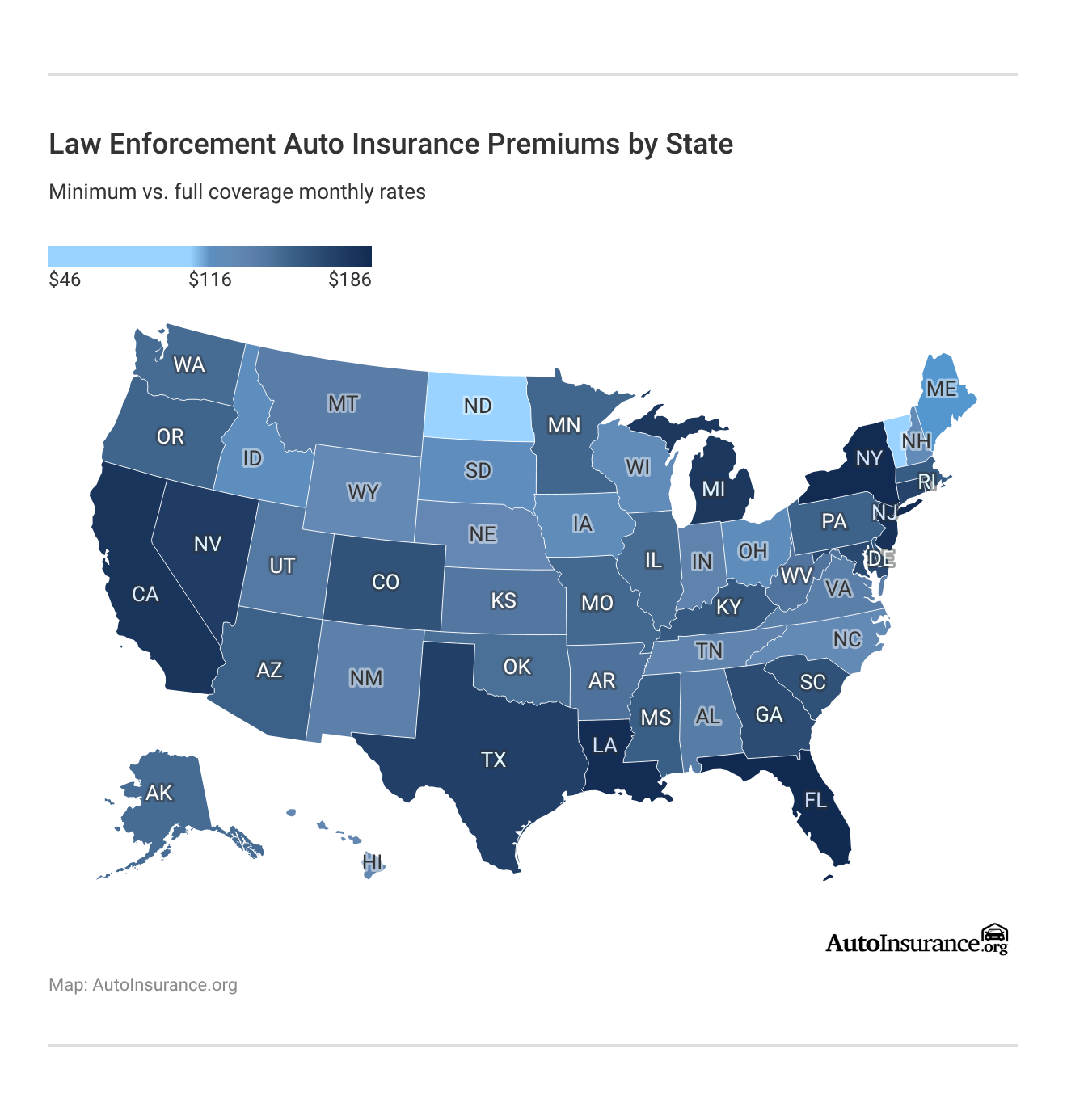
Monthly auto insurance rates for law enforcement officers vary by state, with minimum and full coverage rates differing significantly by location.
Local claim costs, traffic, weather, repair expenses, and state laws affect full coverage auto insurance rates. Premiums for law enforcement officers also vary by state based on coverage requirements and insurer availability.
Even within the same state, premiums can differ by ZIP code for officers with similar driving records. Local traffic, accident rates, and repair costs can also affect the price of auto insurance for police officers.
Officers who move should request updated quotes to check their new rates. To find auto insurance with the best rates, compare quotes from insurers in your state using the same coverage limits and deductibles.
Free Insurance Comparison
Compare Quotes From Top Companies and Save
Law Enforcement Auto Insurance Savings
Law enforcement officers may qualify for several types of auto insurance discounts, including occupation, membership, military, payment, and online-purchase savings.
The table shows potential discounts available to eligible drivers, including law enforcement officers. Savings vary by insurer, state, and eligibility requirements, and the percentages do not guarantee a specific reduction in your premium.
Auto Insurance Discounts Available to Law Enforcement Officers
| Company | Discount | Discount Type |
|---|---|---|
| 12% | Membership Required |
| 15% | Affiliation-Based |
| 7% | Payment Plan |
| 11% | Occupation-Based |
| 10% | Eligible Military |
| 12% | Online Purchase |
| 7% | Limited Availability |
| 8% | Group Discount |
| 12% | Safe Driving |
| 10% | Military Only |
Not all discounts are law enforcement-specific, and eligibility varies by insurer and state. Officers interested in a Farmers Insurance law enforcement discount should ask whether occupation-based savings are available in their state and what documentation is required.
Before applying for auto insurance discounts for law enforcement, ask whether the insurer requires proof of employment or membership in a qualifying police association.
Compare the final premium after discounts, since a lower base rate may save law enforcement officers more than a larger advertised discount.
Nationwide and Progressive offer additional discounts, including potential safe-driver savings. Check all eligible discounts and compare final premiums before choosing coverage.
Law enforcement officers should compare the final premium after discounts, review claims support, and confirm whether personal vehicles and work equipment are covered before choosing a policy.Laura Berry Former Licensed Insurance Producer
Eligible police officers, firefighters, and EMTs may qualify for first-responder auto insurance discounts through participating insurers, which may require proof of employment or association membership.
Available car insurance discounts for police officers may include association-based savings, safe-driver discounts, and multi-policy discounts, depending on the insurer.
- Ask About Payment Options: Some insurers offer savings when you pay your premium in full or enroll in automatic payments.
- Bundle Your Policies: When shopping for the best home and auto insurance for law enforcement, ask each insurer how much you could save by combining both policies.
- Choose a Deductible You Can Afford: A higher deductible usually lowers your monthly premium, but make sure you could cover the cost after a claim.
- Compare Equivalent Policies: Use the same limits and deductibles when checking prices across insurers.
- Maintain a Clean Driving Record: Avoiding accidents and traffic violations helps keep premiums lower over time.
- Review Your Coverage After Major Life Changes: Moving, changing vehicles, or reducing your annual mileage may qualify you for lower rates.
When shopping for homeowners insurance for law enforcement, officers should ask about discounts through professional associations.
Eligibility and discounts may differ between home and auto policies. Before renewal, check for new safe-driver discounts based on your driving history.
Combining savings, including a homeowners insurance law enforcement discount, with the right deductible may lower costs. Update your insurer after moving, changing vehicles, or adjusting your mileage.
Law enforcement association members may qualify for discounts, while police union auto insurance benefits may require proof of membership in a participating organization.
Coverage Law Enforcement Officers Should Consider
When choosing off-duty police officer car insurance, consider the price and coverage available for your personal vehicle. Many insurers offer standard protection along with optional features that better meet the needs of law enforcement officers.
Our top picks offer liability, collision, comprehensive coverage, rental reimbursement, and uninsured motorist protection. Rental reimbursement coverage helps pay for a temporary rental car while your vehicle is being repaired after a covered claim, subject to policy limits.
Law Enforcement Auto Insurance Coverage Options
| Protection | What it Covers | Key Benefit |
|---|---|---|
| Collision | Crash-related vehicle damage | Protects an officer’s vehicle |
| Comprehensive | Theft, weather, and vandalism | Helps protect parked vehicles |
| Gap Insurance | Loan balance after total loss | Limits unexpected officer costs |
| Liability | Injuries and property damage | Protects officers from liability |
| Medical Payments | Crash-related medical expenses | Helps with officer medical costs |
| Personal Injury (PIP) | Medical bills and lost wages | Protects income after injuries |
| Rental Reimbursement | Replacement vehicle costs | Keeps officers on the road |
| Roadside Assistance | Towing and roadside services | Aids officers in breakdowns |
| Underinsured Motorist | Costs beyond driver’s limits | Reduces out-of-pocket costs |
| Uninsured Motorist | Uninsured driver accident costs | Reduces officers’ financial risk |
Gap insurance may cover the difference between your vehicle’s insurance payout and the remaining loan or lease balance after a covered total loss, subject to policy limits and exclusions.
Personal auto insurance generally covers commuting, but officers using their own vehicles for work-related duties should confirm whether those activities require additional coverage. Consider how often you drive and what you could pay after an accident when choosing.
- Accident Forgiveness: Check whether the insurer offers this benefit automatically or requires additional eligibility before a qualifying accident is forgiven.
- Collision Coverage: Consider the value of your personal vehicle and how much you could afford to pay for repairs or replacement after a crash.
- Comprehensive Coverage: This may be worth considering if your vehicle is frequently parked outdoors or exposed to theft, severe weather, or vandalism.
- Liability Coverage: Choose limits based on the financial protection you need rather than relying only on your state’s minimum requirements.
- Rental Car Reimbursement: Consider this option if you depend on your personal vehicle for commuting and would need transportation while it is being repaired.
- Roadside Assistance: Compare towing limits, service availability, and benefits before adding it to your policy, especially if you already have roadside coverage elsewhere.
- Uninsured/Underinsured Motorist Coverage: Check state requirements and whether your limits cover your expenses after an accident with an uninsured or underinsured driver.
Extra coverage may help with towing, transportation, medical costs, or repairs after an incident. Review your policy for covered benefits, limits, and eligibility requirements.
Some insurers offer new car replacement, gap coverage, or deductible rewards. Prioritize extras that address your vehicle use, budget, and daily driving needs. Frequent commuters may also benefit from rental reimbursement and roadside assistance.
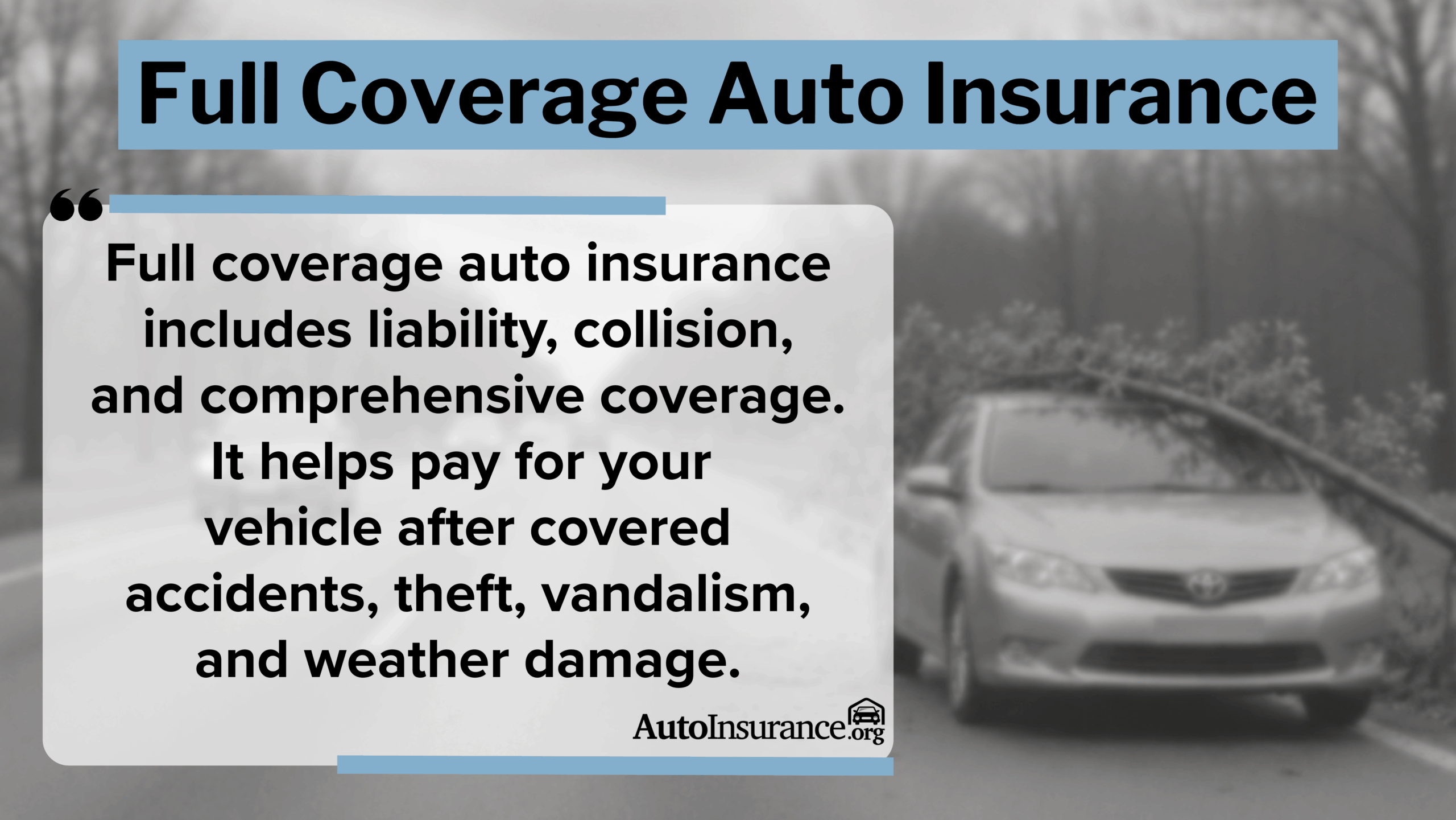
Law enforcement officers may qualify for rental car discounts through participating rental companies, but these savings are separate from rental reimbursement coverage, which can help pay for transportation after a covered insurance claim.
Departments generally arrange police vehicle insurance through commercial or government fleet policies that cover agency-owned patrol cars used for official duties.
10 Best Auto Insurance Companies for Law Enforcement
When choosing coverage, officers should consider claims service, financial strength, available discounts, and policy options.
Reviewing different auto insurance providers can help officers find benefits and service that fit their needs.
#1 – Erie: Top Pick Overall
Pros
- Affordable Coverage Options: Erie starts at $56 per month for minimum coverage and $128 for full coverage, with Rate Lock available to eligible drivers.
- Rate Lock Feature: Erie’s Rate Lock can help prevent certain premium increases, subject to the program’s terms and eligibility requirements. Learn more in our Erie auto insurance review.
- Claims Satisfaction Score: Erie has a claims satisfaction score of 743 out of 1,000, the highest among the insurers ranked in this comparison.
Cons
- Fewer Digital Tools: Erie’s mobile app and online features are more limited compared to larger national insurers.
- Limited Availability: Erie is only available in select states, which may limit access for some law enforcement officers.
#2 – USAA: Best for Military Savings
Pros
- Claims Handling: USAA scored 741 out of 1,000 in the 2025 J.D. Power U.S. Auto Claims Satisfaction Study. Read our USAA auto insurance review for more details.
- Serves Military Families: USAA offers minimum coverage starting at $49 per month and full coverage at $112 for eligible military members, veterans, and their families.
- Various Discounts: USAA offers savings for storing a vehicle on a military base, along with discounts for safe driving, anti-theft devices, and good students.
Cons
- Few Physical Branches: You won’t find many USAA auto insurance offices to get in-person customer service.
- Military Eligibility Required: USAA coverage is limited to eligible military members, veterans, and their families, so not all law enforcement officers qualify.
#3 – Liberty Mutual: Best for Organization Discount
Pros
- Better Car Replacement Coverage: If your car is less than a year old with under 15,000 miles, Liberty Mutual may replace it with a newer model.
- Customizable Policies: Liberty Mutual’s Coverage Customizer tool recommends discounts and coverage based on your needs. Explore our Liberty Mutual auto insurance review.
- Police Discount: Fraternal Order of Police members may qualify for Liberty Mutual savings. The insurer offers an online-purchase discount of 12% or more, depending on location.
Cons
- Higher Rates: Liberty Mutual tends to have higher rates than many of its competitors.
- High Complaint Index: Liberty Mutual’s NAIC complaint index score is 3.09, or three times higher than average, indicating the company receives several customer complaints.
#4 – Nationwide: Best for Usage-Based Savings
Pros
- SmartRide Savings: Careful drivers can earn up to 40% through Nationwide SmartRide. Find out how the program works in our Nationwide SmartRide app review.
- BBB A+ Rating: Nationwide has an A+ rating from the Better Business Bureau.
- Vanishing Deductible: Nationwide offers a vanishing deductible program that reduces your deductible by $100 for every year of safe driving.
Cons
- Not Available in All States: You can’t get Nationwide car insurance for law enforcement officers in Alaska, Hawaii, or Louisiana.
- Not the Cheapest: Other competitors, such as State Farm and Geico, generally have cheaper rates.
#5 – AAA: Best for Roadside Assistance
Pros
- AAA Membership Discount: Law enforcement officers may qualify for an auto insurance discount with an AAA membership.
- Membership Perks: AAA’s membership grants police officers access to discounts on travel, shopping, dining, hotels, auto repair, and more.
- Various Insurance Products: Alongside AAA’s extensive roadside assistance coverage, you can get life, home, renters, and condo insurance.
Cons
- Limited Offerings: AAA coverage and policy options vary by club and state, so some benefits may not be available where you live.
- Must Pay Membership Fee: Having to pay a membership fee to get AAA may deter some law enforcement officers from getting coverage with the company.
#6 – State Farm: Best for Local Agents
Pros
- Financial Strength: State Farm has an A++ rating from AM Best, indicating a strong financial outlook.
- Various Discounts: Police officers may qualify for State Farm savings such as safe-driving, multi-policy, and multi-vehicle discounts.
- Vast Network of Agents: State Farm has more than 19,000 local agencies, making it easy for officers to get in-person help when they need it.
Cons
- Doesn’t Have Accident Forgiveness: Unfortunately, State Farm doesn’t offer an accident forgiveness program, so you could see higher rates after an accident.
- No Gap Insurance: Law enforcement officers with new cars may be disappointed to hear that State Farm doesn’t offer gap insurance coverage.
#7 – Geico: Best for Federal Savings
Pros
- Lower Monthly Rates: Geico offers minimum coverage starting at $55 per month and full coverage at $126 per month.
- Multiple Discount Options: Geico offers savings for eligible military members and federal employees, along with discounts for multi-vehicle policies and defensive driving.
- 24/7 Customer Service: Geico’s around-the-clock customer service accommodates police officers who work nontraditional hours.
Cons
- Few Local Agents: Geico mainly serves customers online and by phone, which may not appeal to officers who prefer in-person support.
- No Rideshare or Gap Insurance: Police officers who need rideshare auto insurance or gap insurance for their financed vehicle can’t get it with Geico.
#8 – Allstate: Best for Add-On Coverages
Pros
- Law Enforcement Savings: Eligible officers may qualify for an affiliation-based discount. Allstate also offers savings through programs such as Drivewise.
- Local Agents: Allstate has a large network of local agents for a personalized customer service experience.
- Various Coverage Options: Allstate includes accident forgiveness, new car replacement, and rideshare coverage. See our Allstate auto insurance review.
Cons
- Higher Rates: Allstate may have higher rates than some of its competitors.
- Poor Customer Satisfaction: While Allstate has an A+ from the Better Business Bureau (BBB), its customer reviews average 1.1 out of 5 stars based on 1,056 reviews.
#9 – Farmers: Best for Bundling Policies
Pros
- NAIC Complaint Record: Farmers has a low complaint index score from the National Association of Insurance Commissioners (NAIC).
- Specialized Coverage: Farmers offers law enforcement officers personal umbrella, spare parts, and glass coverage. Learn more in our Farmers auto insurance review.
- Multiple Discount Options: Farmers offers multiple discounts, including multi-policy, multi-vehicle, and safe-driver savings.
Cons
- Limited Online Tools: Farmers offers fewer online policy-management features than some competitors.
- Not Available Nationwide: Farmers doesn’t offer auto insurance in nine states and Washington, D.C., which may limit options for some officers.
#10 – Progressive: Best for Loyalty Rewards
Pros
- Multiple Loyalty Discounts: Progressive offers multi-car, multi-policy, and continuous insurance discounts, with additional savings available to some eligible officers.
- Digital Policy Tools: Progressive offers a mobile app for managing policies, payments, and claims, with features covered in our best auto insurance mobile apps guide.
- Accident Forgiveness: Progressive offers accident forgiveness to eligible drivers, which may help prevent a qualifying accident from increasing their premium.
Cons
- Limited Agent Presence: Progressive has fewer local agents, which may not suit officers who prefer in-person service.
- Potential Rate Increases: You could see higher rates with Progressive after an accident, which may be a drawback for some drivers.
Largest Auto Insurers by Market Share
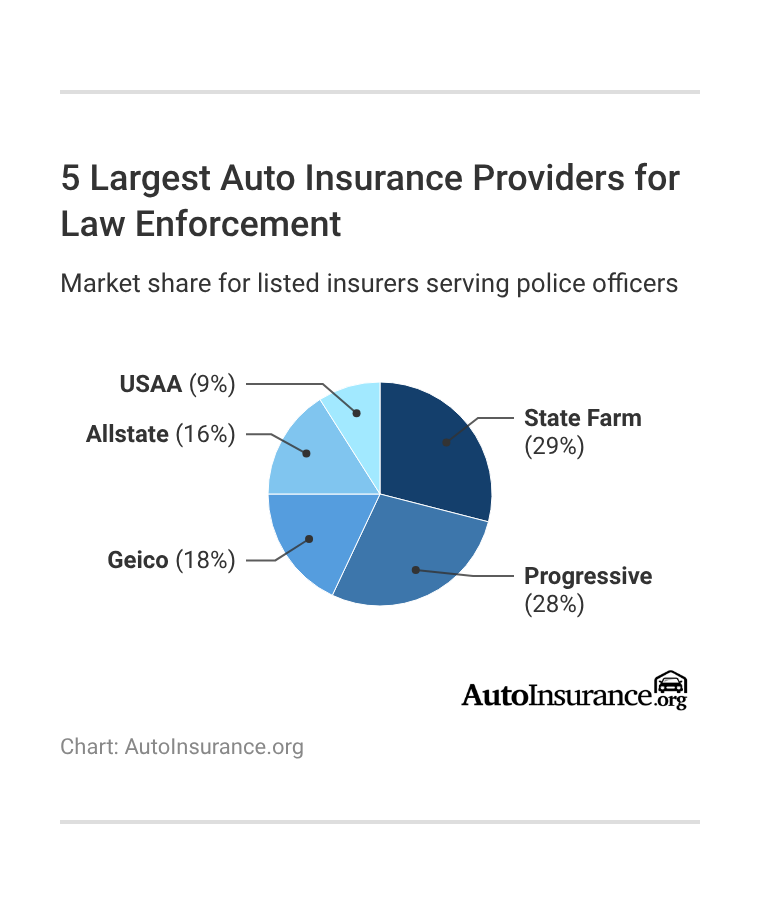
These percentages are based on each insurer’s general U.S. auto insurance market share and are normalized across the five companies shown.
They do not represent market share specifically among law enforcement officers. State Farm and Progressive have the largest shares in this comparison at 29% and 28%, followed by Geico at 18%, Allstate at 16%, and USAA at 9%.
See the largest auto insurance companies in the U.S. for a broader look at national market share and other major insurers.
A larger market share doesn’t guarantee better rates, claims service, or coverage for officers. Even car insurance companies that give law enforcement discounts should be compared by final premiums and coverage options.
Free Insurance Comparison
Compare Quotes From Top Companies and Save
Final Auto Insurance Picks for Law Enforcement
Choose liability limits that meet state requirements and provide enough financial protection for your personal driving and commuting needs.
If you rely on your personal vehicle for a long commute or frequent driving, consider whether collision and comprehensive coverage make sense based on the car’s value and what you could afford to pay for repairs or replacement.
Police officers affiliated with the military, a federal agency, or qualifying law enforcement organizations may be eligible for additional discounts.Laura D. Adams Insurance & Finance Analyst
When selecting a police officer auto insurance deductible, choose an amount you could comfortably pay after a covered claim. A higher deductible may lower your premium, but it also increases what you pay out of pocket.
Uninsured and underinsured motorist coverage can provide added protection if another driver has little or no insurance.
Officers carrying work equipment in personal vehicles should ask about law enforcement vehicle equipment coverage for theft or damage. Check eligibility for occupation, association, military, safe-driver, and multi-policy discounts.
Use the best car insurance comparison sites to review quotes with the same liability limits, deductibles, and coverage options. This gives you a more accurate comparison of the final premium and the protection each policy provides.
Enter your ZIP code into our free quote comparison tool to find the best rates from top providers near you in minutes.
Frequently Asked Questions
What is the best car insurance company for law enforcement?
Erie is the best car insurance company for law enforcement in our ranking, with a 743 out of 1,000 claims satisfaction score and minimum coverage starting at $56 per month. USAA offers savings for eligible military families, while Liberty Mutual provides discounts to qualifying police association members.
Does law enforcement get discounts on car insurance?
Many insurers offer discounts for law enforcement officers, but eligibility varies. Some savings come through police associations or first responder programs, while others can be combined with safe driver or bundling discounts. You may also qualify for car insurance with first responder discount programs in select states.
What companies offer discounts that law enforcement officers may qualify for?
Discount eligibility varies by insurer. Officers may qualify through occupation, association, military, federal employment, safe-driving, or multi-policy savings. Progressive and State Farm do not offer nationwide law enforcement discounts. Compare the best auto insurance discounts for police officers for more options.
How much does car insurance cost for law enforcement officers?
In our rate comparison, USAA costs $49 per month for minimum coverage and $112 for full coverage for eligible military members. Erie costs $56 and $128, respectively. Your rate will depend on your location, driving history, age, credit profile, coverage, and available discounts.
Does Progressive offer a law enforcement discount?
Progressive doesn’t advertise a nationwide law enforcement discount, but eligible officers may qualify for group savings through participating organizations. Other savings may be available through Snapshot and bundling.
Use our free comparison tool to look for affordable car insurance.
Does Liberty Mutual offer a law enforcement discount?
Yes. The Liberty Mutual law enforcement discount is available to eligible Fraternal Order of Police members, with savings varying by state and policy. Officers may also qualify for multi-policy, safe-driver, or paperless billing savings. Review first responder auto insurance discounts to explore other insurers’ offers.
Does State Farm do a first responder discount?
State Farm does not offer a nationwide first responder discount. Eligible officers may still save through safe-driving, multi-policy, and multi-vehicle discounts, although availability varies by state. Bundling home and auto insurance may also lower the combined cost.
How can law enforcement officers save on auto insurance?
Law enforcement officers may lower their auto insurance costs through eligible occupation, safe-driver, multi-policy, and association discounts. They can also learn how to save money by bundling insurance policies to reduce the combined cost of home and auto coverage.
What is a cop insurance policy?
A cop insurance policy generally covers a law enforcement officer’s personal vehicle. Personal auto insurance covers privately owned vehicles, while department-owned vehicles, including take-home patrol cars, typically require separate fleet coverage. Eligible officers may also qualify for occupation-based discounts or other savings.
Do police officers need special auto insurance coverage?
Police officers generally purchase the same types of personal auto insurance as other drivers. Those using personal vehicles for work should check for coverage exclusions or additional requirements. Officers who use personal vehicles for official duties should ask their insurer about coverage exclusions before relying on a standard auto policy.
What is law enforcement liability insurance?
Get a FREE Quote in Minutes
Insurance rates change constantly — we help you stay ahead by making it easy to compare top options and save.