
Does auto insurance cover towing a trailer?
If you're wondering whether auto insurance covers towing a trailer, you should know that policies generally do not cover damage to the trailer itself. However, you can purchase a policy for a light trailer for about $41 per month.
Read more Secured with SHA-256 Encryption





Table of Contents
Table of Contents

Published Insurance Expert
Melanie Musson is the fourth generation in her family to work in the insurance industry. She grew up with insurance talk as part of her everyday conversation and has studied to gain an in-depth knowledge of state-specific car insurance laws and dynamics as well as a broad understanding of how insurance fits into every person’s life, from budgets to coverage levels. She also specializes in sustai...
Melanie Musson

Licensed Insurance Agent
Chris is the founder of Abrams Insurance Solutions and Marcan Insurance, which provide personal financial analysis and planning services for families and small businesses across the U.S. His companies represent nearly 100 of the top-rated insurance companies. Chris has been a licensed insurance agent since 2009 and has active insurance licenses in all 50 U.S. states and D.C. Chris works tireles...
Chris Abrams
Updated March 2026
If you’re asking, “Does car insurance cover towing a trailer” or “Is towing a trailer covered by insurance,” it’s important to note that while liability coverage might extend to damage caused by the trailer, it typically does not cover the trailer itself.
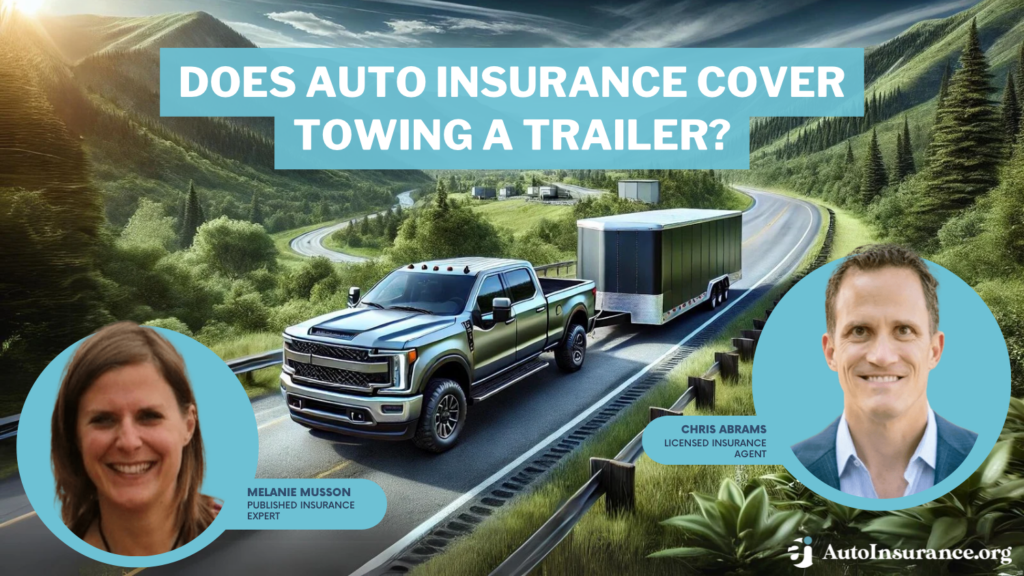
When you buy a trailer, insurance might be the last thing on your mind. However, it’s crucial to have the right coverage in case something happens to your trailer. Whether you are hauling for work or pleasure, understanding what states require trailer insurance and whether your car insurance covers your trailer is crucial for every trailer owner.
While your liability insurance from your auto policy will probably pay for damage you cause while you’re towing, it won’t cover damage to your trailer. Instead, you’ll probably have to find alternative insurance by adding it to your car policy or buying a separate plan. You can read our article to find out more about what liability auto insurance coverage is.
Read on to learn more about what insurance covers when you tow a trailer. Then, compare rates with as many companies as possible to find the right policy for your trailer needs.
- Liability insurance usually covers damage or injuries you cause in an accident while towing a trailer
- Standard car insurance policies do not extend comprehensive or collision coverage to trailers when you tow them
- Most companies sell add-ons or separate policies that will cover any damage done to your trailer
Does liability insurance cover towing?
Liability insurance covers damage you cause to other people in an accident, and their property damage coverage covers any damage done to their property or vehicle. Additionally, your liability insurance covers damage you cause with a trailer you’re towing.
Your trailer won’t be included in your liability insurance if it’s unregistered, not street-legal, or using the wrong type of vehicle to tow it. For example, a liability claim will likely be denied if you overload a trailer and try towing it with a small car.
If your insurance denies a liability claim, you’ll be responsible for paying for all damage you cause. For this reason, you must keep your trailer in good condition and use it correctly.
Insurance typically covers liability—that is, damage your trailer might cause to other vehicles or property in an accident. However, the trailer itself often requires additional coverage for damages from accidents or other mishaps on the road. Confirming the specifics with your insurance provider can prevent costly surprises and ensure you’re fully protected.
Most states require liability insurance before you drive or register your car. Getting the minimum car insurance required in your state is your most affordable option for coverage. You can check how much the average minimum insurance policy costs in your state below.
As you can see, minimum insurance rates are very affordable in most states. Some states with higher rates usually require more insurance due to factors like heavy traffic, high theft rates, or extreme weather risks.
Free Insurance Comparison
Compare Quotes From Top Companies and Save
Secured with SHA-256 Encryption
What does trailer insurance cover?
Trailer insurance typically encompasses several key types of coverage to protect you and your trailer, including:
- Liability Coverage: This covers any legal responsibilities you may have if your trailer causes injury to others or damages someone else’s property.
- Collision Coverage: This pays for damage to your trailer resulting from a collision with another vehicle or object, regardless of who is at fault.
- Comprehensive Coverage: Protects against damage from non-collision events such as theft, vandalism, fire, natural disasters, and other risks.
- Contents Coverage: Optional coverage that protects the contents or cargo within your trailer, which can be crucial if you transport valuable items.
Each of these coverages ensures that you’re financially protected against a wide range of potential incidents that could occur while owning and using a trailer.
Does car insurance cover a trailer being towed if you only have comprehensive coverage?
Comprehensive auto insurance isn’t required in any state, but you usually need it if you have a car loan or lease. Comprehensive insurance protects your car from damage outside of accidents, including fire, weather, theft, vandalism, and animal contact.
Unfortunately, your comprehensive insurance doesn’t automatically cover a trailer you’re towing. If something damages your car while you have a trailer attached, your comprehensive insurance will only pay for damage to your vehicle.
Are trailers covered under auto insurance of any kind?
Like your comprehensive insurance, collision coverage doesn’t cover trailers. That means that your insurance won’t cover your trailer if you hit someone and damage it during a tow.
While your standard car insurance policy won’t cover it, you can find coverage specifically for your trailer. Many companies sell add-ons for car insurance policies that extend coverage to your trailer and will pay for any damage in a covered event. You might also be able to buy a separate recreational vehicle policy for your trailer.
Free Insurance Comparison
Compare Quotes From Top Companies and Save
Secured with SHA-256 Encryption
Do you need to let your car insurance company know you plan to tow something?
Since towing a trailer comes with more risks than everyday driving, you might think you must tell your insurance company before you start hauling. However, that’s unnecessary in most situations.
If you use your trailer to tow something occasionally, there’s no need to inform your company. As long as you make sure your trailer is in working order and you tow it correctly, your liability should cover you if you cause an accident.
However, there are times when you’ll need to speak with an insurance representative about towing. If you use your trailer to tow things for business, your personal coverage likely won’t extend to your trailer. In fact, you’ll probably need commercial auto insurance to cover your vehicle if you use it for work. Review our tips for buying cheap commercial auto insurance.
Do you need insurance for a trailer?
Knowing exactly what you need to keep your trailer covered can be a bit tricky. For example, some states require additional insurance for trailers, whereas others allow trailers to be covered by your car coverage. Additionally, some insurance policies cover your trailer but not the contents you carry.
Insurance companies often require you to list your trailer in the declaration part of your policy before you drive with it if you want any coverage.
To find out if you have to have insurance on a trailer, you should first speak with a representative from your insurance company. Ask them “Do I need insurance for a trailer?” They’ll be able to tell you if your normal car insurance covers your trailer.
You also might be able to buy an endorsement for your policy that will protect your trailer. If you don’t want to add coverage to your insurance, you should consider purchasing a policy specifically for your trailer.
Many insurance companies offer policies that cover trailers, including collision and comprehensive insurance. It’s usually a good idea to buy a separate policy for an expensive trailer. Although your car insurance might cover it while you’re driving, your trailer will have zero coverage when parked or unattached.
The good news is that trailer insurance is usually affordable. Prices can vary significantly depending on the trailer you want to insure, but the average light trailer costs about $41 a month to cover.
Details on Trailer Types and Insurance Needs
The type and usage of your trailer significantly influence the kind of insurance coverage necessary. Utility trailer insurance and car insurance trailer policies vary considerably. For instance, ‘Does my car insurance cover my trailer?’ is a common question, especially among those using utility trailers. Specific coverage for utility trailers can offer tailored protection that addresses the unique risks associated with these types of vehicles.
Utility trailers, used for hauling equipment, debris, or recreational vehicles, might not be covered under the standard auto insurance policy when detached from the towing vehicle. Utility trailer insurance necessitates a separate policy specifically for the trailer, which might cover everything from theft and vandalism to accident-related damages. Knowing the details of what your insurance covers—and what it doesn’t—can help you decide whether to adjust your policy or purchase additional coverage.
Each type of trailer has specific needs:
- Travel Trailers: Often require separate policies similar to RV insurance that cover both physical damage while parked and liability while being towed.
- Boat Trailers: May need additional coverage beyond typical auto insurance due to their exposure to unique risks like water damage and corrosion.
- Commercial Trailers: Used for business purposes typically require commercial trailer insurance, which can cover a wider range of scenarios and higher liability limits.
Ensuring you have the correct type and amount of insurance for your trailer is essential to avoid uncovered claims and potential financial hardship.
Insurance Requirements by Trailer Type
The amount of coverage you need for your trailer depends on the type of trailer you plan to tow. The most commonly towed trailers include:
- Fifth-wheel trailer
- Conventional trailer
- Truck camper
- Pop-up tent trailer
- Horse trailer
- Cargo or utility haulers
- Toy hauler
Your car insurance often covers Toy haulers and conventional trailers, but you should check with a representative to make sure. You’ll probably need a separate policy for travel trailers.
Before you set out with a trailer, you should also check if what you’re hauling is covered. For example, if you’re towing expensive personal items, you should consider buying additional protection in case they are destroyed during transit. Car insurance does not cover personal items within a vehicle; the same goes for trailers.
You’ll also need separate insurance policies for vehicles you tow. Boats, dirt bikes, ATVs, or other off-road vehicles require their own policies. Those policies not only cover you while you’re using them, but the coverage also applies during transit.
Free Insurance Comparison
Compare Quotes From Top Companies and Save
Secured with SHA-256 Encryption
When are trailers not covered by your insurance?
Although your liability insurance likely covers a trailer you’re towing, there are situations when you won’t have any coverage at all.
Your insurance will not cover a rented trailer. If you need to rent a trailer, you should spend a little extra money and buy the company’s rental insurance.
A trailer you use for work will also likely not be covered unless you have commercial auto insurance.
No matter what you’re hauling, it’s always a good idea to check with an insurance representative first. They’ll be able to explain what your insurance covers and the company’s rules regarding trailers.
State Requirements for Trailer Insurance
Different states have different requirements when it comes to insuring trailers. While your auto insurance liability coverage might extend to damage caused by a trailer while towing, this does not usually cover the trailer itself. It’s essential to consult with your insurance provider or check local DMV guidelines to understand the specific insurance requirements for trailers in your state.
Does my auto insurance cover towing a trailer?
Generally, the liability portion of your auto insurance will cover damages to others caused by the trailer while it is being towed. However, this does not cover damages to the trailer itself. For comprehensive or collision coverage of the trailer, a separate trailer insurance policy is often required, especially if the trailer is used frequently or carries valuable cargo.
Free Insurance Comparison
Compare Quotes From Top Companies and Save
Secured with SHA-256 Encryption
Specific Insurances for Different Trailer Types
Insurance policies vary significantly depending on the type of trailer. Utility trailers, for instance, might not be covered under the same terms as travel trailers or boat trailers. It’s crucial to understand the distinctions and ensure you have appropriate coverage based on the trailer type and usage.
Understanding Your Trailer Insurance Coverage
When exploring the details of your auto insurance policy, it’s common to question, “Does my car insurance cover my trailer?” and “Are trailers covered under car insurance?” Understanding the extent of your coverage is essential for properly protecting your assets while towing.
Trailer Insurance Basics
Most car insurance policies include liability coverage that extends to towing a trailer. This means if your trailer is involved in causing damage or injury to others, your policy may cover these liabilities. However, this does not typically include any damage to the trailer itself. For this reason, many trailer owners invest in specific “trailer towing insurance” which offers both liability and physical damage protection for the trailer.
Coverage in Case of Accidents
If “someone hit my trailer,” the next steps depend significantly on your coverage specifics. If you have comprehensive or collision insurance specifically for your trailer, you may be covered for the damages. Without this, you might need to rely on the at-fault party’s insurance to cover the damage, if they are insured and found liable.
Detailed Policy Inquiries
“Is a trailer covered by auto insurance?” Generally, the answer is complex. While your auto insurance may extend liability coverage to incidents involving your trailer, comprehensive and collision coverage for the trailer itself often requires additional, specific insurance. It’s important to directly check with your insurance provider to understand all aspects of your coverage.
Insurance for Different Scenarios
For those towing frequently or for business, it’s crucial to verify, “Does my insurance cover a trailer?” Especially in scenarios where high-value goods or equipment are involved, having tailored insurance for your trailer can safeguard against significant financial losses.
State Farm and Rental Trailers
A specific query like “Does State Farm cover rental trailers?” highlights the need for clarity regarding rental situations. Many insurance companies, including State Farm, offer liability coverage for towing rented trailers. However, for comprehensive or collision coverage, you might need to arrange additional insurance through the rental agency or check if your personal policy can be extended to cover rented trailers.
By thoroughly understanding your policy details, you can ensure that you are adequately prepared for the various situations that may arise while towing your trailer. Whether it’s dealing with damage from an accident or ensuring compliance with state laws, the right insurance coverage is invaluable.
Find Insurance for Towing Today
Ensuring your trailer is adequately covered can present challenges, especially when state laws mandate insurance for trailers. However, in cases where you’re responsible for an accident while towing, your liability insurance typically provides coverage for the trailer. This means you may not need to worry about specific single car hauler insurance, tool trailer insurance, and toy hauler insurance cost if you’re involved in a towing-related incident.
When it comes to enclosed cargo trailer insurance or towing a caravan insurance, it’s important to explore your options thoroughly. Rates for these specialized coverages can vary significantly among insurers. Additionally, it’s crucial to determine whether your car insurance policy includes coverage for your trailer. For specific needs like insurance for dump trailers, it’s advisable to seek quotes from multiple providers to find the best fit for your requirements.
Frequently Asked Questions
Can you insure a trailer?
You have several options for insuring your trailer. First, you may be able to purchase an add-on or endorsement for your car insurance that extends coverage to your trailer. Many companies also offer policies specifically for trailers. For example, AAA provides coverage for horse trailers, Progressive offers insurance for compact tractors, and State Farm offers insurance for utility trailers. Additionally, you might explore gap insurance policies for horse trailers through specific providers.
Do you need insurance for a travel trailer?
While you definitely need insurance for a motorized RV, you don’t legally need insurance for your travel trailer. However, you’ll probably need to buy some sort of physical damage insurance if you have a loan on your trailer. Some auto insurance policies will allow you to cover your travel trailer on the same policy at no additional cost, but sometimes that may mean that you’ll be covered only if your RV is attached to your vehicle.
What does insurance cover on trailers?
Trailer insurance works similarly to regular car policies. The comprehensive portion covers damage from things like weather, fire, theft, and vandalism. Collision insurance will pay for repairs after an accident or if you hit a stationary object.
Does cargo insurance cover the trailer?
Cargo insurance covers the contents of what you are transporting and is frequently purchased by tractor-trailer operators and other shippers. While it usually only covers the contents, you may be able to find a policy that extends protection to your trailer.
What does auto insurance cover when towing a trailer?
When towing a trailer, your auto insurance policy usually covers liability for damages or injuries caused by the attached trailer to your vehicle. This coverage is typically an extension of your auto liability coverage. It helps protect you if you cause an accident while towing the trailer and are found legally responsible for the damages.
Does auto insurance cover damage to the trailer while towing?
In most cases, standard auto insurance policies do not provide coverage for damage to the trailer itself while it is being towed. Coverage for the trailer typically requires additional insurance, such as trailer insurance or a specialized recreational vehicle (RV) policy.
What insurance options are available for coverage on the trailer?
To ensure coverage for damage to the trailer while towing, you may need to consider the following insurance options:
- Trailer insurance: This type of insurance is specifically designed to provide coverage for the trailer itself. It typically includes protection against theft, damage, and liability related to the trailer while it’s being towed or parked.
- RV insurance: If you have a recreational vehicle, such as a travel trailer or camper trailer, you may need RV insurance. This type of policy can provide comprehensive coverage for the trailer, its contents, and liability while it’s being used for recreational purposes.
Are there limitations or restrictions to liability coverage when towing a trailer?
Liability coverage for towing a trailer may have limitations or restrictions. Common limitations include the type and weight of the trailer, as well as any special licensing requirements. It’s important to review your auto insurance policy or contact your insurance provider to understand the specific terms and conditions of your liability coverage for towing a trailer.
Is my trailer covered by car insurance when it is not attached to my vehicle?
Typically, your trailer is not covered by your auto insurance when it is detached from the insured vehicle. For standalone protection, you will need a separate policy that covers the trailer while it is parked or detached.
Does car insurance cover trailer damage?
Liability insurance generally covers damage that your trailer might cause to others or their property while you’re towing it. However, any damage to the trailer itself usually requires separate coverage.
Can my trailer be covered under the same policy as my car?
What type of insurance do I need for a trailer used for business?
How can I ensure my trailer is fully insured?
Does Geico cover towing a trailer?
Do you need insurance to tow a trailer?
Is my trailer covered by car insurance when not attached?
Does AAA cover utility trailers?
How much is insurance for a car hauler?
Does car insurance cover trailers?
Does my truck insurance cover my trailer?
Does Geico cover towing a trailer?
Does USAA cover U-Haul trailers?
Does a boat trailer need insurance?
Does my Progressive auto insurance cover towing a trailer?
Do you need insurance for a horse trailer?
Does Geico insure campers?
Does my auto insurance cover my travel trailer?
Do you have to insure a camper trailer?
Is there temporary trailer insurance
Does my car insurance cover towing a trailer?
Related Articles
-
Dec 2024

Connecticut Penalties for a DUI Conviction (2026)
-
Dec 2024
Delaware Child Car Seat Laws (2026)
-
Dec 2024
Can I keep auto insurance with a revoked driver’s license?
-
Dec 2024
How long do you keep auto insurance statements?
-
Dec 2024
Does auto insurance cover transmission repair? (2026)
-
Dec 2024
When to Take Your Auto Insurance Company to Court in 2026 (+Case Studies)
Get a FREE Quote in Minutes
Insurance rates change constantly — we help you stay ahead by making it easy to compare top options and save.
Secured with SHA-256 Encryption
