

Replacement Cost vs. Actual Cash Value in 2026 (Differences Explained)
Replacement cost vs. actual cash value affects insurance payouts. Replacement costs start at as low as $40/month and cover full replacement at current prices, while ACV deducts depreciation, offering lower payouts but cheaper premiums. Understanding both helps you choose the best coverage.
Read more





Table of Contents
Table of Contents

Insurance and Finance Writer
Merriya Valleri is a skilled insurance writer with over a decade of professional writing experience. Merriya has a strong desire to make understanding insurance an easy task while providing readers with accurate and up-to-date information. Merriya has written articles focusing on health, life, and auto insurance. She enjoys working in the insurance field, and is constantly learning in order to ...
Merriya Valleri

Licensed Agent & Financial Advisor
Schimri Yoyo is a financial advisor with active insurance licenses in seven states and over 20 years of professional experience. During his career, he has held roles at Foresters Financial, Strayer University, Minnesota Life, Securian Financial Services, Delaware Valley Advisors, Bridgemark Wealth Management, and Fidelity. Schimri is an educator eager to assist individuals and families in ach...
Schimri Yoyo
Updated December 2024
When evaluating your insurance options, understanding replacement cost vs. actual cash value is crucial for protecting your assets. With replacement cost coverage starting at $40/month, you’ll receive a payout that covers the full cost of replacing damaged property without factoring in depreciation.
This ensures you can rebuild or replace items at current prices, providing essential financial protection. In contrast, actual cash value (ACV) policies consider depreciation, offering a payout that reflects the current market value of your property.
While ACV typically has lower premiums, it may leave you with insufficient funds to replace your items or repair your property. Grasping these differences is crucial for selecting the right policy to protect your assets effectively. By entering your ZIP code above, you can get instant car insurance quotes from top providers.
- Replacement cost policies provide full coverage for repairs or replacements
- Actual cash value accounts for depreciation in your insurance payout
- Compare top insurers to find the best rates and coverage options
Actual Cash Value of a Car Explained
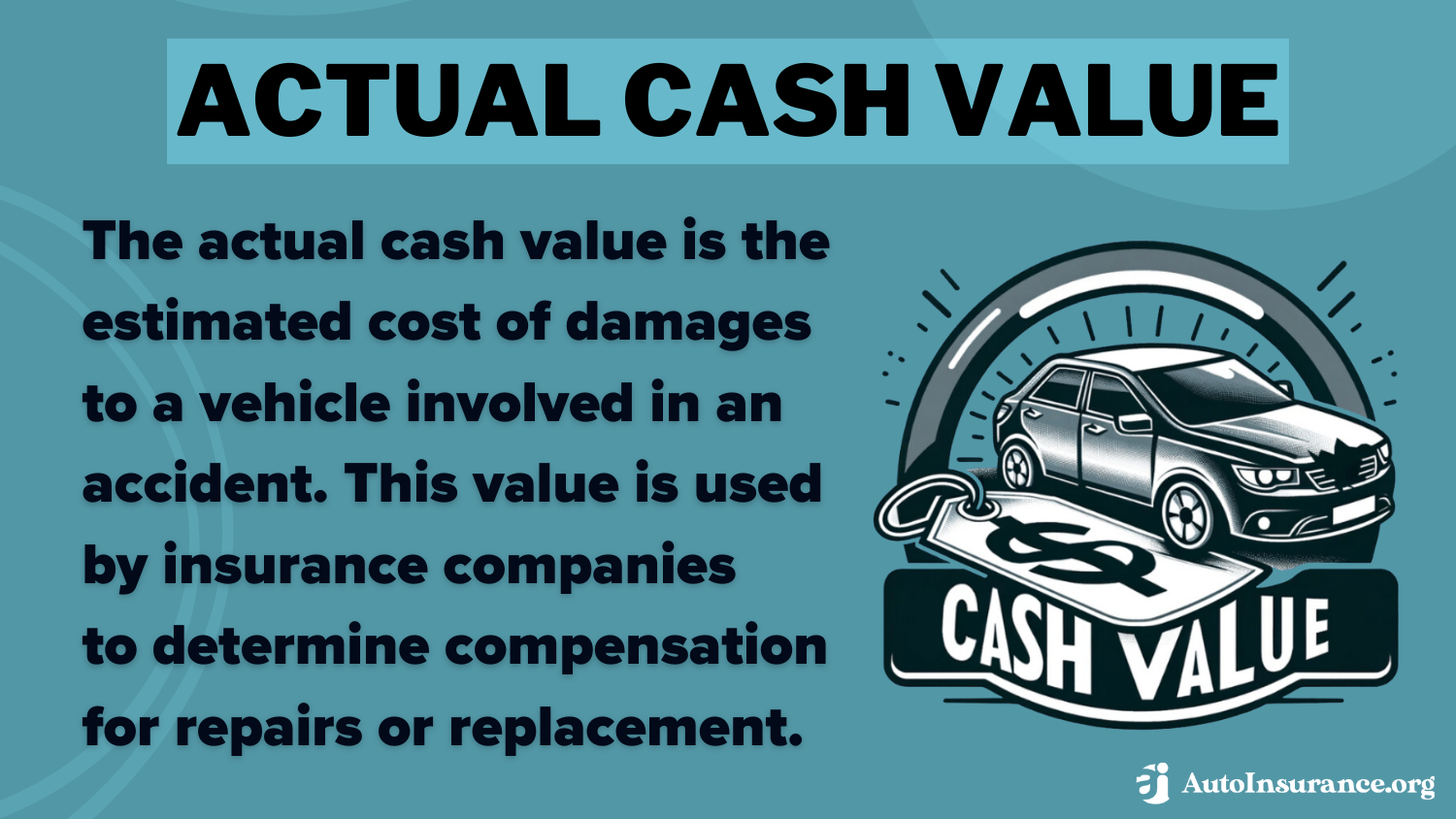
In insurance, ACV is the amount an insured asset is worth minus depreciation. However, in auto insurance, the actual cash value of a car is the car’s market value at the time of loss or damage minus any depreciation.
Therefore, ACV helps determine the amount an insurer will pay for a covered loss or damage to a car. Continue reading about the different types of auto insurance for more information.
When the cost of repairing your car exceeds a certain percentage of its ACV, your insurer may declare the vehicle a total loss. Find out how insurance companies decide to total a car.
Auto Insurance Monthly Rates by Provider & Coverage Level
| Insurance Company | Minimum Coverage | Full Coverage |
|---|---|---|
 | $55 | $130 |
 | $47 | $118 |
 | $52 | $123 |
 | $50 | $115 |
 | $53 | $128 |
 | $49 | $122 |
 | $48 | $125 |
 | $45 | $120 |
 | $46 | $119 |
 | $40 | $110 |
Additionally, understanding the actual cash value car calculator is essential for determining how much you’ll receive from your insurance company if your car is damaged or totaled. The actual cash value represents the vehicle’s worth at the time of the claim, factoring in depreciation, and is critical for assessing your compensation.
Replacement Cost vs. Actual Cash Value Insurance Monthly Rates by Provider
| Insurance Company | Replacement Cost | Actual Cash Value |
|---|---|---|
| $145 | $130 |
| $133 | $118 |
| $138 | $123 |
| $130 | $115 |
| $143 | $128 |
| $137 | $122 |
| $140 | $125 |
| $135 | $120 |
| $134 | $119 |
| $125 | $110 |
When dealing with claims, the actual cash value loss settlement refers to determining the car’s current worth based on its depreciation. Distinguishing between actual cash value and replacement cost is important, as the former includes depreciation, while the latter covers the cost to replace the vehicle without considering depreciation.
Free Insurance Comparison
Compare Quotes From Top Companies and Save
What is the Actual Cash Value vs. the Replacement Cost of a Vehicle
The ACV is the market value of your vehicle at the time of loss. Replacement cost, on the other hand, is the amount it would cost to replace your car with a new one of the same make and model.
The key difference between these two coverage options is that actual cash value factors in depreciation, while replacement cost reimburses you for the cost of replacing a vehicle with a new one. Find out how insurance adjusters determine the value of a car.
Understanding the Mechanics of Replacement Cost Auto Insurance
Replacement cost insurance provides policyholders coverage to help replace their vehicles in case of a covered loss or damage. Gap insurance can help cover the difference between your vehicle’s actual cash value and the amount owed on your loan or lease, preventing you from significantly paying off a depreciated car.
It’s crucial to understand the distinction between car insurance replacement value and market value, as the market value reflects your vehicle’s worth in the current market. Continue reading about new car replacement insurance for more details.
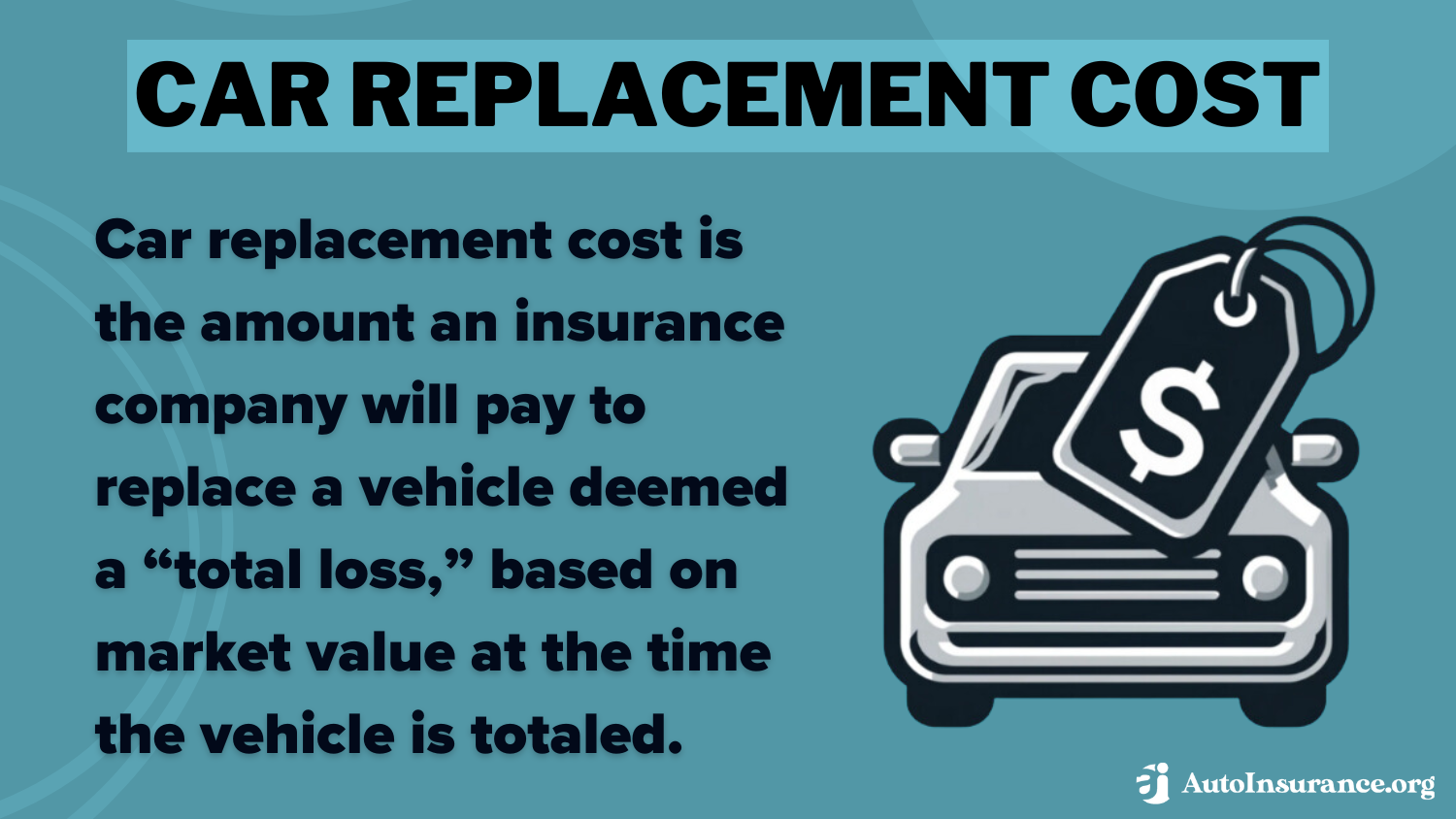
When choosing car insurance, it’s essential to differentiate between actual cash value (ACV) and replacement cost. ACV considers depreciation, meaning it pays less if your car is totaled or stolen. At the same time, replacement cost coverage would provide the full amount needed to replace the car without depreciation. Understanding car replacement costs directly impacts your insurance decisions and how much coverage you need.
New car replacement insurance options, like those from State Farm, can provide greater value than traditional ACV policies. Tools like the Progressive Insurance actual cash value calculator can help you determine payouts based on your car’s current value. Understanding these aspects ensures you choose the insurance policy that best suits your needs and provides effective financial protection.
How Does an Insurance Company Determine the ACV of Totaled Cars
In most cases, the insurance company will use these methods to determine an accurate ACV for the totaled car. Doing so helps them be fair and consistent in compensating policyholders for total loss claims. Find out more in our totaled car value calculator.
Minimum liability, comprehensive, collision, rental, personal effects…the list goes on♾. How many types of car insurance coverage are there, and how do you decide which ones are right for you🤔? Check out our comprehensive guide to get started👉: https://t.co/UtzCBRs82i pic.twitter.com/YAnbPW9Ffa
— AutoInsurance.org (@AutoInsurance) September 30, 2024
Also, when an insurance company determines the ACV of totaled cars, they start by assessing the actual car value. This represents the car’s worth immediately before the damage occurred.
According to industry standards, the insurance company will typically use several methods to determine the ACV of a car totaled in an accident. These may include:
- Using a published guide that provides estimated values for different makes and models of cars.
- Comparing the car to similar vehicles recently sold in the same area.
- Hiring an appraiser to assess the actual value of the car.
To ensure an accurate valuation, insurers use resources like the black book price, which provides detailed information on vehicle values based on current market data. They also consider the car market value for insurance purposes, which reflects the typical sale price of similar vehicles in the area. For further details, check out how insurance companies value totaled cars.
Additionally, a car’s salvage value is crucial to this process. It indicates how much the damaged vehicle could be sold for, even in its impaired state. The value of car insurance then integrates these elements to calculate the compensation amount. Understanding how these factors contribute to determining the ACV helps clarify how insurers assess your claim and what you can expect regarding payout.
Free Insurance Comparison
Compare Quotes From Top Companies and Save
Tips for Negotiating the Actual Cash Value of Your Car
When negotiating the actual cash value of your car with an insurance company, it’s crucial to understand the differences between repair or replacement cost coverage for auto and car replacement value. Repair or replacement cost coverage for auto provides compensation based on the expense of repairing or replacing your vehicle, which may be higher than the actual cash value.

Knowing the car replacement value, you can argue for a better payout if the ACV offered is too low. Additionally, being aware of the insurance value of your car helps you understand how it compares to these coverage options and strengthens your position in negotiating a more favorable settlement.
Here are a few tips that can help:
- Do Your Research: Understand your car’s value well before negotiating with the insurer. This will help you determine a fair ACV and give you a point of reference during negotiations. You can research your car’s value using online resources such as the Kelley Blue Book or the National Automobile Dealers Association (NADA).
- Don’t Accept the First Offer: The insurance company’s initial offer is likely lower than your car’s value. Try to get a higher settlement, but be prepared to counter the offer with supporting evidence of your car’s value.
- Be Professional and Polite: Always maintain a professional and courteous demeanor during negotiations. Avoid getting emotional or aggressive, as this can harm your chances of getting a fair settlement.
- Consider Hiring an Appraiser: If you’re having trouble reaching an agreement with the insurer, consider hiring an independent appraiser to assess your car’s value. An appraiser can provide a professional opinion of your car’s value, which can help support your position during negotiations.
Negotiating the actual cash value of your car effectively requires a clear understanding of its value and your insurance coverage options. Familiarize yourself with the differences between repair or replacement cost coverage for auto and car replacement value to make a strong case for a fair payout.
If you find the initial offer unsatisfactory, remember that Progressive Insurance’s total loss replacement purchase price could provide a different compensation structure than standard ACV policies. Explore what standard auto insurance covers for additional information.
Exploring new car replacement insurance might also offer additional value by covering the cost of a new vehicle rather than just the actual cash value. Being well-informed and considering professional appraisers can significantly improve your chances of a favorable settlement.
Replacement Cost vs. Actual Cash Value: Essential Insights
When determining how much car insurance coverage you need, knowing what your car is worth and how much an insurance company will pay if it’s totaled is crucial. An insurance company will use various factors, such as age, mileage, condition, and recent comparable sales for similar vehicles, to determine the ACV of a totaled car.
Car owners should research before negotiating with an insurance company to ensure they get a fair amount for their damaged vehicle. Generally, replacement cost coverage is more beneficial than ACV since it covers the full amount needed to purchase another vehicle of the same make and model. However, depending on your situation, opting for less coverage may be appropriate.
In addition, when dealing with a totaled car, it is crucial to understand the difference between replacement value and actual cash value (ACV) in your insurance policy. The car value for insurance purposes under an ACV insurance policy reflects the vehicle’s worth minus depreciation, which can leave you with insufficient funds if your car is totaled and you still owe money on a loan.
Knowing the difference between replacement cost and actual cash value is essential. Replacement cost ensures full restoration of your vehicle, while actual cash value considers depreciation, often resulting in lower payouts for policyholders.Travis Thompson Licensed Insurance Agent
This gap arises because the ACV payout may not cover the full amount needed to repay the loan. In contrast, new car replacement coverage offers a more comprehensive solution by covering the cost of replacing your totaled car with a new vehicle rather than just reimbursing its depreciated value.
Understanding these differences helps you navigate your insurance claim more effectively. If your policy’s replacement value or ACV insurance policy does not fully address your financial situation, opting for new car replacement coverage can offer additional protection. Read our extensive guide on “Factors That Affect Auto Insurance Rates” for more knowledge.
By knowing the terms and implications of each type of coverage, you can make informed decisions and ensure you receive adequate compensation to cover the vehicle’s value and any outstanding loan balance. See if you’re getting the best deal on car insurance by entering your ZIP code below.
Frequently Asked Questions
How to determine ACV of a car?
The Actual Cash Value (ACV) of a car is calculated by considering the vehicle’s age, mileage, condition, and depreciation. Most insurance companies use these factors to assess how much your car was worth right before the damage occurred.
What is insurance car replacement value?
Insurance car replacement value refers to the amount your insurance company will pay to replace your car with a new one of similar make and model, rather than factoring in depreciation like ACV.
What does replacement cost auto insurance cover?
Replacement cost auto insurance covers the full cost of replacing your vehicle without considering depreciation, allowing you to purchase a similar new car after a covered loss.
Discover more about comprehensive auto insurance.
What is the difference between replacement value vs market value car?
Replacement value refers to the cost of buying a new car of the same model and make, while market value represents the amount you could sell your car for in the current market, considering depreciation.
What is an ACV insurance endorsement?
An ACV insurance endorsement is an addition to your auto insurance policy that specifies how the actual cash value of your vehicle is calculated in the event of a claim.
What does actual cash value in auto insurance mean?
Actual cash value in auto insurance pays out the value of your car at the time of a loss, considering depreciation. This means you might receive less than what you initially paid for the vehicle.
For further details, check out our in-depth “How do insurance companies determine car value?” article.
How does the actual cash value car calculator work?
An actual cash value car calculator helps determine the payout you’ll receive from your insurance company by calculating the vehicle’s value at the time of the claim, minus depreciation.
What is the actual cash value definition in insurance?
The actual cash value (ACV) definition in insurance refers to the vehicle’s worth at the time of a loss, factoring in depreciation. It is the market value before the damage occurred.
Which companies offer new car replacement insurance?
New car replacement insurance companies typically include Allstate, Liberty Mutual, and Travelers, offering coverage that replaces your car with a new one if it’s totaled within a certain time frame or mileage limit.
Learn more by visiting our detailed “Full Coverage Auto Insurance” section.
What is an actual cash value loss settlement?
An actual cash value loss settlement is the process by which your insurance company calculates how much you’ll receive for your vehicle based on its ACV at the time of the loss.
Get the right car insurance at the best price — enter your ZIP code below to shop for coverage from the top insurers.
What is ACV vs replacement cost?
What is the ACV insurance claims process?
What is ACV meaning in car sales?
What is car value for insurance purposes?
What is the replacement cost insurance definition?
What is replacement cost coverage for cars?
What is Vehicle Replacement Insurance Advantage?
How do I calculate vehicle replacement cost?
Which is better: ACV vs replacement cost?
How do you determine the value to replace the vehicle?
Related Articles
-
Dec 2024

What does an auto insurance policy look like?
-
May 2026
Cheap Temporary Auto Insurance in 2026 (Top 10 Low-Cost Companies)
-
Dec 2024
Does auto insurance cover a clutch? (2026)
-
Jul 2025
Does a denied claim affect my auto insurance rate? (2026)
-
Apr 2025
Best Windshield Replacement Coverage in Alabama (Top 10 Companies Ranked for 2026)
-
Nov 2024
Idaho Minimum Auto Insurance Requirements (What ID Drivers Need in 2026)






Get a FREE Quote in Minutes
Insurance rates change constantly — we help you stay ahead by making it easy to compare top options and save.